
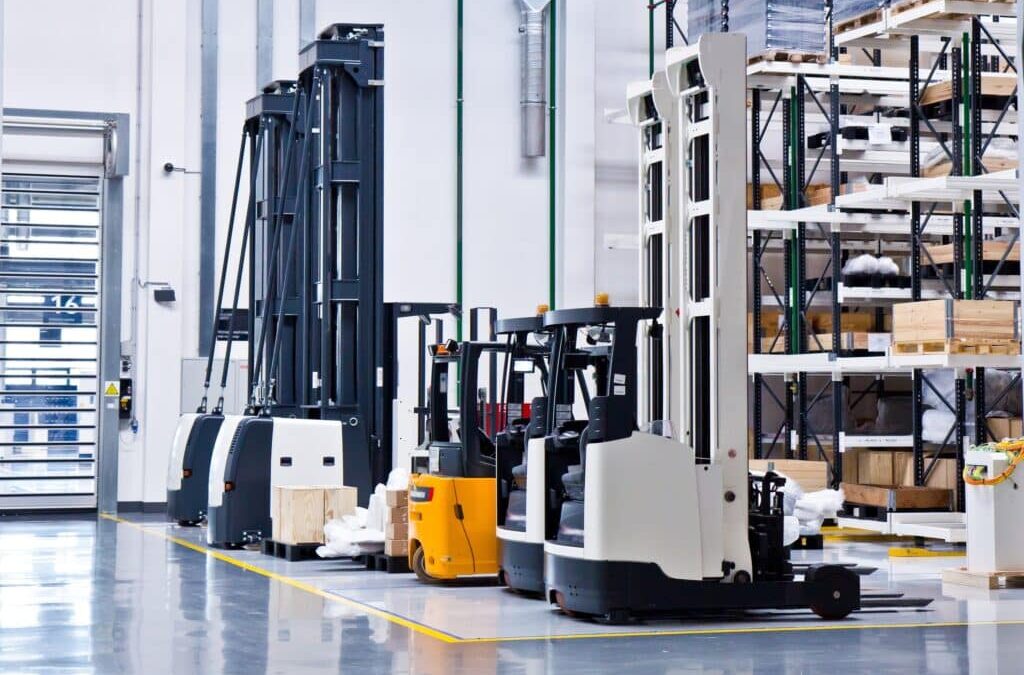
THEMA North America: Ergonomic Material Handling Solutions for Manufacturing
The global material handling equipment market has crossed the two hundred thirty billion dollar threshold in 2026, with industry analysts projecting growth to nearly three hundred billion dollars by 2030 at a compound annual growth rate of 6.6 percent. These are not abstract numbers for manufacturers watching production quotas slip because they cannot staff their floors. THEMA North America, a provider of precision-engineered ergonomic material handling solutions, works directly with mid-market manufacturers navigating exactly this collision of forces — and the decisions being made right now will define competitive positioning for the rest of this decade. Behind the material handling equipment market growth is a convergence of pressures that have been building for years and are now impossible to ignore: a manufacturing labor shortage that shows no sign of easing, workplace safety enforcement that is tightening month by month, and an automation wave that has moved well beyond Fortune 500 factories into the mid-market operations where most American goods are actually produced.
The 2026 Manufacturing Outlook Study surveyed more than two hundred manufacturing professionals and found that seventy-nine percent of executives identified the skilled labor shortage in manufacturing as their single greatest challenge. Sixty-nine percent are now investing in robots, ergonomic lifting equipment, and other hardware to fill workforce gaps — a figure that jumped nine percent from the prior year alone. The study’s lead researcher put it plainly: manufacturing growth in 2026 will not come from broad expansion but from the ability to extract more value from the assets companies already own. That includes the workers already on the payroll. Every minute a skilled operator spends wrestling a heavy component into position by hand is a minute of productive capacity wasted, and every back injury that sidelines that operator for weeks represents institutional knowledge sitting at home while production targets go unmet.
The injury picture adds urgency to every capital expenditure conversation. The U.S. Bureau of Labor Statistics reported 2.5 million nonfatal workplace injuries and illnesses in 2024, with manufacturing consistently ranking among the highest-risk sectors in the American economy. Musculoskeletal disorders caused by manual lifting in factories — repetitive lifting, bending, carrying, and pushing — remain the leading cause of lost or restricted work time on factory floors. The National Safety Council estimates that the cost of a workplace back injury in manufacturing reaches roughly forty thousand dollars per incident when factoring in medical expenses, lost productivity, overtime pay for replacement workers, and potential litigation. For manufacturers already operating short-staffed, every injury compounds a problem that recruitment alone cannot solve.
[IMAGE PLACEMENT 1: A data-driven infographic showing the $230B market size, projected $300B by 2030, and 2.5M injury statistics side by side. Alt text: “Material handling equipment market size 2026 infographic showing $230 billion market value, projected growth to $300 billion by 2030, and 2.5 million annual U.S. manufacturing workplace injuries”]
Why Manual Lifting Is Becoming Unacceptable in 2026
For decades, manual material handling was treated as an unavoidable reality of factory life. Workers lifted, carried, and positioned heavy objects because that was how the job got done. The calculus has fundamentally changed. Labor is scarce, the cost of back injuries in manufacturing facilities is rising, and federal regulators are paying closer attention to employers who expose workers to preventable ergonomic hazards.
How OSHA ergonomics rules affect manufacturing in 2026 is no longer a niche compliance question — it is a board-level risk management issue. OSHA has intensified enforcement of ergonomic violations under the General Duty Clause, which requires employers to provide workplaces free from recognized hazards. The agency’s ergonomics guidance for manufacturing identifies heavy lifting, repetitive motions, and awkward postures as primary risk factors for musculoskeletal disorders in factories and explicitly recommends engineering controls such as mechanical lifting devices as the most effective prevention strategy. The distinction matters: OSHA’s General Duty Clause ergonomics enforcement considers mechanical aids superior to administrative controls like training programs and job rotation schedules because mechanical aids eliminate the hazard rather than merely reducing exposure to it.
The 2026 update to OSHA’s 30-hour training program now includes expanded modules on ergonomic hazard recognition and musculoskeletal injury prevention. Amazon’s December 2024 settlement with OSHA over ergonomic injuries at its U.S. warehouses required the company to implement adjustable workstations, ergonomic mats, harnesses, and job rotations — establishing a highly visible precedent for what federal regulators consider adequate intervention. Manufacturers who continue relying on manual handling for tasks that mechanical aids could perform are accepting both injury risk and growing OSHA ergonomics compliance exposure.
The financial argument reinforces the regulatory one. A single serious back injury costing forty thousand dollars can exceed the installation cost of a pneumatic manipulator that would have prevented the injury entirely. Understanding how lift-assist devices help with OSHA compliance is increasingly part of every serious risk management conversation in manufacturing facilities. Manufacturers who have run the numbers are already buying. Those who have not are falling behind while simultaneously accumulating regulatory liability.
Examining Manufacturing’s Ergonomic Crisis: Why Musculoskeletal Injuries Still Cost American Factories Billions reveals the full scope of the problem that is driving these accelerating industrial lifting equipment investments across every manufacturing sector.
Automation Is Not Just for Large Factories Anymore
The material handling equipment market in 2026 is no longer confined to massive automotive plants and Amazon-scale distribution centers. Best ergonomic lifting equipment for mid-size manufacturers has become one of the most searched procurement categories precisely because mid-market facilities — food and beverage processing, packaging, mechanical engineering, and general industrial production — are driving new demand as the labor math becomes unavoidable. When a facility cannot hire enough workers to run a second shift, pneumatic manipulators and lift assist devices allow existing workers to handle heavier loads at faster cycle times without the injury risk that comes with manual processes.
Manufacturers report throughput gains of twenty-five to forty percent after implementing pneumatic handling systems. Understanding how pneumatic manipulators improve factory throughput comes down to a simple workforce math: a single operator using a pneumatic manipulator can safely position loads that previously required two or three workers to lift manually. That is not marginal improvement. That is the difference between meeting production commitments and turning away orders because the workforce cannot keep pace with demand.
What is a zero-gravity lifting system? It is a pneumatic or mechanical device that counterbalances the weight of a load, making it feel nearly weightless to the operator — enabling precise, fatigue-free positioning of components that would otherwise require team lifts or mechanical cranes. These systems are at the center of the ergonomic equipment boom. The shift toward ergonomic material handling solutions in North America also reflects changing expectations among the workers manufacturers are trying to attract. Younger employees entering manufacturing careers have grown up with information about workplace injuries readily available and show little tolerance for employers who have not invested in basic ergonomic protections. When the facility across town provides pneumatic manipulators and zero-gravity lifters while your operation still relies on manual team lifts, your experienced operators notice the difference and your recruiting efforts suffer accordingly.
Manufacturers providing modern material handling solutions find it significantly easier to recruit and retain talent in a market where an estimated 2.1 million manufacturing jobs may go unfilled by the end of the decade.
Understanding 2.1 Million Manufacturing Jobs at Stake: How Smart Lifting Equipment Bridges the Labor Gap provides critical context for why equipment decisions made in 2026 will determine which manufacturers thrive and which struggle through the rest of this decade.
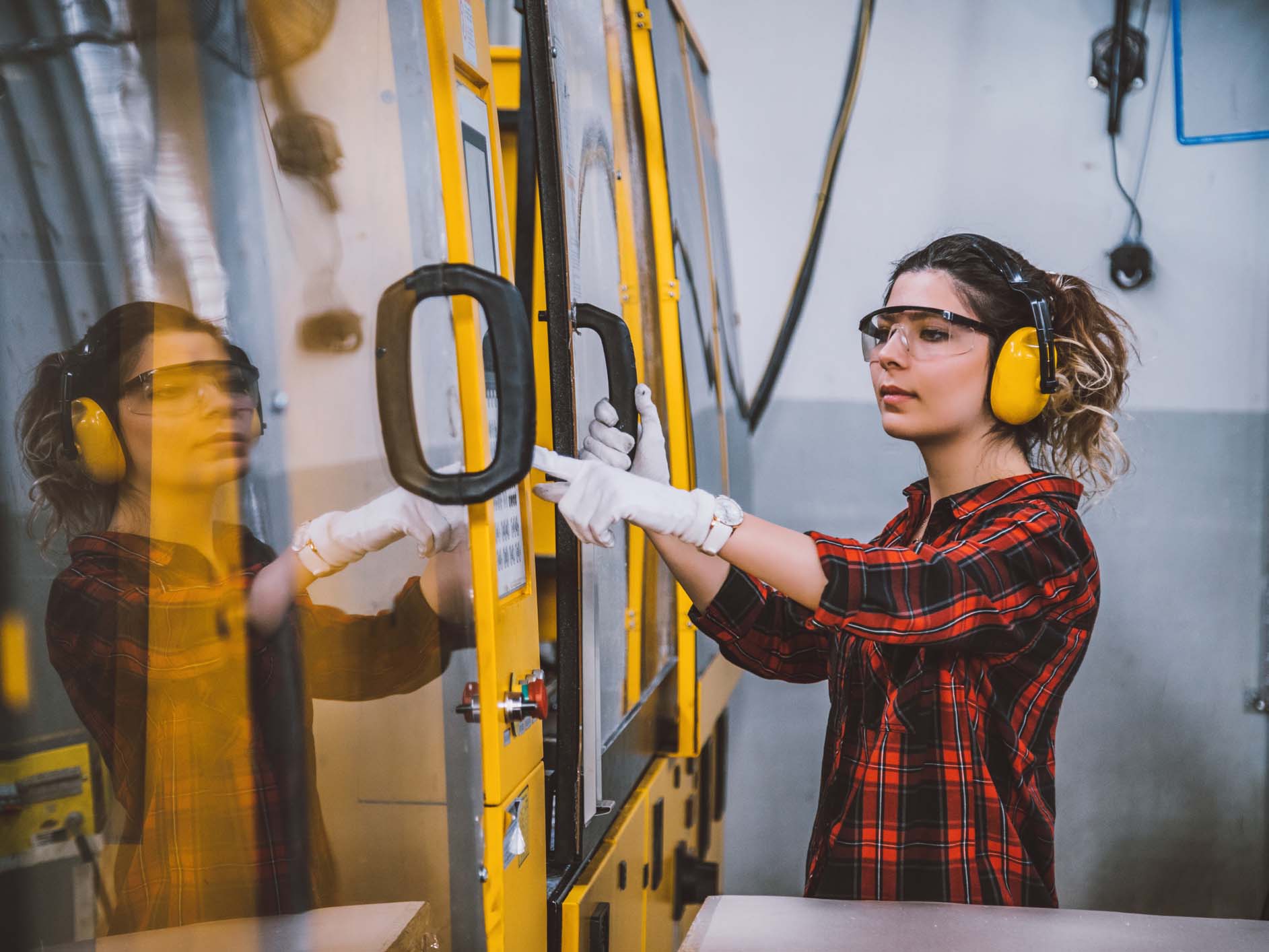
Pneumatic-Manipulator-Lifting-System-For-Ergonomic-Material-Handling
Where the Investment Is Heading: Material Handling Equipment Market 2026
Understanding manufacturing automation investment trends in 2026 requires looking at where capital is actually flowing. The fastest-growing segments within material handling equipment reveal where the industry is placing its bets. Cranes and lifting equipment alone represented over seventeen billion dollars in 2024 and continue climbing. But it is the ergonomic handling category — encompassing pneumatic manipulators, vacuum lifters, articulated arm systems, and zero-gravity lifting systems — that is experiencing the sharpest growth among mid-market manufacturers.
What is the material handling equipment market growth rate? Industry analysts project a CAGR of 6.6 percent through 2030, with the material handling integration market alone projected to reach over seventy-seven billion dollars by 2031. Robotic systems show the highest growth rate at over ten percent annually. But for the vast middle of American manufacturing, the most impactful material handling equipment investment in 2026 is not a million-dollar robot. It is ergonomic lifting equipment that protects workers, increases throughput, and pays for itself within the first year of deployment.
Understanding material handling equipment ROI for manufacturers in this context means considering the full picture: injury cost avoidance, insurance premium reductions, productivity gains across every shift, and the recruitment and retention dividend that comes from providing modern working conditions. Ergonomic equipment investment in manufacturing is increasingly factored into insurance underwriting decisions, with carriers offering premium reductions to facilities that demonstrate proactive hazard elimination through engineering controls.
These are solutions available across industries — from automotive manufacturing to food and beverage processing to packaging operations and mechanical engineering. Pneumatic manipulators for food and beverage manufacturing represent one of the fastest-growing niches within the broader equipment market, driven by hygienic design requirements and the particularly labor-intensive nature of food processing operations.
How to reduce manual lifting hazards in manufacturing through compressed air lifting systems is straightforward in principle — it requires only the compressed air infrastructure that most facilities already have in place, eliminating the programming complexity and software dependency of robotic alternatives. This mechanical simplicity minimizes maintenance requirements and maximizes uptime in harsh industrial environments.
Manufacturers who act now will compound productivity gains through the rest of the decade. Those who wait will face tighter labor markets, stricter safety enforcement, and competitors who have already solved the lifting problem. THEMA’s professional installation support and ongoing maintenance programs ensure that equipment investments deliver reliable returns from day one and continue performing for years without disrupting operations.

Material-Handling-Equipment-Market-Growth-Ergonomic-Pneumatic-Lifting
THEMA North America: Your Partner in Ergonomic Material Handling
THEMA North America brings European precision engineering and North American responsiveness to manufacturers who need reliable, ergonomic material handling solutions. Based in Harleysville, PA, our team works directly with facility managers, EHS directors, and operations leaders to implement pneumatic manipulator systems that eliminate manual lifting hazards while increasing throughput by 25 to 40 percent across every shift.
Our Solutions Include:
- Pneumatic Manipulators — Zero-gravity lifting systems handling loads from 60 kg to 1,850 kg with custom gripper solutions for any application
- Automotive Manufacturing Solutions — Purpose-engineered for high-cycle automotive production environments
- Food & Beverage Processing Solutions — Hygienic, USDA-compatible systems for sensitive processing environments
- Packaging Operations Solutions — High-throughput lift-assist systems for packaging line demands
- Breweries & Distilleries — Specialized handling solutions for vessel and keg management
- Painting & Coating Operations — Manipulator systems compatible with finishing environment requirements
- Paper & Forestry Industries — Heavy-load handling for roll, bale, and sheet applications
- Professional Installation — Expert commissioning to ensure systems perform from day one
- Ongoing Maintenance Programs — Maximize uptime and protect your investment over the long term
Ready to Eliminate Manual Lifting Hazards? Contact THEMA North America to discuss how our ergonomic material handling equipment can protect your workforce and increase productivity.
FAQs
Q1: How large is the material handling equipment market in 2026?
The global material handling equipment market crossed $230 billion in 2026 and is projected to reach nearly $300 billion by 2030, growing at a compound annual growth rate of approximately 6.6 percent. The ergonomic and pneumatic lifting equipment segment is growing fastest among mid-market manufacturers.
Q2: Why are musculoskeletal disorders so common in manufacturing facilities?
Musculoskeletal disorders are the leading cause of lost work time in manufacturing because factory jobs regularly involve the primary risk factors: repetitive heavy lifting, bending, carrying, and sustained awkward postures. Without mechanical lifting aids, workers absorb cumulative physical stress that leads to soft tissue injuries of the back, shoulders, and joints over time.
Q3: What does OSHA’s General Duty Clause require for ergonomics in manufacturing?
OSHA’s General Duty Clause requires employers to provide a workplace free from recognized hazards. For ergonomics, this means identifying manual lifting, repetitive motion, and awkward posture risks and implementing engineering controls — such as pneumatic manipulators and lift-assist devices — as the preferred intervention. Training and rotation are considered less effective than mechanical elimination of the hazard.
Q4: How do pneumatic manipulators compare to robotic arms for mid-market manufacturers?
Pneumatic manipulators operate on compressed air infrastructure that most facilities already have, require no programming expertise, and can be learned by operators quickly. Robotic arms require software integration, programming skills, and ongoing technical support. For manufacturers handling variable loads and custom applications, pneumatic systems typically deliver faster ROI with lower total cost of ownership.
Q5: What is the average cost of a workplace back injury in manufacturing?
The National Safety Council estimates the average workplace injury costs approximately $40,000 in direct and indirect costs, including medical expenses, lost productivity, overtime for replacement workers, and potential litigation. A single serious back injury can exceed the full installation cost of a pneumatic manipulator system.
Q6: What industries are driving growth in the ergonomic material handling equipment market?
Food and beverage processing, packaging, mechanical engineering, automotive manufacturing, breweries and distilleries, and paper and forestry industries are all significant growth drivers. These mid-market sectors are increasingly unable to meet production demands through manual labor alone and are investing in pneumatic and ergonomic systems to bridge the gap.
Q7: How does ergonomic equipment investment affect manufacturing insurance premiums?
Insurance carriers are increasingly incorporating ergonomic equipment into their underwriting assessments. Manufacturers that demonstrate proactive hazard elimination through mechanical lifting aids — particularly in categories like back injuries and musculoskeletal disorders — may qualify for measurable premium reductions, further accelerating the ROI on equipment investment.
Q8: What is the material handling integration market projected to reach by 2031?
The material handling integration market is projected to exceed $77 billion by 2031. Within this figure, robotic systems show the highest growth rate at over 10 percent annually, but ergonomic pneumatic equipment represents the most accessible and immediately impactful investment for the mid-market manufacturing sector that makes up the bulk of U.S. industrial production.
Works Cited
“Employer-Reported Workplace Injuries and Illnesses, 2023-2024.” U.S. Bureau of Labor Statistics, U.S. Department of Labor, 22 Jan. 2026, www.bls.gov/news.release/osh.nr0.htm. Accessed 25 Feb. 2026.
“Ergonomics – Overview.” Occupational Safety and Health Administration, U.S. Department of Labor, www.osha.gov/ergonomics. Accessed 25 Feb. 2026.
Related Articles
- Manufacturing’s Ergonomic Crisis: Why Musculoskeletal Injuries Still Cost American Factories Billions
- 2.1 Million Manufacturing Jobs at Stake: How Smart Lifting Equipment Bridges the Labor Gap