

American manufacturing is staring down a workforce crisis with no simple resolution on the horizon. An estimated 2.1 million manufacturing jobs could go unfilled by 2030 according to research from the Manufacturing Institute, with the potential economic cost reaching one trillion dollars in that year alone. THEMA North America, a leading provider of ergonomic material handling solutions, has spent years helping factory managers navigate exactly this challenge — not by replacing workers, but by making every worker dramatically more capable. The National Association of Manufacturers reports that roughly 1.4 million manufacturing jobs were lost during the early pandemic period, and while the industry has largely recovered those positions, the demand for additional skilled workers far outpaces the available talent pool. For factory managers trying to fill second shifts, meet production commitments, and retain the experienced workers they already have, the question is no longer when the skilled labor shortage in manufacturing will arrive. It arrived years ago and is getting worse.
The 2026 Manufacturing Outlook Study paints a stark picture. Seventy-nine percent of executives identify the manufacturing workforce shortage as their top challenge. Ninety percent say manufacturing departments are the most affected area, followed by operations at forty-eight percent and design and engineering at forty percent. Sixty-nine percent are investing in robots, smart lifting equipment, and other hardware to compensate — a figure nine percent higher than just one year earlier. The message from industry leadership could not be more direct: growth in 2026 will not come from hiring your way to capacity. It will come from extracting more value from the workforce and equipment you already have.
This reality is forcing a fundamental rethinking of how materials move through American factories. Every time a skilled operator spends ten minutes wrestling a heavy component into position manually, that is ten minutes of productive capacity lost to a task that equipment could handle in two. Every back injury that sidelines an experienced worker for weeks or months represents years of institutional knowledge sitting at home recovering while production quotas go unmet and remaining workers absorb dangerous additional strain. Smart lifting equipment — particularly pneumatic manipulators and ergonomic lift-assist devices — addresses both problems simultaneously by making existing workers faster, safer, and more willing to stay.
Key Takeaways
- An estimated 2.1 million manufacturing jobs could go unfilled by 2030, with a potential economic cost of $1 trillion that year (Manufacturing Institute).
- Manufacturers compete for workers against tech, healthcare, logistics and service industries for the same shrinking labor pool.
- The supply side won’t fix itself — the strategic answer is increasing output without hiring more people.
- Smart lifting equipment makes every current worker more productive while protecting them from MSDs.
- Retention improves when working conditions are safer and less physically punishing than competing jobs.
The Numbers Behind the Squeeze
The manufacturing labor shortage statistics in 2026 hit harder than most economic sectors because factory work demands physical capability alongside technical skill. The U.S. Chamber of Commerce’s ongoing analysis of industry-level labor data shows that manufacturing faced a major setback after losing roughly 1.4 million jobs in 2020 and has struggled to fully close the resulting gap. As of early 2025, over three hundred thousand durable goods manufacturing job openings remained unfilled across the country. Nearly a quarter of the current manufacturing workforce is aged fifty-five or older, meaning retirements will accelerate the shortage regardless of how successful recruitment efforts become.
The demographic math is unforgiving. Baby boomers who built decades-long careers on manufacturing floors are leaving the workforce faster than younger workers are entering it. The U.S. Census Bureau has documented how the intersection of skills gaps, demographic shifts, and competition from other sectors compounds the problem. Manufacturers are not just competing against each other for talent. They are competing against technology companies, healthcare systems, logistics operations, and service industries for the same shrinking pool of workers willing to perform physically demanding jobs. Understanding how to solve the skilled labor shortage in manufacturing requires acknowledging that the supply-side will not fix itself — the strategic answer lies in increasing manufacturing output without hiring more workers through better equipment and processes.
For manufacturers who cannot simply wait for the labor market to improve, the strategic imperative is clear: make every worker currently on the payroll more productive, protect them from musculoskeletal disorders in factories, and create working conditions attractive enough to retain them against the constant pull of competing employment opportunities.
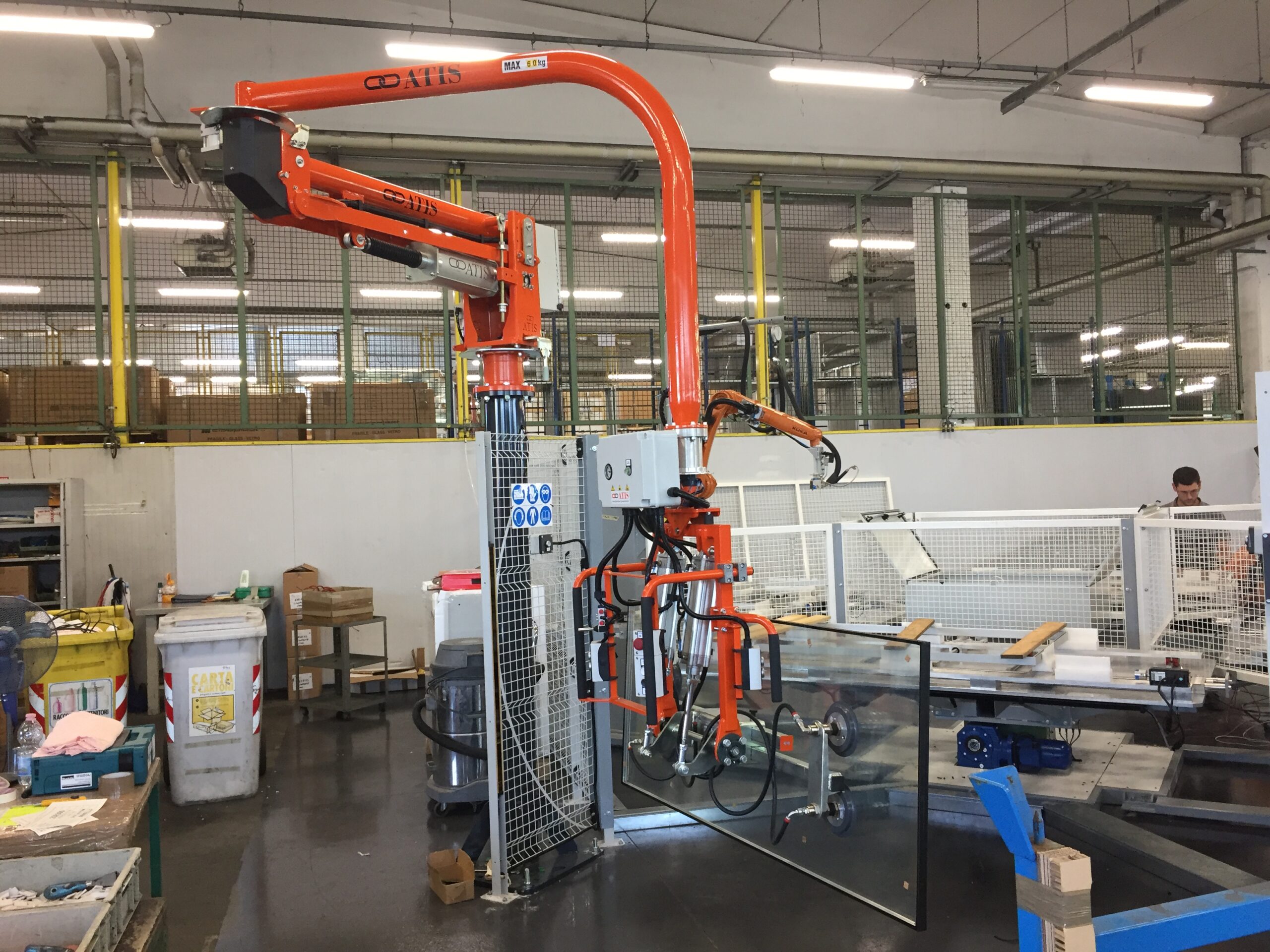
Pneumatic-Manipulator-Lifting-Heavy-Manufacturing-Load
How Smart Lifting Equipment Multiplies Workforce Capacity
Pneumatic manipulators and zero-gravity lifting systems directly address workforce scarcity by amplifying what individual workers can accomplish during every shift. A single operator using a pneumatic manipulator can safely handle loads that previously required two or three workers to lift and position manually. Manufacturers implementing these systems report throughput gains of twenty-five to forty percent. That is not incremental improvement. That is the difference between meeting customer commitments and turning away orders because the workforce cannot keep pace with demand.
Understanding how pneumatic manipulators help with the manufacturing labor shortage comes down to simple physics and economics: when one person can move what used to require three, your effective workforce capacity multiplies without a single new hire. How smart lifting equipment increases factory throughput goes further than raw speed — the precision of guided pneumatic systems reduces rework, scrap, and damage to expensive components, compounding the productivity advantage.
The productivity multiplier extends well beyond raw lifting speed. Workers freed from physical strain maintain higher performance levels across entire shifts rather than gradually slowing as fatigue accumulates through hours of manual handling. Quality improves because operators can focus their attention on precision positioning and visual inspection rather than managing the physical demands of heavy weights. Changeover times between production runs decrease when moving tooling and materials requires guiding a manipulator rather than coordinating team lifts and waiting for available helpers who are busy elsewhere on the floor.
THEMA’s pneumatic manipulator solutions are engineered for exactly this kind of multi-dimensional impact — across automotive manufacturing, food and beverage processing, packaging operations, and a range of other demanding industries.
These gains matter enormously when the broader context is considered. The material handling equipment market has surged past $230 billion as safety and labor crises collide — manufacturers across every sector and geography are reaching the same conclusion: equipment investment is the only reliable path to productivity growth when qualified workers remain scarce and expensive to recruit.
Retention: The Overlooked Equation
Hiring dominates most manufacturing workforce shortage conversations, but retention may ultimately matter more for manufacturing competitiveness. Replacing a manufacturing worker costs an estimated six to nine months of that employee’s salary when accounting for recruiting expenses, onboarding time, training investment, and the productivity gap before a new hire reaches full capability. In the current labor market, the replacement may never materialize at all, leaving the position vacant for months while remaining workers shoulder the extra burden.
Physical working conditions directly influence whether experienced workers stay or leave. The 2026 Manufacturing Outlook Study found sixty-two percent of manufacturers are prioritizing employee retention in manufacturing alongside recruitment as a workforce strategy. Workers who face daily heavy lifting, chronic soreness, and accumulating injury risk have every incentive to seek employment in sectors or facilities that have already addressed these hazards. When the warehouse or competing factory down the road provides pneumatic manipulators and your operation still relies on manual team lifts, your experienced operators notice the difference.
How lift-assist devices reduce workplace injuries has a direct downstream effect on whether those workers see a future in your facility. The evidence is consistent: ergonomic investment correlates with improved retention metrics.
Younger workers entering manufacturing careers are even more decisive about physical working conditions than their predecessors. They have grown up with workplace injury information readily available online, they have watched family members deal with chronic pain from years of manual labor, and they show little tolerance for employers who have not invested in basic ergonomic material handling solutions that have been available for years. Manufacturers that provide modern lift-assist equipment for an aging manufacturing workforce signal concretely that they value worker wellbeing, creating a tangible competitive advantage in recruiting from a generation that has unprecedented employment options.
The connection between injury prevention and workforce retention becomes especially critical when examining manufacturing’s ongoing ergonomic crisis and musculoskeletal injury costs. Every preventable injury that sends a worker home for weeks or pushes them permanently out of the manufacturing industry deepens the shortage for every employer in the sector.
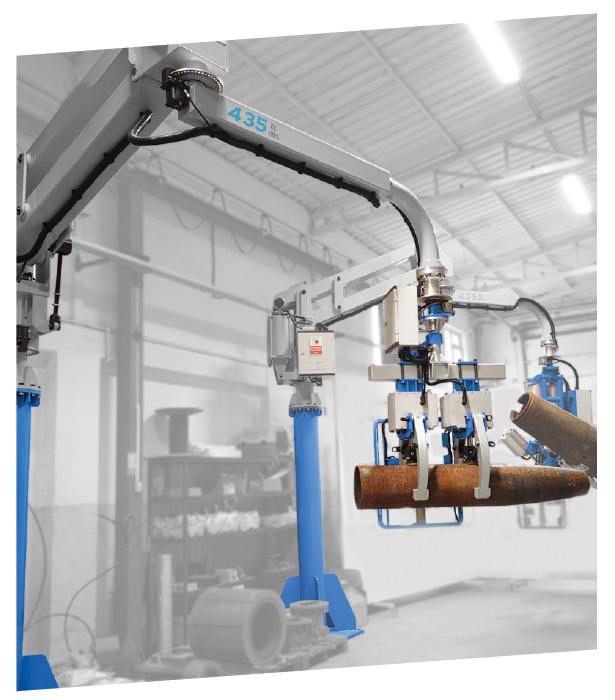
Pneumatic-Manipulator-Improving-Manufacturing-Efficiency-and-Safety
The ROI That Justifies Itself
Manufacturers hesitant about capital expenditure for ergonomic lifting equipment should examine the full lifting equipment ROI picture rather than evaluating equipment purchases in isolation. A single serious back injury — with the cost of back injuries in manufacturing facilities averaging forty thousand dollars in direct and indirect costs — can exceed the total price of a pneumatic manipulator installation including custom grippers, mounting hardware, and operator training. Facilities that handle moderate to heavy loads on a regular basis can expect multiple injury-related incidents annually when relying entirely on manual processes. The equipment investment frequently pays for itself within the first year of operation through injury cost avoidance alone, before counting the additional returns from productivity gains, quality improvements, reduced overtime, and improved employee retention.
Understanding ergonomic equipment ROI in manufacturing plants also means accounting for insurance dynamics. Carriers are increasingly factoring ergonomic equipment investments into their underwriting decisions and premium calculations. Manufacturers that demonstrate proactive hazard elimination through mechanical lifting aids may qualify for premium reductions that further accelerate return on investment. Some carriers now specifically ask about material handling equipment during risk assessments — particularly in the context of manufacturing ergonomics compliance with OSHA 2026 standards — providing measurable financial rewards to facilities that have eliminated their highest-frequency injury categories.
The labor shortage has also compressed pneumatic manipulator delivery lead times in North America. Manufacturers who delayed purchasing decisions through 2024 and 2025 are now competing for equipment capacity against the sixty-nine percent of their peers who have already committed to hardware investments. Lead times for specialized pneumatic manipulators with custom-engineered grippers typically run ten to fourteen weeks from order to installation. Waiting until the shortage becomes even more acute means waiting even longer for the equipment that could have been solving problems today.
The manufacturing labor shortage is structural, not cyclical. Demographic trends, educational pipeline gaps, and competing employment sectors will keep the manufacturing workforce constrained through the remainder of this decade and well into the next. Manufacturers who treat the shortage as a temporary problem requiring patience will watch competitors who invested in ergonomic material handling solutions pull steadily further ahead in productivity, quality, safety metrics, and talent attraction. Smart lifting equipment does not replace workers. It makes each worker more valuable, more capable, and more likely to build a career rather than look for the exit.
THEMA North America: Your Partner in Ergonomic Material Handling
THEMA North America provides pneumatic manipulators that make heavy loads feel weightless, enabling manufacturers to accomplish more with their existing workforces while creating safer, more attractive workplaces. Our systems deliver 25 to 40 percent throughput gains with 10 to 14 week lead times.
Our Solutions Include:
- Pneumatic Manipulators — Zero-gravity lifting systems handling loads from 60 kg to 1,850 kg with custom gripper solutions for any application
- Automotive Manufacturing Solutions — Purpose-engineered for the unique demands of automotive production lines
- Food & Beverage Processing Solutions — Hygienic, USDA-compatible systems for sensitive environments
- Packaging Operations Solutions — High-cycle lift-assist systems designed for throughput-intensive packaging lines
- Ongoing Maintenance Programs — Protect your investment and maximize uptime with THEMA’s dedicated service support
Ready to Multiply Your Workforce Capacity? Contact THEMA North America to discuss how pneumatic manipulators can help your factory produce more with the team you already have.
Frequently Asked Questions
Q1: How do pneumatic manipulators help solve the manufacturing labor shortage?
Pneumatic manipulators allow a single operator to safely handle loads that previously required two or three workers, effectively multiplying workforce capacity without additional headcount. Manufacturers implementing these systems typically report throughput gains of 25 to 40 percent, making it one of the most measurable solutions to workforce scarcity.
Q2: What is a zero-gravity lifting system and how does it work in manufacturing?
A zero-gravity lifting system uses pneumatic pressure to counterbalance the weight of a load, making it feel nearly weightless to the operator. Workers can guide heavy components precisely into position with minimal physical effort, reducing fatigue, injury risk, and the number of people required for each lift cycle.
Q3: What is the ROI of ergonomic lifting equipment in a manufacturing plant?
A single serious back injury in manufacturing can cost $40,000 or more in direct and indirect expenses. A pneumatic manipulator installation — including custom grippers, mounting hardware, and training — can be recouped within the first year through injury cost avoidance alone, before factoring in productivity gains and reduced employee turnover.
Q4: How does smart lifting equipment improve manufacturing worker retention?
Workers in facilities equipped with pneumatic manipulators experience less physical strain, fewer injuries, and better overall working conditions. These factors directly reduce turnover by making manufacturing jobs more sustainable and competitive with less physically demanding employment alternatives.
Q5: What industries benefit most from pneumatic manipulators?
Pneumatic manipulators are used across automotive manufacturing, food and beverage processing, packaging operations, breweries, mechanical engineering, painting and coating, and paper and forestry industries. Any sector involving repetitive lifting of loads above 25 kg is a strong candidate for lift-assist solutions.
Q6: How long does it take to receive and install a pneumatic manipulator system in North America?
Lead times for specialized pneumatic manipulators with custom-engineered grippers typically run 10 to 14 weeks from order to installation. Facilities facing urgent productivity or safety challenges are advised to initiate procurement early, as demand has increased significantly in 2025 and 2026.
Q7: How do lift-assist devices reduce musculoskeletal injuries in factories?
Lift-assist devices eliminate or drastically reduce the biomechanical stress of heavy manual lifting — the primary cause of musculoskeletal disorders (MSDs) in manufacturing. By transferring the physical load to a pneumatic system, workers avoid the repetitive spinal loading, shoulder strain, and awkward posture risks that cause most factory injuries.
Q8: Can pneumatic manipulators help with OSHA ergonomics compliance in 2026?
Yes. Implementing pneumatic manipulators and ergonomic lift-assist equipment serves as an engineering control — the highest level of hazard elimination in OSHA’s hierarchy of controls. This proactive approach to hazard elimination is recognized by regulators and insurers alike, and can support OSHA compliance programs targeting musculoskeletal disorder prevention.
Works Cited
“2.1 Million Manufacturing Jobs Could Go Unfilled by 2030.” National Association of Manufacturers, nam.org/2-1-million-manufacturing-jobs-could-go-unfilled-by-2030-13743/. Accessed 25 Feb. 2026.
“Understanding America’s Labor Shortage: The Most Impacted Industries.” U.S. Chamber of Commerce, www.uschamber.com/workforce/understanding-americas-labor-shortage-the-most-impacted-industries. Accessed 25 Feb. 2026.
Related Articles
- Material Handling Equipment Market Surges Past $230 Billion as Safety and Labor Crises Collide
- Manufacturing’s Ergonomic Crisis: Why Musculoskeletal Injuries Still Cost American Factories Billions
{“@context”:”https://schema.org”,”@type”:”FAQPage”,”mainEntity”:[{“@type”:”Question”,”name”:”How many manufacturing jobs could go unfilled by 2030?”,”acceptedAnswer”:{“@type”:”Answer”,”text”:”An estimated 2.1 million, according to research from the Manufacturing Institute, with a potential economic cost of one trillion dollars in that year alone.”}},{“@type”:”Question”,”name”:”Can manufacturers solve the labor shortage by hiring more?”,”acceptedAnswer”:{“@type”:”Answer”,”text”:”Not reliably. Manufacturers compete for the same shrinking labor pool as technology, healthcare, logistics and service industries, so the supply side is unlikely to fix itself.”}},{“@type”:”Question”,”name”:”How does smart lifting equipment address the labor shortage?”,”acceptedAnswer”:{“@type”:”Answer”,”text”:”By increasing output per worker rather than requiring more hires; equipment like pneumatic manipulators lets each current employee handle more physical work safely.”}},{“@type”:”Question”,”name”:”Does ergonomic equipment help with worker retention?”,”acceptedAnswer”:{“@type”:”Answer”,”text”:”Yes. Safer, less physically punishing working conditions make manufacturing jobs more competitive against other industries pulling from the same labor pool.”}},{“@type”:”Question”,”name”:”What is the ROI case for smart lifting equipment amid labor shortages?”,”acceptedAnswer”:{“@type”:”Answer”,”text”:”It comes from higher output per existing worker, fewer MSD-driven absences, and improved retention, which together offset the cost of new hires or overtime in a tight labor market.”}},{“@type”:”Question”,”name”:”Does this equipment replace manufacturing workers?”,”acceptedAnswer”:{“@type”:”Answer”,”text”:”No. The approach is to make each worker on the payroll more capable and protected from injury, not to replace headcount with automation.”}}]}