

Thema North America: Precision Material Handling Solutions
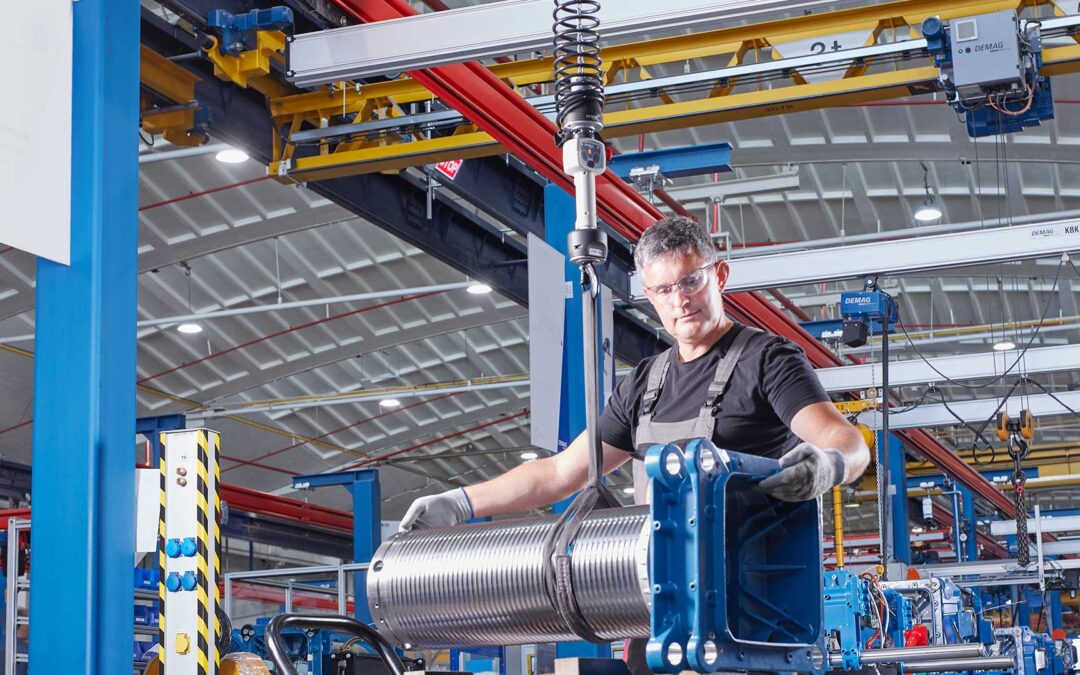
Electric vehicle battery assembly has created an ergonomic crisis that traditional material handling equipment cannot solve. Battery packs for passenger vehicles weigh between 454 and 900 kilograms, while individual modules requiring repeated handling throughout shifts weigh 20 to 70 kilograms each. The National Institute for Occupational Safety and Health establishes 51 pounds as the maximum recommended lift under ideal conditions, yet battery production demands workers handle components far exceeding this threshold hundreds of times daily. Investing in a high-quality industrial manipulator is no longer a luxury but a necessity for meeting these rigorous production demands safely.
Zero-gravity lifting technology resolves this fundamental mismatch between human capability and EV manufacturing requirements. Pneumatic manipulators for automotive manufacturing use compressed air to counterbalance load weight, making heavy components feel weightless while preserving the precise positioning control that battery assembly demands. This technology has emerged as essential infrastructure for the wave of battery plants currently entering production across North America.
The Bureau of Labor Statistics reports that musculoskeletal disorders account for approximately 30 percent of workplace injuries requiring days away from work. In battery manufacturing environments combining heavy loads with repetitive motions, these injury risks intensify without proper ergonomic intervention. Zero-gravity lifting systems address both acute injury risks from excessive loads and cumulative strain from repetitive handling, protecting workers while enabling the production volumes EV market growth demands.
Understanding the Biomechanical Challenge
Battery component handling strains human biomechanics in ways that guarantee injuries without engineering controls. When workers lift loads manually, compressive forces on the spine increase dramatically with load weight and horizontal reach distance. The NIOSH lifting equation accounts for these factors, reducing recommended weight limits when conditions deviate from ideal positioning.
Battery module installation rarely permits ideal lifting conditions. Workers must reach into vehicle chassis, position components at awkward angles, and hold loads steady while fasteners are secured. These deviations from optimal positioning multiply spinal compression forces, accelerating disc degeneration and soft tissue damage even when individual lifts fall below NIOSH limits.
According to data from the National Council on Compensation Insurance, the average workers’ compensation claim for accidents occurring in 2022-2023 cost $47,316. Musculoskeletal injuries to the back and shoulders consistently rank among the most expensive claim categories. A single worker developing chronic back problems from repetitive battery handling can generate costs exceeding $100,000 through medical treatment, lost time, and disability payments.
The broader industry context amplifies these concerns. The industry boom detailed in [North America’s $250 Billion EV Battery Plant Boom Creates Unprecedented Material Handling Demand] means hundreds of thousands of workers will enter battery manufacturing roles over the coming decade. Without systematic ergonomic intervention, injury rates will scale proportionally, creating unsustainable workers’ compensation burdens and workforce availability constraints.

How Pneumatic Zero-Gravity Systems Work
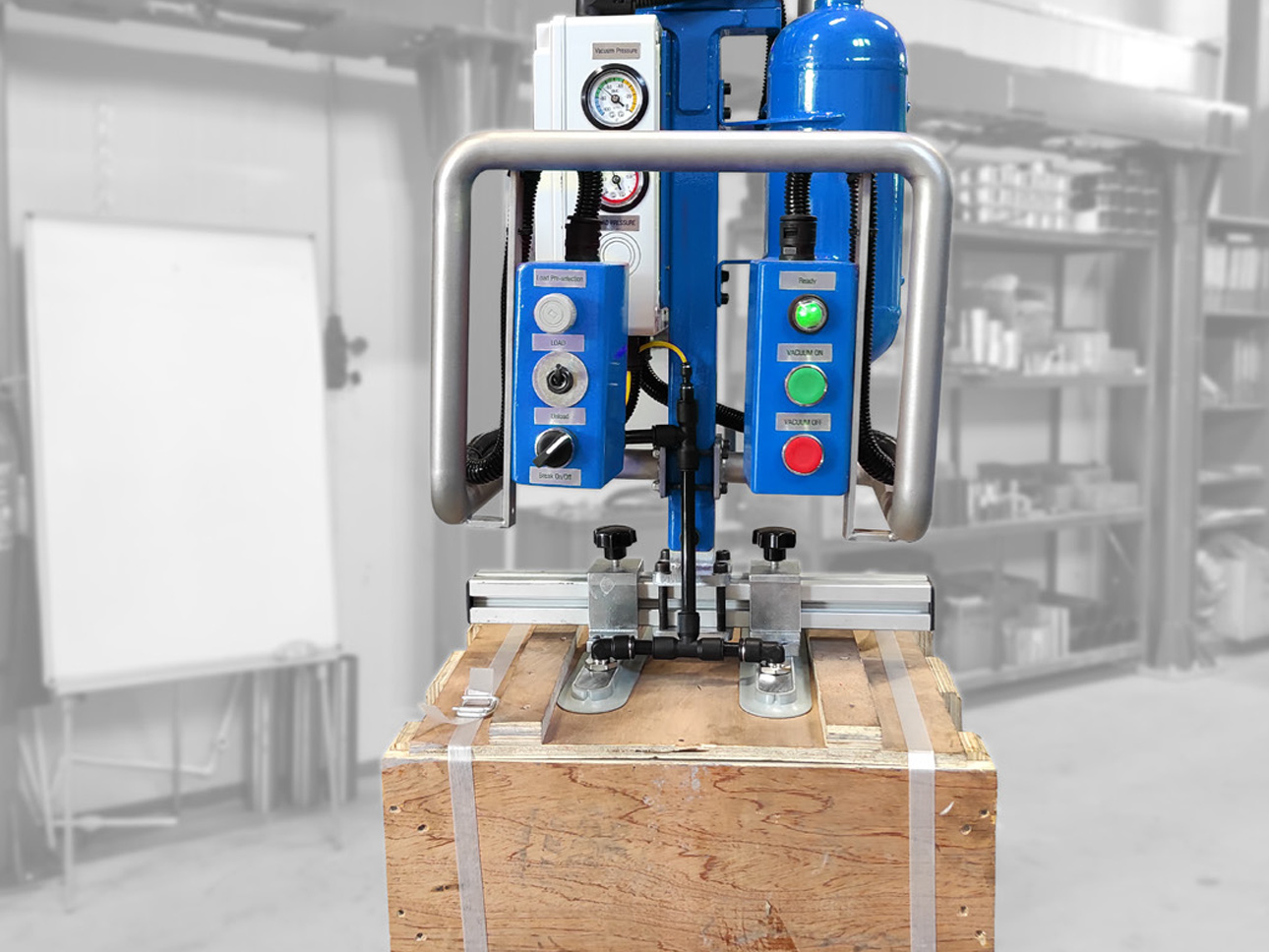
Pneumatic manipulators achieve zero-gravity handling through continuous air pressure regulation that counterbalances load weight. Sensors detect vertical forces and automatically adjust pressure to keep loads suspended at neutral buoyancy regardless of weight. Operators guide components using minimal force while the pneumatic system handles gravitational loads completely.
The mechanical design combines a vertical pneumatic cylinder with an articulating arm assembly providing multi-axis movement. This multi-functional capability is why pneumatic manipulators for mechanical engineering are increasingly used to perform complex assembly tasks that require both strength and delicacy. The system responds instantly to operator input, making heavy loads feel like extensions of the worker’s own hands.
Unlike electric hoists requiring button controls, pneumatic manipulators respond to direct physical guidance. This intuitive operation preserves the human judgment and fine motor control that battery assembly requires. Workers can feel resistance when components contact surfaces, adjust approach angles in real-time, and execute precise placements that automated systems cannot replicate economically.
Load capacity ranges from small battery cells weighing a few kilograms to complete vehicle battery packs exceeding 1,500 kilograms. The same operational principles apply across this range, with system sizing scaled to application requirements. This flexibility enables standardized training and operational procedures across diverse battery manufacturing tasks.
Precision Requirements in Battery Manufacturing
Battery assembly tolerances leave no margin for handling errors. Cell-to-cell connections require alignment accuracy measured in millimeters. Module insertion into pack housings demands precise angular positioning to prevent connector damage. Furthermore, the need for speed means that pneumatic manipulators for packaging operations are often integrated at the end of the line to manage the high-velocity transition from assembly to shipping.
Dropped or impacted battery cells may sustain internal damage invisible during assembly inspection. Compromised cells can later experience thermal events under charging or operational stress, creating warranty liability and safety risks that extend far beyond initial manufacturing costs. Material handling equipment must prevent not only injuries but also product damage that manifests months or years after production.
Zero-gravity pneumatic systems excel at preventing impact damage because operators maintain direct tactile feedback throughout handling operations. Unlike overhead cranes where loads swing freely, pneumatic manipulators move only in response to deliberate operator input. Components cannot drop unexpectedly because the pneumatic system maintains continuous lift regardless of operator action or inaction.
This control precision enables assembly approaches impossible with traditional handling methods. Workers can rotate battery modules during insertion, make micro-adjustments to alignment, and gently seat components against mating surfaces with controlled force. The result is faster assembly cycles and higher first-pass quality compared to crane-based handling requiring multiple positioning attempts.
Integration with Battery Production Lines
Modern battery plants organize production around continuous flow principles requiring material handling equipment that integrates seamlessly with line operations. Pneumatic manipulator systems mount at individual workstations, providing dedicated lifting capability where workers need it without requiring overhead crane infrastructure spanning entire facilities.
Workstation-specific installation reduces infrastructure costs compared to facility-wide crane systems. Each pneumatic manipulator serves a defined work envelope appropriate to its station’s tasks, enabling optimal sizing and configuration. Facilities can add or relocate workstations as production requirements evolve without restructuring centralized material handling infrastructure.
Cycle time consistency proves critical in battery production where stations must synchronize to maintain line flow. Pneumatic manipulators deliver consistent operation regardless of ambient temperature, operator fatigue, or load variations within rated capacity. This predictability simplifies production planning and prevents bottlenecks that disrupt downstream operations.
Understanding how suppliers throughout the value chain are adapting their operations provides essential context. Exploring how [Automotive Suppliers Face Ergonomic Compliance Pressure as EV Production Scales] reveals the cascade of material handling requirements flowing from OEM facilities through component suppliers, creating market demand that spans the entire EV manufacturing ecosystem.
Workforce Protection and Productivity Gains
Zero-gravity lifting technology generates returns through both injury prevention and productivity enhancement. Workers using pneumatic manipulators maintain consistent output throughout shifts rather than slowing as fatigue accumulates. This sustained performance increases daily throughput without requiring additional labor or extended hours.
Injury prevention benefits extend beyond direct medical and compensation costs. OSHA recordable injuries trigger investigations consuming management time, may prompt regulatory scrutiny, and can damage facility reputation in tight labor markets. Workers increasingly research employer safety records before accepting positions, making injury prevention a recruiting advantage.
The National Safety Council calculated the total cost of work injuries in 2023 at $176.5 billion, with cost per medically consulted injury averaging $43,000. These figures represent national averages; manufacturing environments with heavy lifting requirements typically experience higher injury rates and costs. Each prevented musculoskeletal injury represents substantial cost avoidance.
Workforce availability constraints amplify the importance of protecting existing workers. Battery plants competing for limited labor pools cannot afford preventable injuries that remove trained workers from production. Ergonomic equipment investments preserve workforce capacity while demonstrating employer commitment to worker wellbeing, supporting both retention and recruiting objectives.
Thema North America: Your Partner in EV Manufacturing Excellence
Thema North America specializes in pneumatic manipulator systems engineered for the precision demands of battery and automotive manufacturing. Our Italian-designed equipment combines decades of ergonomic engineering expertise with material handling solutions specifically configured for EV component weights and positioning requirements.
Our Services Include:
- Pneumatic Manipulators for Packaging Operations -High-speed, zero-gravity lifting solutions designed to handle packaging loads from 60 kg to 1,850 kg (4,078 lbs) with absolute precision.
- Custom End Effector Design – Application-specific tooling engineered for battery modules, packs, and components
Ready to Optimize Your EV Production Line? Contact Thema North America to discuss how zero-gravity lifting technology can transform your battery assembly operations.
Works Cited
“OSHA Procedures for Safe Weight Limits When Manually Lifting.” Occupational Safety and Health Administration, U.S. Department of Labor, 4 June 2013, www.osha.gov/laws-regs/standardinterpretations/2013-06-04-0. Accessed 16 Dec. 2025.
“Work Injury Costs.” Injury Facts, National Safety Council, injuryfacts.nsc.org/work/costs/work-injury-costs/. Accessed 16 Dec. 2025.
Related Articles
- [North America’s $250 Billion EV Battery Plant Boom Creates Unprecedented Material Handling Demand]
- [Automotive Suppliers Face Ergonomic Compliance Pressure as EV Production Scales]