
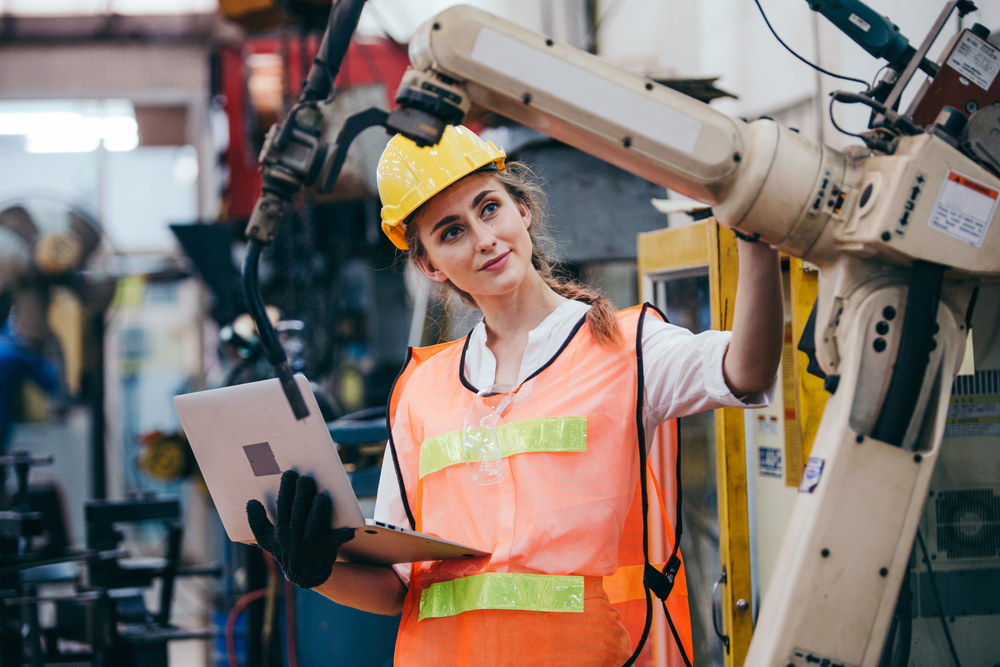
American manufacturing faces a safety reckoning. Workplace injuries cost U.S. businesses an estimated $167 billion in 2022 alone, according to the Brookings Institution. As regulatory pressure intensifies and workers’ compensation premiums climb, plant managers across North America are investing heavily in Pneumatic Manipulators: Durable and Efficient Material Handling Solutions that eliminate the ergonomic hazards responsible for the largest category of manufacturing injuries.
The numbers demand attention. The Bureau of Labor Statistics reported 2.6 million nonfatal workplace injuries and illnesses in 2023, with manufacturing accounting for 355,800 of those cases. Musculoskeletal disorders, sprains, strains, and back injuries stemming directly from manual material handling represent 30 percent of all days-away-from-work cases in the private sector. These aren’t abstract statistics. They represent workers who cannot lift their children, employees facing months of rehabilitation, and families dealing with reduced income during recovery periods.
According to the Bureau of Labor Statistics, manufacturing recorded an injury and illness rate of 2.8 cases per 100 full-time equivalent workers in 2023. The Brookings Institution calculates that workplace injuries resulted in roughly 75 million lost workdays in 2022, imposing costs that extend far beyond direct medical expenses to include lost productivity, administrative burden, and replacement worker training. Implementing a high-performance industrial manipulator is the most effective way to address these systemic issues.
Key Takeaways
- Workplace injuries cost U.S. businesses an estimated $167 billion in 2022 alone (Brookings Institution).
- Pneumatic manipulators use a simple piston-and-relay-valve system that balances load weight automatically — no software or complex controls.
- Rising regulatory pressure and workers’ comp premiums are accelerating adoption of engineered lifting equipment.
- Pneumatic, hydraulic and electric manipulators each suit different applications — food processing, automotive and packaging have different needs.
- Capital investment in equipment is increasingly justified by avoided injury costs and premium reductions, not just productivity gains.
The Hidden Costs Driving Equipment Investment
Insurance premiums tell only part of the story. When a manufacturing worker suffers a back injury from lifting heavy materials, the immediate workers’ compensation claim represents perhaps 20 percent of actual costs. Indirect expenses—overtime for replacement workers, production delays, quality issues from inexperienced operators, management time devoted to incident investigation—multiply the financial impact several times over. The National Safety Council reports that medically consulted workplace injuries average $43,000 per incident, while the National Council on Compensation Insurance puts the average workers’ compensation claim at $47,316 for accidents occurring in 2022-2023.
Manufacturing facilities increasingly recognize that traditional approaches to injury prevention have reached their limits. Safety training, while essential, cannot change the fundamental physics of lifting heavy loads repeatedly throughout an eight-hour shift. Administrative controls like job rotation distribute ergonomic stress across more workers but do not eliminate it. Personal protective equipment offers no meaningful protection against the cumulative strain of manual material handling. These solutions are specifically tailored for various industries, ensuring that the equipment meets the unique hygiene or safety standards of each sector.
Engineering controls—redesigning work tasks to eliminate hazards rather than merely managing them—represent the preferred approach under OSHA guidelines. The agency’s ergonomics resources specifically recommend mechanical lifting devices as primary controls for reducing musculoskeletal disorder risk. Pneumatic manipulators embody this engineering control philosophy by making heavy loads effectively weightless, allowing operators to guide materials precisely without bearing their physical weight.
Understanding how specific lifting technologies address different manufacturing challenges requires examining the engineering principles behind zero-gravity material handling systems. The differences between pneumatic, hydraulic, and electric manipulators matter significantly for food processing, automotive, and packaging applications where operational requirements vary substantially, as explored in Zero-Gravity Lifting Technology Addresses Manufacturing’s MSD Epidemic.
Why Pneumatic Systems Lead the Market
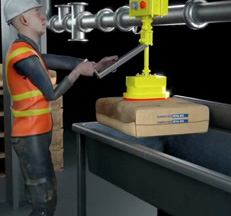
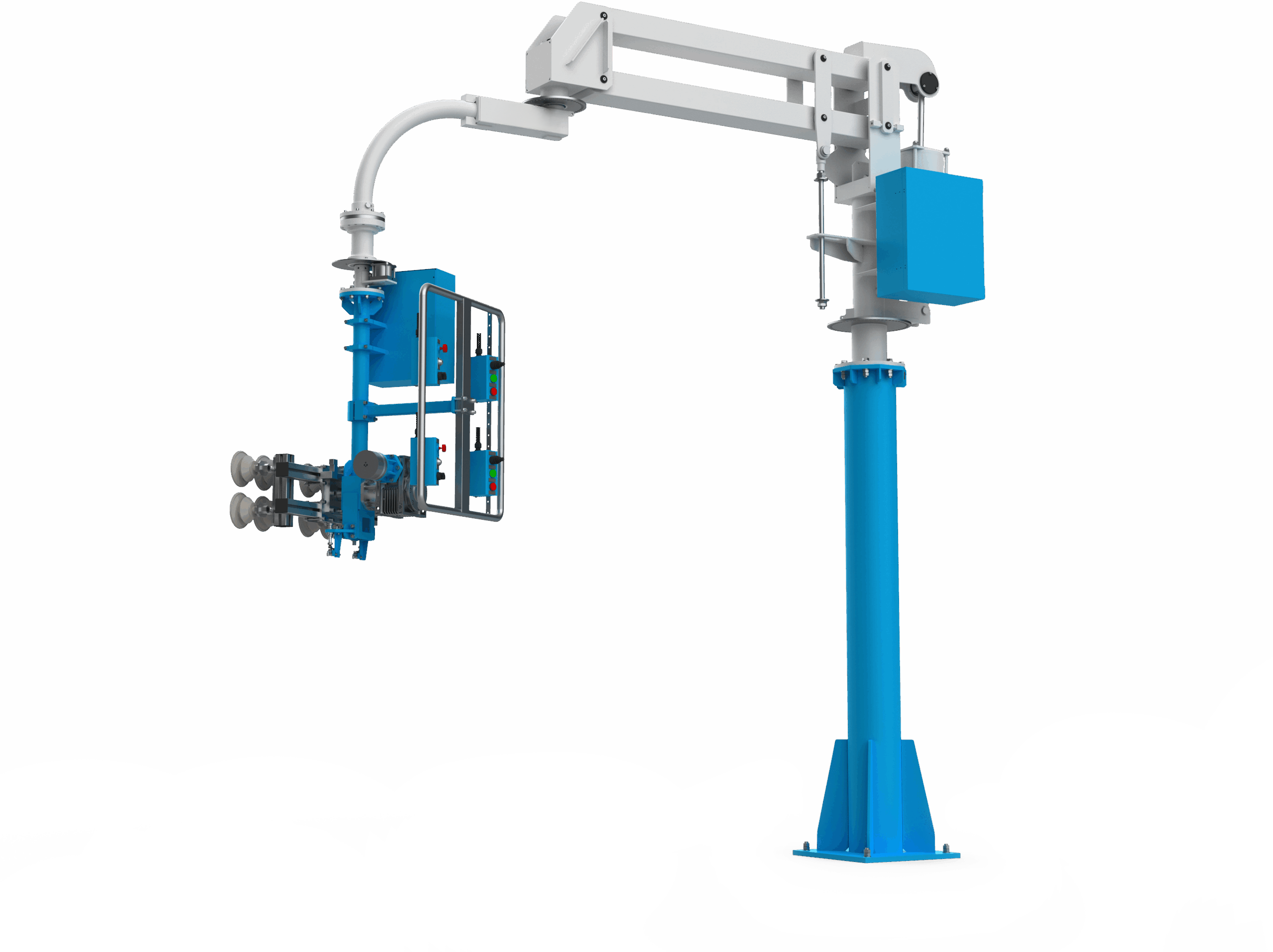
Pneumatic manipulators operate on elegantly simple principles that deliver exceptional reliability in demanding industrial environments. A pneumatic piston and relay valve automatically balance load weight, with two integrated air circuits creating smooth vertical movement. When operators apply upward force, air pressure increases to lift loads effortlessly. Downward force releases air for controlled descent. Without operator input, the system locks the position automatically.
This pure pneumatic technology means no software complications, no electrical failures from factory floor contamination, and maintenance requirements that production technicians can handle without specialized training. Systems running exclusively on compressed air—already available in virtually every manufacturing facility—eliminate the electrical hazards that complicate equipment use in explosive atmospheres or wet environments common in food processing and chemical handling.
The operational benefits translate directly to productivity metrics that justify capital investment. Workers freed from physical fatigue maintain consistent output throughout shifts rather than slowing as muscles tire. Reduced injury-related absenteeism improves scheduling predictability and eliminates overtime costs for coverage. Lower turnover preserves training investments and institutional knowledge.
Modern pneumatic manipulators accommodate load capacities from 60 kilograms to 1,500 kilograms with reaches extending to 6 meters, covering the vast majority of manufacturing material handling requirements. Custom gripper solutions—vacuum systems for bags and boxes, jaw grippers for clamping irregular shapes, expanding mandrels for internal grip on rolls and drums—ensure precise handling for specific product characteristics.
Regulatory Pressure Accelerates Adoption
OSHA continues issuing ergonomic hazard alert letters and General Duty Clause citations to manufacturers with documented musculoskeletal disorder problems. While Congress rescinded the original comprehensive ergonomics rule in 2001, employers retain legal obligations under Section 5(a)(1) of the OSH Act to maintain workplaces free from recognized serious hazards. The Occupational Safety and Health Administration states clearly that these obligations exist whether or not voluntary guidelines apply to specific industries.
The practical reality facing manufacturing leadership is straightforward: documented injury patterns create enforcement exposure, and engineering controls demonstrably eliminate that exposure. Pneumatic Manipulators: Durable and Efficient Material Handling Solutions provide objective evidence of hazard abatement that satisfies regulatory requirements while delivering operational benefits that improve competitive position regardless of compliance considerations.
For facilities evaluating material handling equipment investments, understanding how labor market dynamics intersect with safety requirements reveals why manufacturing automation has become essential rather than optional. The workforce challenges reshaping North American manufacturing compound injury-related productivity losses in ways that demand systematic solutions, as detailed in North America’s Material Handling Labor Gap Forces Automation Innovation.
Investment Returns That Justify Capital Expenditure
Manufacturing executives evaluating industrial manipulator investments find compelling financial justification beyond injury cost avoidance. Reduced injury claims lower workers’ compensation experience modification rates, directly reducing insurance premiums over three-year rating periods. Decreased turnover eliminates recruiting and training costs for replacement workers. Improved throughput increases revenue without proportional labor cost increases.
The capital investment required for pneumatic manipulator systems compares favorably to alternatives. Robotic automation offers greater autonomy but costs significantly more and requires specialized programming and maintenance expertise. Exoskeletons assist individual workers but do not eliminate lifting forces and require ongoing replacement as units wear. Pneumatic manipulators deliver the core benefit—making heavy loads weightless—at price points accessible to small and medium manufacturers.
Installation timelines add to the value proposition. Typical pneumatic manipulator deployments are complete within one to two days, including operator training. Column, overhead, or floor mounting options accommodate existing facility layouts without expensive infrastructure modifications. Systems arrive with CE and ATEX certifications, eliminating compliance documentation burdens.
The manufacturing safety crisis demands solutions that work. Pneumatic manipulators represent proven technology with decades of industrial deployment demonstrating effectiveness. As injury costs climb and regulatory attention intensifies, the question for manufacturing leadership becomes not whether to invest in engineering controls but how quickly to implement them.
THEMA North America: Your Partner in Ergonomic Material Handling
THEMA North America delivers European precision engineering with North American responsiveness, providing pneumatic manipulators that make heavy loads feel weightless. Our systems serve automotive, food and beverage, packaging, and industrial manufacturing applications throughout the continent.
Our Services Include:
- Pneumatic Manipulators: Durable and Efficient Material Handling Solutions – Zero-gravity lifting systems from 60 kg to 1,850 kg (4,078 lbs) capacity with custom gripper solutions
- Site inspection, custom design, and seamless integration services.
Ready to Transform Your Operations? Contact THEMA North America to discuss how pneumatic manipulators can reduce injuries, improve productivity, and strengthen your competitive position.
Works Cited
“Ergonomics – Overview.” Occupational Safety and Health Administration, U.S. Department of Labor, www.osha.gov/ergonomics. Accessed 16 Dec. 2025.
“IIF Home.” Bureau of Labor Statistics, U.S. Department of Labor, www.bls.gov/iif/. Accessed 16 Dec. 2025.
Related Articles
{“@context”:”https://schema.org”,”@type”:”FAQPage”,”mainEntity”:[{“@type”:”Question”,”name”:”How much do workplace injuries cost U.S. manufacturers?”,”acceptedAnswer”:{“@type”:”Answer”,”text”:”The Brookings Institution estimates workplace injuries cost U.S. businesses $167 billion in 2022 alone, a major driver of the shift toward engineered lifting equipment.”}},{“@type”:”Question”,”name”:”Why do pneumatic manipulators lead the material handling market?”,”acceptedAnswer”:{“@type”:”Answer”,”text”:”They operate on simple, reliable principles: a pneumatic piston and relay valve automatically balance load weight using integrated air circuits, requiring no software or complex electronic controls.”}},{“@type”:”Question”,”name”:”How does regulatory pressure affect equipment investment decisions?”,”acceptedAnswer”:{“@type”:”Answer”,”text”:”Rising regulatory scrutiny and climbing workers’ compensation premiums are pushing manufacturers to treat ergonomic equipment as a cost-avoidance investment rather than a discretionary expense.”}},{“@type”:”Question”,”name”:”Should I choose pneumatic, hydraulic, or electric manipulators?”,”acceptedAnswer”:{“@type”:”Answer”,”text”:”It depends on the application. Food processing, automotive and packaging operations each have different requirements around sanitation, precision and duty cycle that favor different manipulator types.”}},{“@type”:”Question”,”name”:”What financial returns justify the capital expense of manipulators?”,”acceptedAnswer”:{“@type”:”Answer”,”text”:”Returns come from avoided injury costs, lower workers’ compensation premiums, reduced turnover, and productivity gains, which together typically offset the equipment cost within one to two years.”}},{“@type”:”Question”,”name”:”How do pneumatic manipulators achieve zero-gravity lifting?”,”acceptedAnswer”:{“@type”:”Answer”,”text”:”Applying upward force increases air pressure to lift the load, while downward force releases air to lower it, letting operators guide heavy materials without bearing their weight.”}}]}