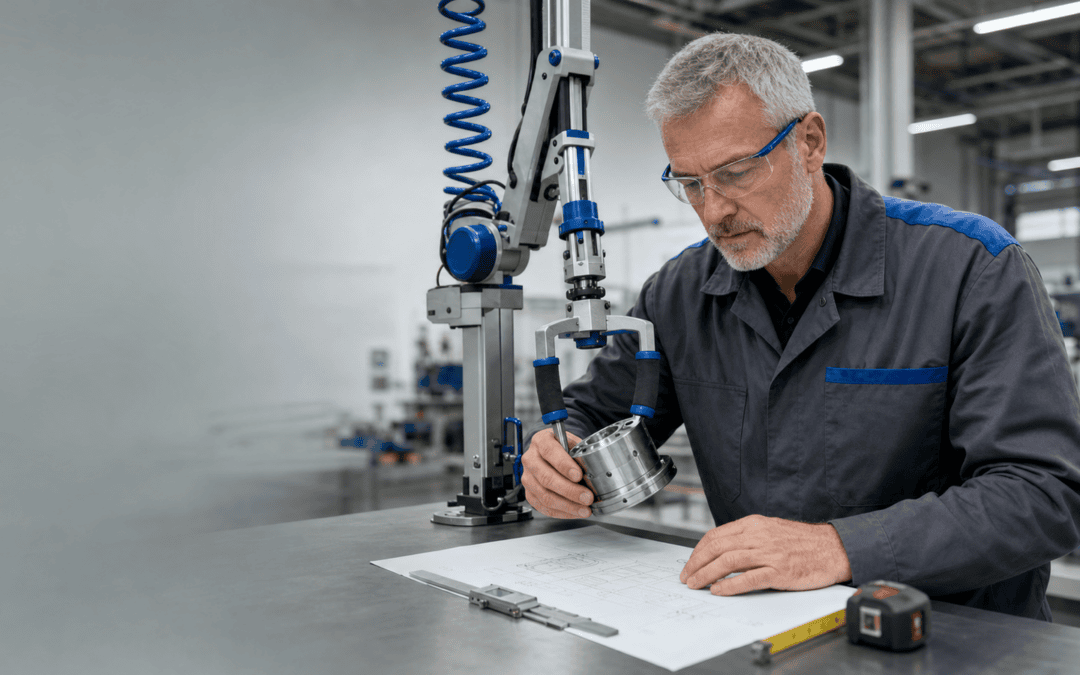
by Christopher Boos | Aug 13, 2026 | Uncategorized
If you want a pneumatic manipulator quote that is actually comparable across vendors, your specification has to describe more than payload. Buyers should document the real load range, pick and place heights, horizontal reach, rotation needs, cycle rate, mounting...
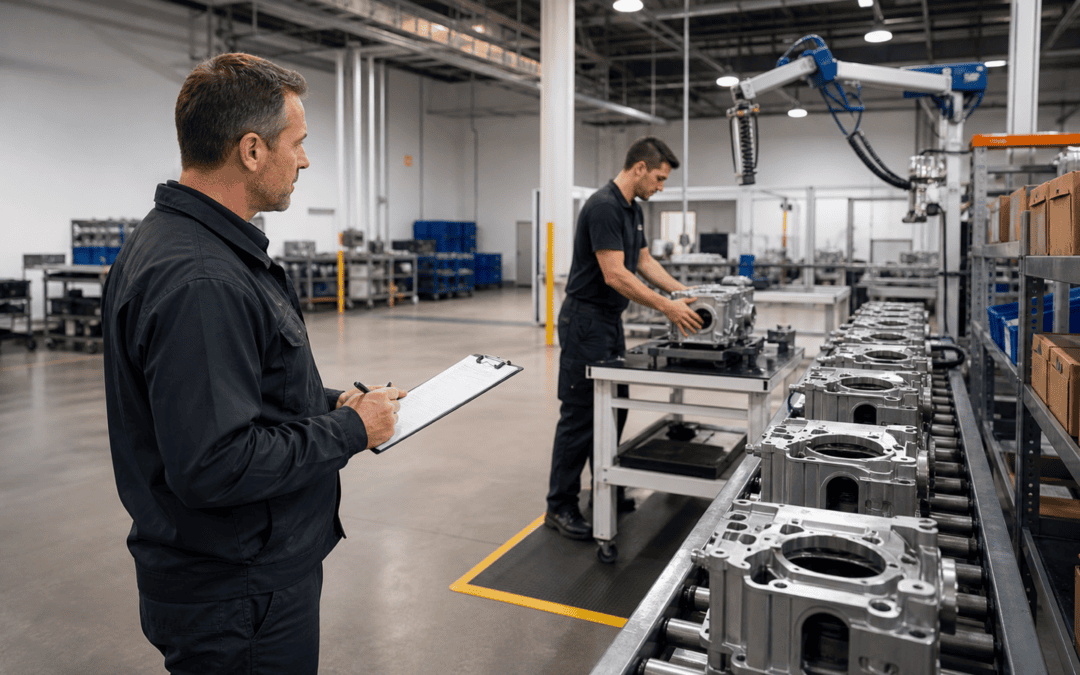
by Christian Tull | Aug 12, 2026 | Uncategorized
Manual handling becomes a throughput bottleneck when operators spend more time stabilizing, lifting, regripping, or waiting on a difficult load than advancing the process. If a task relies on two-person coordination, awkward reaches, repeated twisting, or one...
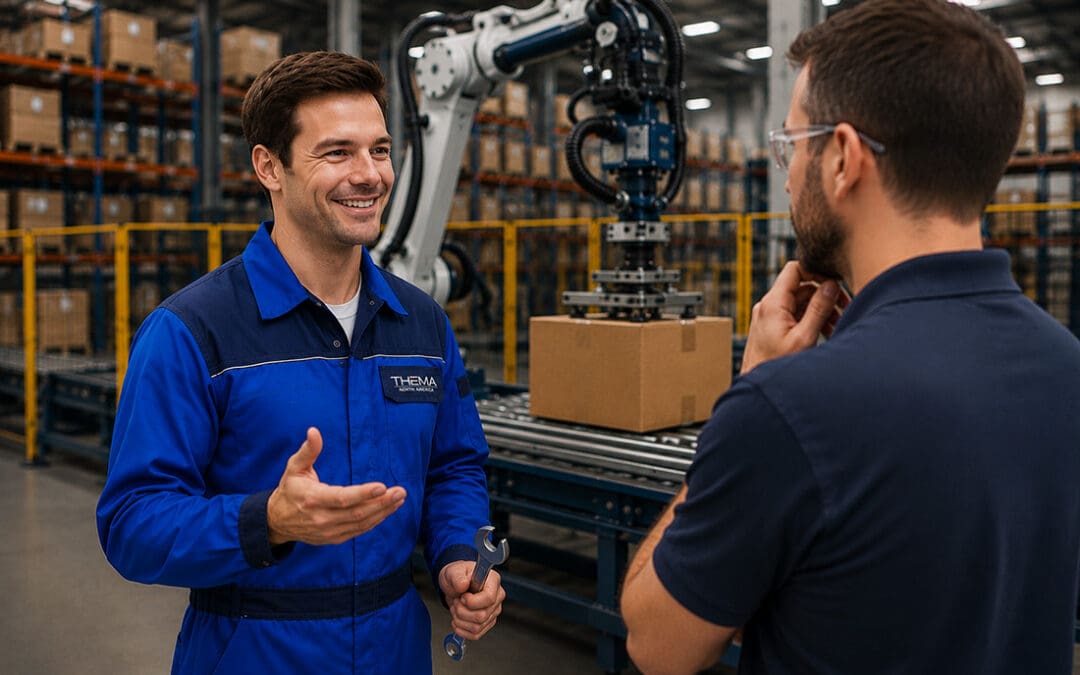
by Christopher Boos | Aug 3, 2026 | Uncategorized
Short answer: A pneumatic manipulator is usually a strong fit in automotive assembly when the job combines a heavy or awkward part, repeated cycles, controlled placement, and a need for human-guided positioning rather than fully fixed automation. Typical candidates...
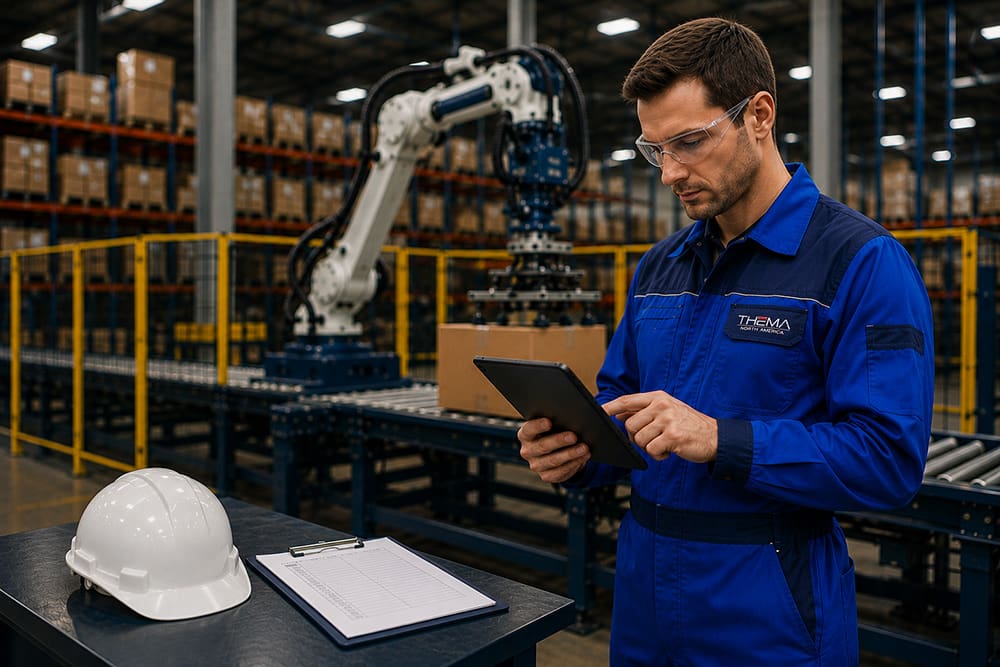
by Christian Tull | Aug 2, 2026 | Uncategorized
If you are selecting an industrial manipulator, start with the task instead of the machine. The right mount depends on where the load starts, where it has to end, how often the lift repeats, how much reach and twist the operator faces, and whether the work cell stays...
by Christopher Boos | Aug 1, 2026 | Uncategorized
If you are considering a manipulator, start with an ergonomic assessment of the task before you start comparing equipment. A useful assessment documents how material moves, where operators lift, reach, twist, and repeat motions, and whether the workflow is stable...
by Christian Tull | Jul 31, 2026 | Uncategorized
The best end-of-arm tooling is the tool that matches how the part must be gripped, rotated, protected, and released in the real workstation. Start with the load’s geometry, surface, center of gravity, part variation, required motion, and environment, then choose...