
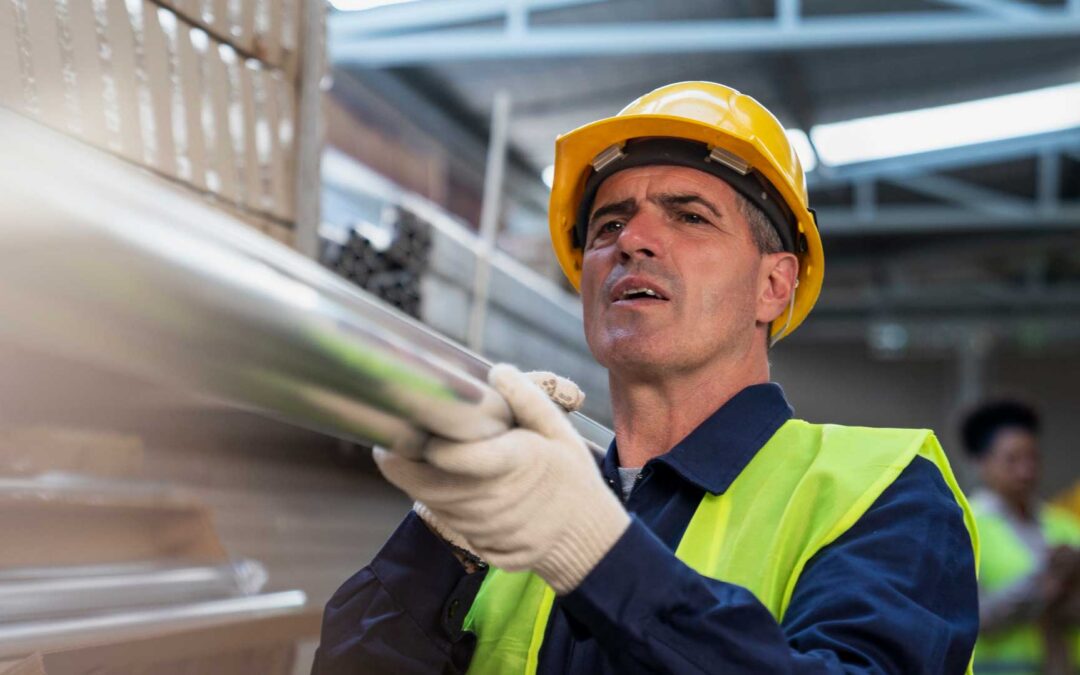
Ergonomic material handling solutions have emerged as the best tool manufacturers have for cutting workers comp claims. Unlike training programs or stretching breaks, ergonomic material handling solutions remove injury risks at the source. For example, when a pneumatic manipulator handles a 200-pound part, no worker needs to lift it. Therefore, no one strains a back doing so.
Indeed, this shift from behavior-based safety to engineering-based safety is the biggest change in workplace safety in decades. Furthermore, the data backing ergonomic material handling solutions is clear. As a result, plants that buy the right gear see big drops in injury rates and insurance costs.
Key Takeaways
- Ergonomic material handling solutions cut claims by removing the injury risk at the source, not by training workers to lift better.
- A single back claim can top $40,000 in direct costs, with indirect costs pushing it to $120,000 or more.
- A pneumatic manipulator system typically runs $30,000–$80,000 depending on size and application.
- Most installations pay for themselves in 18 months or so by preventing just one or two major injuries.
- Systems fit into existing work cells with minimal disruption — and cost far less than full robotic automation.
Why Ergonomic Material Handling Solutions Work Better Than Training
For decades, safety programs have asked workers to behave their way out of injury. They teach lifting form, post safety signs, and run regular training. However, these steps have a clear ceiling. Even so, well-trained workers still get tired, get distracted, or face speed pressure that breaks safe habits over time.
In contrast, ergonomic material handling solutions work in a different way. According to the Occupational Safety and Health Administration, an ergonomic process can lower MSD risk in high-risk fields like manufacturing, food processing, and warehousing. Notably, the OSHA hierarchy of controls puts engineering above training and PPE, since gear does not depend on human behavior.
Specifically, ergonomic material handling solutions hit the root causes of muscle and joint injuries. As a result, they cut heavy lifting, reduce repetitive motion, remove awkward postures, and lower the force workers must use. Therefore, when the strain goes away, the injury risk goes away too.
What NIOSH Recommends for Ergonomic Material Handling Solutions
The National Institute for Occupational Safety and Health put out clear guidelines for manual material handling that speak right to plant work. The guidelines stress that good ergonomic material handling solutions can lower the strain of lifting tasks. Consequently, this lowers both how often and how badly muscle injuries happen.
Above all, NIOSH points to several types of fixes that work:
- Cut load weight or size
- Remove long carries
- Take awkward postures out of the work cycle
- Use machines for lifting and lowering
- Lower repeats through automation
Among these, machines bring the biggest gain. For instance, pneumatic manipulators, lift tables, and vacuum lifters all turn manual lifting into guided moves. As a result, workers still place parts with care, while the gear takes the load.
Beyond injury cuts, NIOSH research shows that ergonomic material handling solutions also boost output. For example, workers tire less. Quality climbs because no one is fighting load weight. Cycle times shrink because parts go where they belong on the first try. The article [Manufacturing Workers Compensation Claims: The $13.7 Billion Material Handling Crisis] covers the full money case for these tools.
Pneumatic Manipulators: The Backbone of Ergonomic Material Handling Solutions
Pneumatic manipulators are one of the most flexible types of ergonomic material handling solutions. Specifically, these arm systems use air pressure to move loads from a few pounds up to several tons. As a result, the operator guides the load with little force while the arm holds the weight.
The uses span just about every plant type:
- Auto: moving engines, gear boxes, and body panels
- Aerospace: handling parts and engine pieces
- Food: moving bulk bins and packaging
- Heavy plants: placing castings, welds, and finished goods
- Pharma: moving drums, totes, and process gear
Furthermore, modern pneumatic manipulators come with smart tools that grip, turn, and place loads on their own. As a result, operators move parts with fingertip pressure, not back muscle. In short, the gear handles weight while people handle choices.
In addition, pneumatic manipulators fit right in with current production. For instance, they go into work cells with little change to the lines around them. Therefore, they cost much less than full robot setups.
Calculating Return on Ergonomic Material Handling Solutions
At first, plant leaders often pause at the up-front cost of ergonomic material handling solutions. However, the math tends to favor the buy when run the right way. For example, a single back claim can top $40,000 in direct costs. Therefore, indirect costs push that to $120,000 or more.
By contrast, a pneumatic system might run $30,000 to $80,000 based on size and use. Even so, a basic install often pays for itself by stopping one or two big injuries. Consequently, most plants see payback in 18 to 36 months from direct savings alone.
Beyond direct cost cuts, ergonomic upgrades bring more money wins. For instance, insurance rates drop as your EMR gets better. Likewise, workers stay longer because they like jobs that don’t break their bodies. As a result, hiring gets easier in tight labor markets. In addition, output goes up as workers keep energy through full shifts.
For more on the muscle and joint issues these tools stop, the article [Musculoskeletal Disorders in Manufacturing: The Workers Comp Claim Driver Nobody Talks About] covers the harm types these tools target.
Best Practices for Ergonomic Material Handling Solutions
Above all, rolling out ergonomic material handling solutions takes more than buying gear. In fact, plants that get the best results follow a few key steps.
First, they run a full check before they pick gear. Specifically, these checks find the strain that drives injury, the body parts most hurt, and the work flow around the risky jobs. Without a good check, even the best gear may miss the real problem.
Second, they bring workers right into the choice and install plan. After all, operators know their jobs better than anyone. As a result, they can flag space issues, work flow snags, and training needs that engineers might miss.
Third, they put money into a clean install, training, and care over time. For instance, gear set up wrong gives less gain. By contrast, gear that is well kept stops injuries for years.
THEMA North America: Your Material Handling Solutions Partner
At THEMA North America, we design and build pneumatic manipulators that turn manual lifting into safe, smooth moves. As a result, our tools help plants in auto, aerospace, food, and heavy fields cut workers comp claims while they boost output.
Our Services Include:
- Pneumatic Manipulators – Custom-built material handling for any load
- Maintenance Programs – Care plans that protect your buy
Ready to Engineer Out Your Injury Risk? Contact THEMA North America to talk about ergonomic material handling solutions for your plant.
Works Cited
“Ergonomic Guidelines for Manual Material Handling.” National Institute for Occupational Safety and Health, DHHS (NIOSH) Publication No. 2007-131, Apr. 2007, www.cdc.gov/niosh/docs/2007-131/. Accessed 28 Apr. 2026.
“Ergonomics – Overview.” Occupational Safety and Health Administration, U.S. Department of Labor, www.osha.gov/ergonomics. Accessed 28 Apr. 2026.
Related Articles
- [Manufacturing Workers Compensation Claims: The $13.7 Billion Material Handling Crisis]
- [Musculoskeletal Disorders in Manufacturing: The Workers Comp Claim Driver Nobody Talks About]
{“@context”:”https://schema.org”,”@type”:”FAQPage”,”mainEntity”:[{“@type”:”Question”,”name”:”How much does a pneumatic manipulator system cost?”,”acceptedAnswer”:{“@type”:”Answer”,”text”:”Typically $30,000 to $80,000 depending on size and application, often less than a single serious back-injury claim once indirect costs are included.”}},{“@type”:”Question”,”name”:”What is the ROI on ergonomic material handling equipment?”,”acceptedAnswer”:{“@type”:”Answer”,”text”:”A single back claim can exceed $40,000 in direct costs and $120,000 or more once indirect costs are added. Most installations pay for themselves within about 18 months by preventing just one or two major injuries.”}},{“@type”:”Question”,”name”:”Why do engineering controls work better than safety training?”,”acceptedAnswer”:{“@type”:”Answer”,”text”:”Training relies on workers making the right choice under fatigue every time. Engineering controls remove the hazard entirely; if a manipulator lifts the 200-pound part, no one can strain a back lifting it.”}},{“@type”:”Question”,”name”:”Do pneumatic manipulators disrupt existing production lines?”,”acceptedAnswer”:{“@type”:”Answer”,”text”:”No. They are designed to integrate into existing work cells with minimal changes to surrounding equipment, and cost significantly less than full robotic automation.”}},{“@type”:”Question”,”name”:”What does NIOSH recommend for material handling safety?”,”acceptedAnswer”:{“@type”:”Answer”,”text”:”NIOSH’s hierarchy of controls favors eliminating or engineering out hazards over relying on training or personal protective equipment, which is exactly what ergonomic lifting equipment does for manual material handling.”}},{“@type”:”Question”,”name”:”How quickly can a manufacturer see payback on this equipment?”,”acceptedAnswer”:{“@type”:”Answer”,”text”:”Most plants see payback in roughly 18 to 24 months, driven primarily by avoided workers’ compensation claims and reduced lost-time injuries.”}}]}