
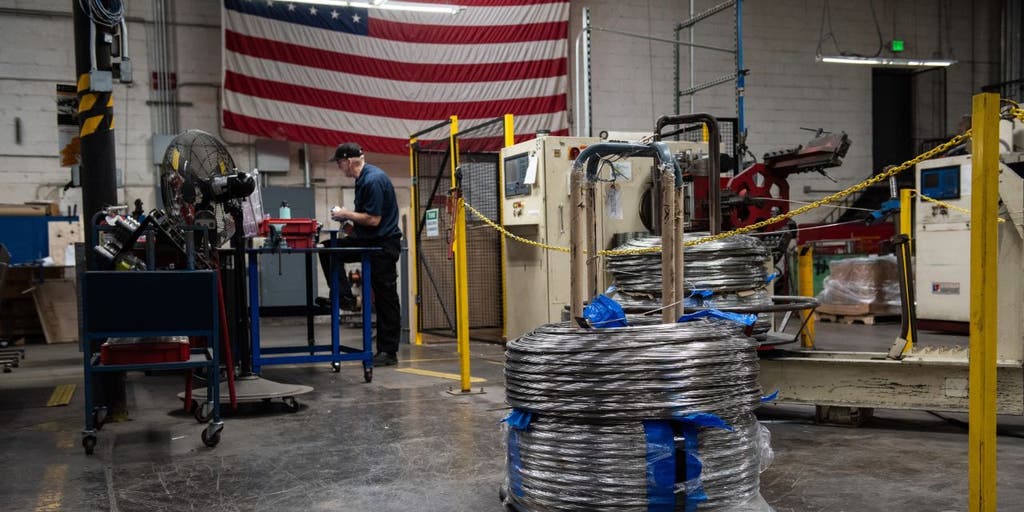
Manufacturing workers compensation claims are crushing American industry budgets. According to Liberty Mutual’s 2025 Workplace Safety Index, U.S. companies spend nearly $59 billion annually on serious workplace injuries. Furthermore, manufacturing workers compensation claims tied to overexertion from manual material handling top the list at $13.7 billion each year. As a result, manufacturing workers compensation claims have become the single largest controllable expense for many production facilities.
The pattern is painfully clear. Manufacturers ask workers to lift, push, pull, and carry components every shift. Eventually, bodies break down. Backs strain. Shoulders tear. Meanwhile, production stops while injured workers recover and claims accumulate. For decades, employers treated this cycle as an unavoidable cost of doing business. However, recent data is forcing a reckoning.
Key Takeaways
- Overexertion from manual material handling is the #1 driver of U.S. workplace-injury cost — $13.7 billion a year (Liberty Mutual 2025), with same-level falls adding $10.5 billion.
- Injured manufacturing workers now miss an average of 74 days per claim, up seven days in five years (Travelers).
- New hires are most at risk — 30% of manufacturing injury claims involve workers in their first 12 months.
- The real cost dwarfs the medical bill: OSHA puts indirect costs at 2–4× direct, so a $50k claim can truly cost $150k–$250k.
- Engineering controls like pneumatic manipulators remove the manual lift at its source — cutting these claims more reliably than training alone.
Why Manufacturing Workers Compensation Claims Keep Climbing
The numbers tell a sobering story. Travelers Insurance recently analyzed more than 2.6 million workers compensation claims spanning nine years. Their findings paint manufacturing as one of America’s riskiest sectors. Today, injured manufacturing workers miss an average of 74 days per claim. Notably, that figure has climbed seven days over the past five years.
Moreover, new hires face the highest injury risk. Travelers found that 30 percent of manufacturing injury claims involve workers in their first twelve months. First-year employees often lack the body conditioning that veterans develop over time. Combined with current labor shortages forcing rushed onboarding, this creates ideal conditions for injury.
Liberty Mutual’s 2025 Workplace Safety Index confirms that overexertion involving outside sources accounts for $13.7 billion in costs annually, primarily from manual material handling. Falls on the same level rank second at $10.5 billion. Together, these two categories alone consume nearly $25 billion each year. Consequently, that money cannot fund equipment upgrades, wage increases, or facility expansion.
The Real Cost Behind Each Manufacturing Workers Compensation Claim
A single workers compensation claim involves far more than the medical bill. Direct costs include doctor visits, surgeries, physical therapy, and indemnity payments while workers recover. However, indirect costs hit even harder, though employers frequently miss them.
When a trained operator goes out on injury, productivity drops immediately. Additionally, replacement workers need weeks to learn the job. Quality often suffers during the transition. Meanwhile, supervisors spend hours on paperwork, accident investigations, and compliance documentation. Insurance premiums rise. As a result, customer deliveries slip.
Indeed, OSHA estimates that indirect costs typically run two to four times the direct costs of a claim. Therefore, a $50,000 medical claim might actually cost a manufacturer $150,000 to $250,000 once all factors are counted. For a single shoulder surgery, that math looks brutal.
Even more concerning, soft-tissue injuries from material handling tend to recur. A worker who strains their back faces elevated re-injury risk for years afterward. Unfortunately, many never return to full capacity.
Material Handling: The Silent Driver Behind These Workers Compensation Claims
Manual material handling refers to lifting, lowering, pushing, pulling, carrying, or moving objects by hand. It sounds simple. However, this single activity drives the largest share of manufacturing workers compensation claims through musculoskeletal disorders.
According to data from the U.S. Bureau of Labor Statistics, musculoskeletal disorder cases account for roughly 30 percent of all days-away-from-work cases in private industry. Furthermore, the median worker loses 12 days per incident. In manufacturing settings, those numbers typically run even higher because the work is inherently physical.
Common manufacturing material handling injuries include lower back strains from repeated lifting, shoulder tears from overhead reaching, knee injuries from awkward postures, and carpal tunnel from repetitive gripping. Notably, these injuries rarely happen in a single dramatic moment. Instead, they accumulate over weeks, months, or years of cumulative trauma.
Understanding why MSDs dominate manufacturing injury data requires deeper analysis. The article [Musculoskeletal Disorders in Manufacturing: The Workers Comp Claim Driver Nobody Talks About] breaks down exactly how these injuries develop and why traditional safety approaches often miss them.
What’s Driving Premium Increases on Workers Compensation Claims
Workers compensation premiums for manufacturers continue rising for several reasons. First, medical costs outpace general inflation each year. Surgeries, prescription medications, and physical therapy all become more expensive. Second, claim durations stretch longer as workers report increasingly complex injuries.
Third, the experience modification rate (EMR) system penalizes employers who file frequent claims. Consequently, a higher EMR can double or triple insurance premiums for years after a difficult injury cycle. For mid-sized manufacturers, an EMR jump from 0.95 to 1.25 might mean tens of thousands in additional annual premiums.
Additionally, regulatory scrutiny is intensifying across the country. OSHA continues focusing enforcement attention on ergonomic hazards. Therefore, manufacturers who fail to address material handling risks now face not only claims but also potential citations.
Why Engineering Controls Beat Training Alone for Reducing Claims
For decades, manufacturers responded to material handling injuries primarily through training programs. They taught proper lifting technique, posted reminders about back safety, and enforced personal protective equipment use. While those measures help, they share a fundamental limitation. Specifically, they require workers to override the natural tendency toward shortcuts when fatigued or rushed.
Engineering controls work differently. Rather than depending on perfect human behavior, they remove the hazard at its source. When a manufacturer installs equipment that handles heavy loads mechanically, workers no longer need to lift those loads at all. As a result, the injury risk simply disappears.
Common engineering controls for material handling include pneumatic manipulators, powered conveyors, lift tables, vacuum lifters, and articulating jib cranes. The article [Ergonomic Material Handling Solutions: Engineering Out Workers Comp Claims] examines specific technologies that target the leading causes of manufacturing injuries.
THEMA North America: Your Material Handling Solutions Partner
At THEMA North America, we engineer material handling equipment that eliminates the manual lifting driving most manufacturing workers compensation claims. Our pneumatic manipulators handle loads from a few pounds to several tons, allowing operators to position heavy components precisely without strain.
Our Services Include:
- Pneumatic Manipulators – Durable, efficient material handling systems engineered for demanding production environments
- Industries We Serve – Custom solutions across automotive, aerospace, food processing, and heavy manufacturing
Ready to Reduce Your Workers Compensation Exposure? Contact THEMA North America to discuss how pneumatic manipulators can transform your operations.
Works Cited
“Occupational Injuries and Illnesses Resulting in Musculoskeletal Disorders (MSDs).” U.S. Bureau of Labor Statistics, Office of Compensation and Working Conditions, www.bls.gov/iif/factsheets/msds.htm. Accessed 28 Apr. 2026.
“US Companies Spend $50.87B per Year on the Top Ten Causes of Serious Workplace Injuries According to 2025 Liberty Mutual Workplace Safety Index.” Liberty Mutual Group, 15 July 2025, www.libertymutualgroup.com/about-lm/news/articles/us-companies-spend-50.87b-year-top-ten-causes-serious-workplace-injuries-according-2025-liberty-mutual-workplace-safety-index. Accessed 28 Apr. 2026.
Related Articles
- [Musculoskeletal Disorders in Manufacturing: The Workers Comp Claim Driver Nobody Talks About]
- [Ergonomic Material Handling Solutions: Engineering Out Workers Comp Claims]
{“@context”:”https://schema.org”,”@type”:”FAQPage”,”mainEntity”:[{“@type”:”Question”,”name”:”How much do manufacturing workers’ comp claims cost each year?”,”acceptedAnswer”:{“@type”:”Answer”,”text”:”Overexertion from manual material handling tops Liberty Mutual’s 2025 Workplace Safety Index at $13.7 billion annually. Falls on the same level add $10.5 billion, so together these two causes consume nearly $25 billion each year.”}},{“@type”:”Question”,”name”:”What is the most common cause of manufacturing injury claims?”,”acceptedAnswer”:{“@type”:”Answer”,”text”:”Manual material handling (lifting, lowering, pushing, pulling and carrying) drives most musculoskeletal-disorder claims. MSDs account for roughly 30% of all days-away-from-work cases, with a median of 12 lost days per incident.”}},{“@type”:”Question”,”name”:”How many days do injured manufacturing workers miss?”,”acceptedAnswer”:{“@type”:”Answer”,”text”:”An average of 74 days per claim, up seven days over the past five years, according to Travelers’ analysis of more than 2.6 million workers’ compensation claims.”}},{“@type”:”Question”,”name”:”Why are new manufacturing hires more likely to be injured?”,”acceptedAnswer”:{“@type”:”Answer”,”text”:”Travelers found 30% of manufacturing injury claims involve workers in their first 12 months. First-year employees lack body conditioning and are often rushed through onboarding amid labor shortages.”}},{“@type”:”Question”,”name”:”What is the true cost of a workers’ comp claim?”,”acceptedAnswer”:{“@type”:”Answer”,”text”:”OSHA estimates indirect costs run two to four times direct costs, so a $50,000 medical claim can actually cost a manufacturer $150,000 to $250,000 once lost productivity, retraining and higher premiums are counted.”}},{“@type”:”Question”,”name”:”How do pneumatic manipulators reduce workers’ comp claims?”,”acceptedAnswer”:{“@type”:”Answer”,”text”:”They handle heavy loads mechanically so operators position components without lifting, removing the overexertion hazard at its source rather than relying on perfect lifting technique.”}}]}