
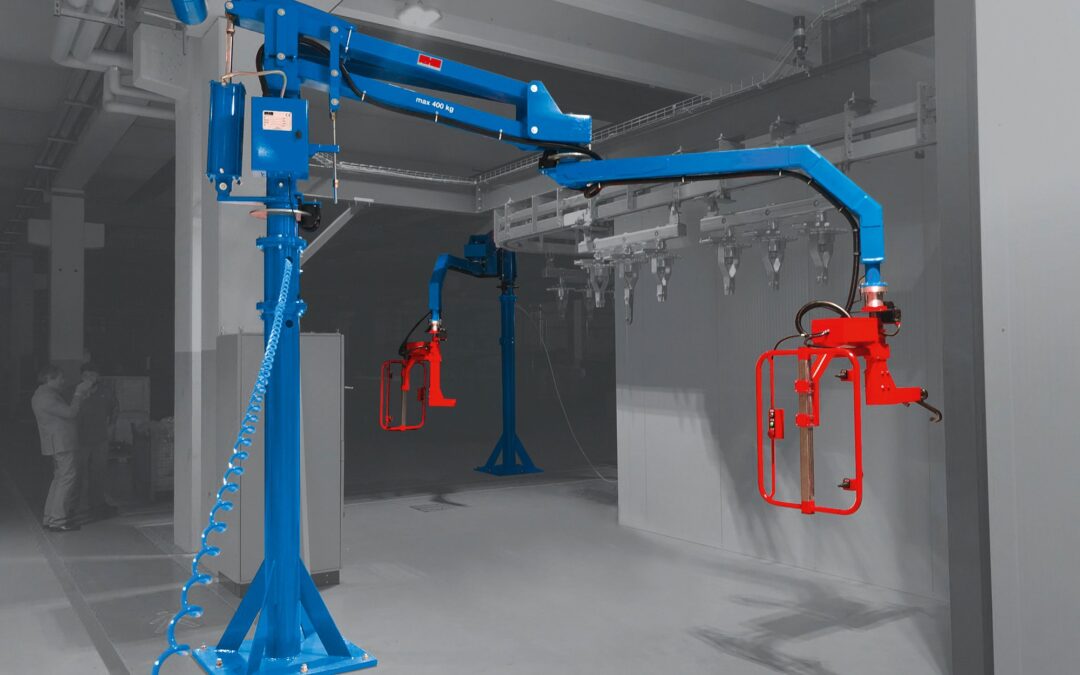
Musculoskeletal disorders represent manufacturing’s most persistent and costly injury category. Back injuries, shoulder strains, and repetitive motion damage account for more workplace disability claims than any other cause, creating a crisis that traditional safety approaches have failed to solve. Zero-gravity pneumatic lifting technology offers manufacturing facilities a fundamentally different approach, eliminating ergonomic hazards rather than merely managing worker exposure to them. Implementing a high-performance industrial manipulator allows companies to transition from reactive treatment to proactive prevention.
The scale of the problem demands attention. According to the Bureau of Labor Statistics, musculoskeletal disorders accounted for 30 percent of all days-away-from-work cases in the U.S. private sector in 2018, with 272,780 MSD cases recorded that year. In motor vehicle parts manufacturing specifically, research published in the International Journal of Industrial Ergonomics found that lifting and lowering tasks cause 81.6 percent of musculoskeletal disorder cases, with low back pain representing the most common complaint. These injuries do not result from acute accidents but from cumulative damage inflicted over weeks, months, and years of manual material handling.
Manual material handling remains a leading source of work-related musculoskeletal disorders and productivity loss across various industries. Tasks involving lifting loads from floor level, reaching above shoulder height, or handling awkward objects create biomechanical stresses that exceed human tissue tolerance when repeated frequently. Even loads well within traditional lifting guidelines cause cumulative damage when workers handle them hundreds of times daily.
The challenge intensifies as manufacturing workforces age. Tissue resilience decreases with age, while recovery time from minor strains increases. Workers in their forties and fifties—often the most experienced and valuable production employees—face elevated injury risk precisely when replacing their institutional knowledge becomes most difficult. Zero-gravity lifting technology addresses this demographic reality by eliminating the physical demands that older workers struggle to sustain.
Key Takeaways
- Musculoskeletal disorders cause roughly 30% of missed workdays in manufacturing — the most persistent, costly injury category.
- Back injuries, shoulder strains and repetitive-motion damage drive more disability claims than any other cause.
- Zero-gravity pneumatic lifting eliminates the physical load entirely rather than reducing it.
- Benefits are application-specific — different industries need different gripper and capacity configurations.
- ROI is measurable through avoided disability claims, reduced absenteeism and sustained productivity.
Understanding Zero-Gravity Pneumatic Principles
Zero-gravity lifting describes the operational characteristic of Pneumatic Manipulators: Durable and Efficient Material Handling Solutions that automatically balance load weight against pneumatic pressure. Operators guide loads through three-dimensional space using minimal force, typically five pounds or less, regardless of actual load weight. The system responds to operator input rather than requiring operators to support or control heavy materials directly.
The engineering relies on a relay valve that continuously adjusts pneumatic cylinder pressure based on operator movement. Upward force on the load triggers increased air pressure, lifting the material. Downward force releases pressure for controlled descent. Absence of force locks the load at the current position. This automatic balancing creates the sensation of weightlessness that gives the technology its name.
Pure pneumatic systems offer significant advantages over electric or hydraulic alternatives for manufacturing environments. Compressed air infrastructure exists in virtually every industrial facility, eliminating power supply requirements. Pneumatic components tolerate the dust, moisture, and temperature extremes common in production environments better than electronic controls. Maintenance requirements stay within the capabilities of existing maintenance staff without specialized training.
The broader context of manufacturing injury costs and regulatory requirements shapes investment decisions for ergonomic equipment. Understanding why facilities across North America are accelerating capital expenditure on an industrial manipulator requires examining the financial and compliance pressures driving these decisions, as detailed in Manufacturing’s $167 Billion Injury Crisis Drives Pneumatic Manipulator Investment.
Application-Specific Benefits Across Industries
Food and beverage manufacturing presents unique ergonomic challenges that zero-gravity technology addresses effectively. Workers handling 50-pound ingredient bags dozens of times per shift accumulate enormous spinal loading. Drums of liquids and bulk containers require awkward gripping and frequent repositioning. Sanitation requirements demand equipment, materials, and designs compatible with washdown procedures.
Pneumatic Manipulators: Durable and Efficient Material Handling Solutions in food applications typically employ vacuum grippers that lift bags, boxes, and pouches without puncturing packaging or contaminating contents. Stainless steel construction and ATEX certification ensure these systems meet the strict safety standards of diverse industries.
Automotive component manufacturing involves heavy parts requiring precise positioning during assembly operations. Door panels, instrument clusters, and seat assemblies must align within millimeter tolerances while workers support component weight. Traditional approaches force workers to choose between ergonomic safety and positioning accuracy—holding parts precisely while bearing their full weight creates exactly the static loading patterns that cause shoulder and back injuries.
Zero-gravity systems in automotive applications eliminate this tradeoff. Operators guide components to precise positions using fingertip control, while pneumatic cylinders support the entire load weight. Custom end-of-arm tooling interfaces with specific part geometries, maintaining orientation throughout handling sequences. Throughput increases as workers complete more cycles per hour without accumulated fatigue degrading positioning accuracy.
Packaging operations involve high-repetition tasks that maximize cumulative ergonomic exposure. Case packing, palletizing, and depalletizing operations may require workers to handle individual items thousands of times daily. Even light loads become ergonomic hazards at these repetition rates. The economic pressure to maintain line speeds compounds injury risk as workers rush to keep pace with automated upstream processes.
Measuring Return on Ergonomic Investment
Manufacturing executives evaluating zero-gravity lifting equipment require concrete metrics demonstrating financial return. Injury reduction provides the most direct and quantifiable benefit. Facilities implementing pneumatic manipulators report meaningful decreases in recordable injury rates for operations with documented manual handling hazards.
Workers’ compensation premium reductions follow injury rate improvements over standard three-year experience rating periods. Depending on facility size and historical injury rates, annual premium savings can be substantial—contributing to payback periods that justify pneumatic manipulator investments.
Productivity gains compound financial returns. Workers freed from physical fatigue maintain consistent output throughout shifts rather than slowing as muscles tire. Reduced injury-related absenteeism improves scheduling predictability and eliminates overtime costs for coverage. Lower turnover preserves training investments and institutional knowledge.
The workforce dynamics reshaping North American manufacturing amplify these returns. Labor shortages force facilities to maximize productivity from available workers while competing for talent against employers offering less physically demanding positions. Understanding how ergonomic equipment investments intersect with broader workforce challenges reveals additional strategic value, as explored in North America’s Material Handling Labor Gap Forces Automation Innovation.

Implementation Considerations for Manufacturing Facilities
Successful pneumatic manipulator deployment begins with systematic task analysis, identifying the highest-risk manual handling operations. Not every lifting task justifies equipment investment. Targeting operations combining heavy loads, high repetition rates, and awkward positioning maximizes return while conserving capital for applications where benefits are greatest.
NIOSH lifting analysis provides a standardized methodology for quantifying ergonomic risk. The Revised NIOSH Lifting Equation calculates recommended weight limits based on load characteristics, lifting frequency, and body positioning requirements. Tasks where actual loads significantly exceed calculated limits present clear candidates for engineering controls. According to NIOSH’s Ergonomic Guidelines for Manual Material Handling, recognizing high-risk tasks and choosing effective options for reducing physical demands represents the foundation of effective injury prevention programs.
Installation planning addresses facility layout constraints and production workflow integration. Column-mounted manipulators provide maximum reach flexibility but require floor anchoring capable of supporting moment loads. Overhead rail systems enable movement across extended work areas but need a structural capacity assessment. Floor-mounted mobile bases accommodate changing production requirements but sacrifice some positioning precision.
Operator training ensures workers understand system capabilities and limitations. While zero-gravity technology dramatically reduces physical demands, proper technique still matters for efficiency and equipment longevity. Training typically requires several hours, depending on application complexity, with most operators achieving full proficiency within their first production week.
The Path Forward for Manufacturing Safety
Zero-gravity lifting technology represents mature, proven engineering rather than experimental innovation. Pneumatic manipulators have served manufacturing applications for decades, accumulating extensive operational experience across industries worldwide. The current investment surge reflects not technological novelty but economic and regulatory pressures finally compelling widespread adoption of solutions that have long been available.
Manufacturing facilities that delay ergonomic equipment investment face compounding disadvantages. Injury costs continue accumulating. Regulatory exposure increases as OSHA’s attention to ergonomic hazards intensifies. Competitive position erodes as facilities with superior working conditions attract talent more easily. The question is not whether to invest but how quickly to act.
THEMA North America: Your Partner in Ergonomic Material Handling
THEMA North America delivers European precision engineering with North American responsiveness, providing pneumatic manipulators that make heavy loads feel weightless. Our systems serve automotive, food and beverage, packaging, and industrial manufacturing applications throughout the continent.
Our Services Include:
- Pneumatic Manipulators: Durable and Efficient Material Handling Solutions – Zero-gravity lifting systems with capacities from 60 kg to 1,850 kg (4,078 lbs) and custom gripper solutions
- Product Line Overview – Complete range of industrial manipulators for every application
Ready to Transform Your Operations? Contact THEMA North America to schedule a consultation and learn how zero-gravity lifting can eliminate ergonomic hazards in your facility.
Frequently Asked Questions
What percentage of workplace injuries are musculoskeletal disorders (MSDs)?
Per BLS, MSDs accounted for 30% of all days-away-from-work cases (272,780 cases). In motor-vehicle parts manufacturing specifically, research in the International Journal of Industrial Ergonomics found lifting and lowering tasks alone cause 81.6% of MSD cases, with low back pain the most common complaint.
How much physical force does an operator need to move a load with a zero-gravity manipulator?
Typically five pounds of force or less, regardless of the actual weight of the load being handled — the system’s relay-valve air circuit carries the load while the operator only guides direction and placement.
Can these systems reduce MSD risk in a way that satisfies OSHA/NIOSH guidance?
Yes. NIOSH’s ergonomic guidance, including the Revised Lifting Equation, identifies engineering controls — equipment that removes the hazardous motion from the job entirely — as the most effective prevention method, ranked above training, job rotation, or wellness programs. Pneumatic manipulators are a direct engineering control.
Are these systems suitable for food and beverage applications?
Yes — stainless steel construction with vacuum gripper options and ATEX certification are available for food and beverage environments requiring hygienic, explosion-safe equipment.
What’s the maximum load these systems can handle?
Up to 1,850 kg (4,078 lbs), with configurations available from 60 kg on the low end.
Works Cited
“Ergonomic Guidelines for Manual Material Handling.” Centers for Disease Control and Prevention, National Institute for Occupational Safety and Health, DHHS (NIOSH) Publication No. 2007-131, 2007, www.cdc.gov/niosh/docs/2007-131/. Accessed 16 Dec. 2025.
Yang, Seung Tae, et al. “Types of Manual Materials Handling (MMH) and Occupational Incidents and Musculoskeletal Disorders (MSDs) in Motor Vehicle Parts Manufacturing (MVPM) Industry.” International Journal of Industrial Ergonomics, vol. 77, 2020, doi:10.1016/j.ergon.2020.102954.
Related Articles