
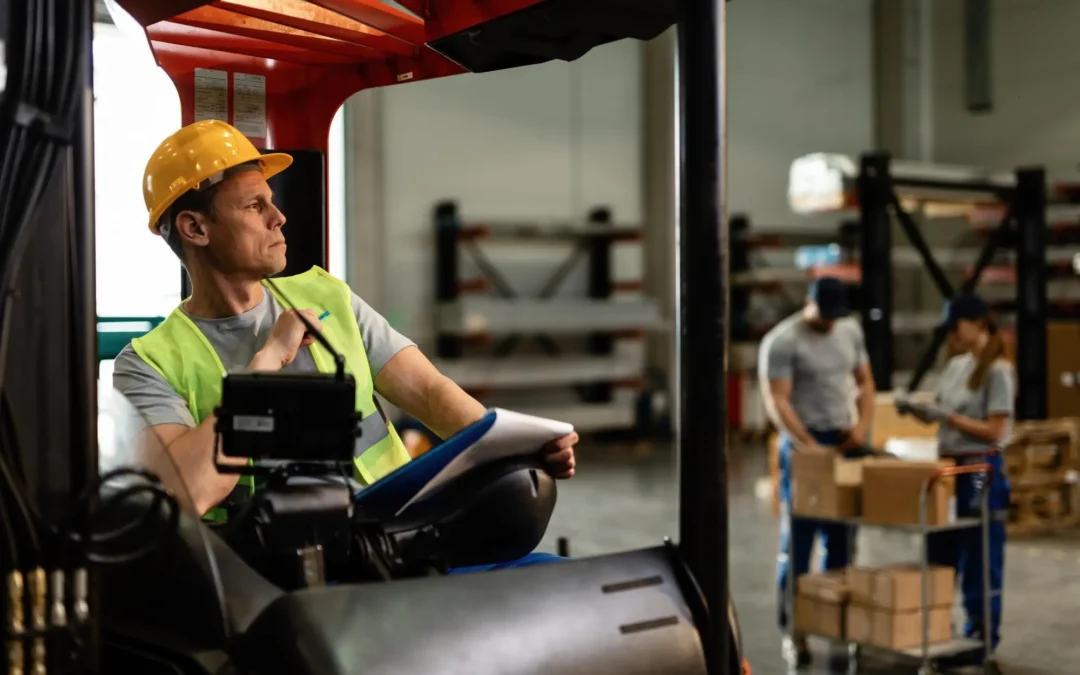
No sector in American industry injures its workers at higher rates than transportation and warehousing. Federal data confirms what safety managers at distribution centers and logistics facilities already know from their recordable injury logs: the physical demands of moving goods through modern supply chains are breaking workers’ bodies faster than any other major employment category. Integrating an industrial manipulator into these workflows can significantly mitigate these risks. Understanding why requires examining both the nature of the work and the gap between available solutions and current practices.
The transportation and warehousing sector recorded the highest serious injury rate among all 19 private industry sectors in 2022, with 3.8 cases per 100 full-time workers requiring days away from work or job restrictions. This rate substantially exceeds healthcare and social assistance at 2.7 cases per 100 workers and manufacturing at 2.0 cases per 100 workers. For context, the serious injury rate across all private industry stands at just 1.7 cases per 100 workers—meaning warehouse and logistics workers face more than double the injury risk of the average American employee.
The e-commerce boom has intensified these pressures dramatically. Warehouse employment grew by approximately 60 percent between 2018 and 2022, while delivery sector employment increased by 41 percent over the same period. This rapid expansion brought millions of new workers into physically demanding roles, many without adequate equipment or ergonomic protections to handle the volume of lifting, carrying, and positioning that modern fulfillment operations require. Many facilities are now turning to ergonomic industrial manipulators to safeguard their expanding workforce.

Key Takeaways
- Transportation & warehousing has the highest serious-injury rate of all 19 U.S. private-industry sectors — 3.8 cases per 100 workers, more than double the 1.7 private-industry average.
- Overexertion from manual lifting causes about half of serious warehouse injuries; three hazard types account for 85%.
- Rates are rising, not falling — general warehousing +20% (4.0 to 4.8) and last-mile delivery +23% (6.0 to 7.4) from 2018 to 2022.
- Training alone cannot fix it: injuries come from cumulative microtrauma, so the effective fix is engineering controls — the top of OSHA’s hierarchy.
- Industrial manipulators transfer loads from workers to machines, cutting the overexertion injuries that drive workers’ comp costs.
The Three Hazards Driving Warehouse Injuries
Federal investigators analyzing Bureau of Labor Statistics data identified three hazard categories responsible for 85 percent of serious injuries in general warehousing: overexertion and bodily reaction, contact with objects and equipment, and falls, slips, and trips. Of these, overexertion dominates—causing approximately half of all serious warehouse injuries and generating the musculoskeletal disorders that sideline workers for extended periods.
The National Institute for Occupational Safety and Health documents that manual material handling contributes to over half a million musculoskeletal disorder cases annually across American workplaces, with strains and sprains to the lower back, shoulders, and upper limbs representing the most common outcomes. Warehouse operations concentrate these risks by requiring workers to perform repetitive lifting tasks throughout their shifts, often handling packages of varying weights and dimensions in constrained spaces that force awkward postures.
The physical mechanics explain why training programs alone cannot solve this problem. A warehouse worker picking orders may lift and carry hundreds of items per shift. Even with perfect technique, the cumulative load on spinal structures, shoulder joints, and supporting muscles eventually exceeds tissue tolerance. The injury that finally sends a worker to the clinic rarely results from a single dramatic event—it represents the endpoint of accumulated microtrauma that proper lifting form cannot prevent. As detailed in Material Handling Injuries Cost U.S. Employers $13.7 Billion Annually—And the Crisis Is Worsening, overexertion has topped workplace injury costs for 25 consecutive years despite widespread safety training.
Why Injury Rates Keep Climbing
Between 2018 and 2022, the serious injury rate in general warehousing rose by 20 percent, climbing from 4.0 to 4.8 cases per 100 full-time workers. Last-mile delivery operations saw an even steeper increase of 23 percent over the same period, with rates jumping from 6.0 to 7.4 cases per 100 workers. These trends moved in the opposite direction of overall workplace safety improvements, suggesting that sector-specific factors are overwhelming general safety gains.
Consumer expectations for rapid delivery have compressed fulfillment timelines, increasing the pace of work throughout logistics networks. OSHA’s commonly cited statistics show that while overall workplace injuries have fallen dramatically since 1972, certain high-risk operations have not shared equally in these improvements. Workers in warehouse and delivery roles report that employer performance expectations and monitoring technologies often make it harder to work safely, a dynamic that pits productivity pressure against injury prevention. In high-velocity environments, Pneumatic Manipulators for Packaging Operations provide the speed required without compromising the health of the operator.
The regulatory environment compounds these challenges. OSHA lacks a specific ergonomics standard, forcing the agency to address musculoskeletal hazards through the general duty clause of the Occupational Safety and Health Act. This approach requires extensive documentation and expert analysis to support citations, making ergonomic enforcement resource-intensive and relatively rare. Over six years, OSHA issued only 11 ergonomic-related citations to warehouse and delivery employers despite documenting more than 2,500 total violations. Exploring How Ergonomic Lifting Equipment Delivers ROI Through Injury Prevention reveals why many employers are taking matters into their own hands rather than waiting for regulatory mandates.
The Labor Market Collision
Warehouse injury rates create a compounding problem when combined with the manufacturing and logistics labor shortage affecting operations nationwide. Nearly one-third of manufacturing workers are over age 55, and the sector faces a projected 2.1 million unfilled jobs by 2030. When experienced workers leave due to musculoskeletal injuries, facilities lose both productive capacity and institutional knowledge that cannot be quickly replaced.
Injured workers who remain employed often require modified duty assignments that restrict lifting, bending, or standing—the core physical activities of warehouse work. These restrictions reduce operational flexibility while the affected employees recover, forcing remaining workers to absorb additional physical demands that increase their own injury risk. The cycle perpetuates itself as overworked staff develop their own musculoskeletal problems.
Younger workers entering logistics careers bring fresh energy but lack the experience to recognize early warning signs of developing injuries. The gradual onset of musculoskeletal disorders means workers often dismiss initial soreness as a normal adjustment to physical work, continuing activities that progressively damage their bodies. By the time symptoms become impossible to ignore, significant tissue damage has typically occurred.

Engineering the Solution
The hierarchy of controls that safety professionals apply to workplace hazards places engineering controls above administrative approaches and personal protective equipment. For material handling operations, engineering controls means providing mechanical assistance that reduces or eliminates the physical forces workers must generate and absorb during lifting tasks.
Industrial manipulators, lift-assist devices, and ergonomic positioning equipment transfer loads from human bodies to mechanical systems designed to handle them safely. A worker using a Pneumatic Manipulators for Packaging Operations system to lift and position a 100-pound component experiences none of the spinal compression and shoulder strain that manual handling would produce. The equipment absorbs the force, allowing the worker to guide placement with minimal physical effort.
This approach addresses injury causation rather than injury management. Training programs attempt to reduce harm from manual lifting that continues; engineering controls eliminate or dramatically reduce the manual lifting itself. For warehouse and logistics facilities facing the highest injury rates in American industry, the distinction determines whether safety investments produce meaningful results or simply document ongoing failures.
THEMA North America: Your Partner in Ergonomic Material Handling
THEMA North America delivers advanced industrial manipulators and ergonomic lifting devices engineered for precision, safety, and speed. As the sole distributor of THEMA Manipulators in North America, we’ve supplied over 2,500 industrial manipulators supporting applications across automotive, food and beverage, packaging, and heavy manufacturing sectors.
Our Solutions Include:
- Industrial Manipulators for Multiple Industries – Ergonomic lifting systems handling loads up to 4,078 lbs using compressed air, customized for your specific application
- Site inspection, custom design, and seamless integration services
Ready to Reduce Injuries and Improve Productivity? Contact THEMA North America to discuss how ergonomic material handling solutions can transform your operations.
Works Cited
“Commonly Used Statistics.” Occupational Safety and Health Administration, U.S. Department of Labor, www.osha.gov/data/commonstats. Accessed 24 Nov. 2025.
“Ergonomic Guidelines for Manual Material Handling.” National Institute for Occupational Safety and Health, Centers for Disease Control and Prevention, DHHS (NIOSH) Publication No. 2007-131, Apr. 2007, www.cdc.gov/niosh/docs/2007-131/default.html. Accessed 24 Nov. 2025.
Related Articles
- Material Handling Injuries Cost U.S. Employers $13.7 Billion Annually—And the Crisis Is Worsening
- How Ergonomic Lifting Equipment Delivers ROI Through Injury Prevention
{“@context”:”https://schema.org”,”@type”:”FAQPage”,”mainEntity”:[{“@type”:”Question”,”name”:”Which U.S. industry has the highest injury rate?”,”acceptedAnswer”:{“@type”:”Answer”,”text”:”Transportation and warehousing, at 3.8 serious injuries per 100 full-time workers (2022), the highest of all 19 private-industry sectors and more than double the 1.7 private-industry average.”}},{“@type”:”Question”,”name”:”What causes most warehouse injuries?”,”acceptedAnswer”:{“@type”:”Answer”,”text”:”Overexertion and bodily reaction, mostly manual lifting, causes roughly half of serious warehouse injuries. Together with contact with objects and slips, trips and falls, three hazard types drive 85% of serious injuries.”}},{“@type”:”Question”,”name”:”Why are warehouse injury rates rising?”,”acceptedAnswer”:{“@type”:”Answer”,”text”:”E-commerce growth (warehouse employment rose about 60% from 2018 to 2022), compressed fulfillment timelines, and productivity monitoring have pushed general-warehousing rates up 20% and last-mile delivery up 23%.”}},{“@type”:”Question”,”name”:”Can training prevent warehouse lifting injuries?”,”acceptedAnswer”:{“@type”:”Answer”,”text”:”Only partly. Most musculoskeletal injuries result from cumulative microtrauma, so even perfect lifting technique cannot prevent them. Engineering controls that remove the manual lift are far more effective.”}},{“@type”:”Question”,”name”:”How do industrial manipulators reduce injuries?”,”acceptedAnswer”:{“@type”:”Answer”,”text”:”They transfer the load from the worker body to a compressed-air mechanical system, letting an operator position heavy items with minimal force, eliminating the spinal compression and shoulder strain that cause overexertion injuries.”}},{“@type”:”Question”,”name”:”How much weight can THEMA manipulators handle?”,”acceptedAnswer”:{“@type”:”Answer”,”text”:”THEMA pneumatic manipulators handle loads up to 4,078 lbs using compressed air, customized to each application.”}}]}