
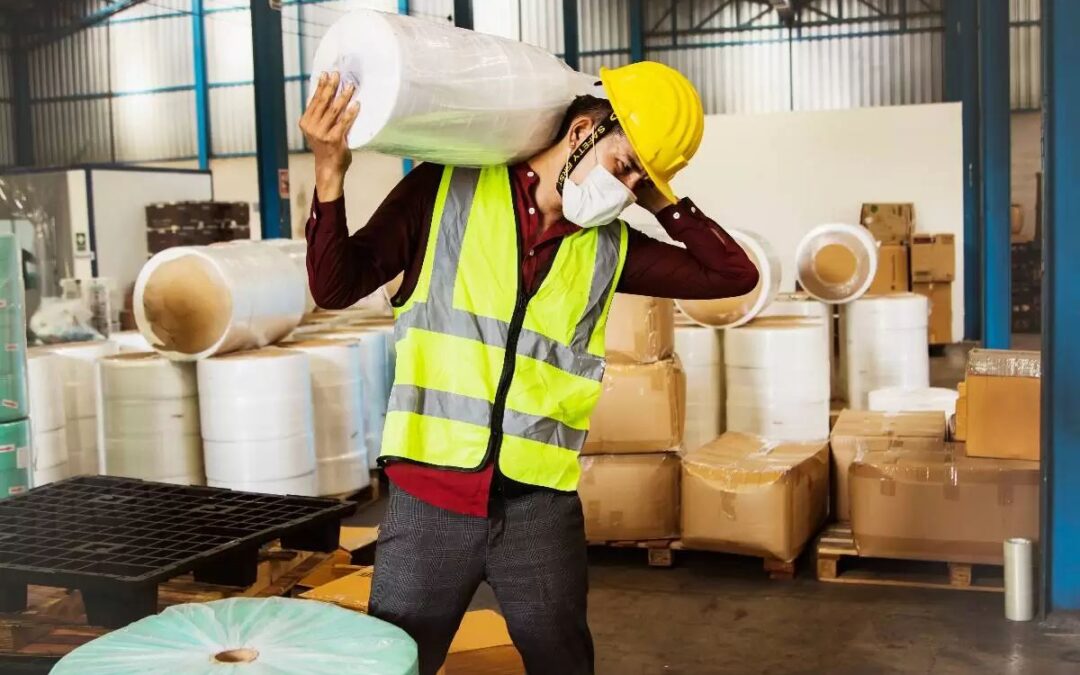
The numbers behind America’s workplace injury crisis tell a story that manufacturing and warehousing executives can no longer ignore. Overexertion involving outside sources—lifting, carrying, pushing, and pulling objects—remains the leading cause of serious workplace injuries for the 25th consecutive year, costing U.S. businesses $13.7 billion annually in direct medical expenses and lost-wage payments. Implementing an industrial manipulator is becoming the standard for companies looking to break this cycle. This persistent pattern reveals a fundamental problem that traditional safety programs have failed to solve.
The 2025 Liberty Mutual Workplace Safety Index reports that the top ten causes of serious workplace injuries now cost employers $50.87 billion per year, with overexertion and same-level falls consistently ranking at the top since the index was first published. Despite decades of awareness campaigns and training programs, manual material handling remains the leading cause of workers’ compensation claims across virtually every industrial sector.
Transportation and warehousing facilities face particularly acute challenges. Federal investigators found that warehouse workers experience musculoskeletal disorders at nearly five times the rate of all private industry, with overexertion incidents causing approximately half of all serious injuries in general warehousing operations. For facilities already struggling to maintain staffing levels amid a projected 2.1 million unfilled manufacturing jobs by 2030, losing experienced workers to preventable injuries compounds an already difficult situation.
Key Takeaways
- Overexertion has been the leading cause of serious workplace injuries for 25 consecutive years, costing $13.7 billion annually in direct costs.
- Training alone cannot fix it — technique doesn’t protect a worker lifting 50-lb loads hundreds of times per shift.
- OSHA enforcement is thin: just 11 ergonomic-related citations out of 2,500+ documented violations over six years.
- With no federal ergonomics standard, employers largely rely on training that cumulative strain eventually overcomes.
- Engineering controls, like industrial manipulators, offer a permanent fix training can’t.
The Mathematics of Manual Lifting Failures
Every time a worker lifts, carries, or positions a load manually, their body absorbs forces that accumulate over shifts, weeks, and years. The musculoskeletal disorders that develop from this repetitive stress, such as back strains, shoulder injuries, and herniated discs, rarely appear as dramatic workplace accidents. Instead, they emerge gradually, often becoming apparent only when significant damage has already occurred. High-performance THEMA manipulators are designed to prevent this accumulation by absorbing the load entirely.
The consequences extend far beyond individual workers. According to federal data, musculoskeletal injuries cost employers at least $17.7 billion in 2021, and overexertion involving outside sources resulted in the greatest workers’ compensation losses. Back injuries alone account for nearly 17 percent of all injury costs, making them the single most expensive category by body part. Understanding Why Warehouse and Logistics Facilities Face the Highest Injury Rates in American Industry helps explain why certain operations bear disproportionate risk.
What makes these statistics particularly troubling is that serious injury rates continue climbing in material-intensive sectors even as overall workplace safety has improved dramatically. Worker fatalities have dropped from 38 per day in 1970 to 15 per day in 2023, and total recordable incidents have fallen from 10.9 per 100 workers in 1972 to 2.4 per 100 in 2023. Yet overexertion injuries, those directly tied to manual lifting and material handling, have proven remarkably resistant to improvement through training alone. Transitioning to Pneumatic Manipulators: Durable and Efficient Material Handling Solutions offers a more permanent fix than behavioral training ever could.
Why Traditional Approaches Keep Failing
The persistence of manual handling injuries despite widespread safety training reveals an uncomfortable truth: you cannot train away the fundamental physical limits of the human body. A worker can learn proper lifting technique, but technique alone cannot protect someone who must lift 50-pound loads hundreds of times per shift. The cumulative strain eventually produces injury regardless of form.
Federal investigators examining warehouse safety found that OSHA rarely identifies and addresses ergonomic hazards at warehouse and delivery operations, issuing only 11 ergonomic-related citations out of more than 2,500 violations documented over six years. Without regulatory pressure and lacking an OSHA ergonomics standard, many employers default to training programs that address symptoms rather than root causes.
The rate of serious workplace accidents has fallen by approximately 40 percent over the 25 years represented by the Liberty Mutual index, while total workers’ compensation costs have increased by 30 percent. Injuries are becoming less frequent but more expensive—a pattern suggesting that the injuries still occurring tend to be more severe. For employers, this means fewer incidents on the recordable injury log but higher costs per claim. Examining How Ergonomic Lifting Equipment Delivers ROI Through Injury Prevention provides context for why capital investments increasingly outperform training-only strategies.
The Compounding Effect of Labor Shortages
The injury crisis collides with workforce challenges that amplify its impact. Approximately 20.6 percent of U.S. manufacturing plants that failed to produce at full capacity cited insufficient supply of labor or labor skills as a key constraint. When experienced workers leave due to injury, facilities lose not only their labor but also the institutional knowledge and skill that takes years to develop. Replacing injured workers in a tight labor market forces employers to choose between overtime for remaining staff—which increases their injury risk—or leaving positions unfilled and accepting reduced output.
Nearly one-third of serious workplace injuries involve musculoskeletal disorders such as sprains, strains, and back injuries. These conditions frequently result in extended absences, with affected workers missing more than five days of work. During recovery periods, operations must absorb productivity losses while continuing to pay workers’ compensation benefits and medical expenses. The transportation and warehousing sector reported the highest serious injury rate among all 19 private industry sectors in 2022, at 3.8 cases per 100 full-time workers—more than double the rate for all private industry combined.

The Path Forward Requires Engineering Controls
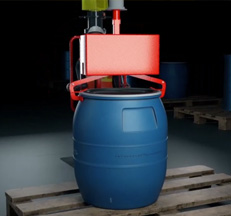
The hierarchy of controls that safety professionals have advocated for decades places engineering solutions above administrative controls and personal protective equipment for good reason. Eliminating or reducing hazards through equipment and process design produces more reliable protection than approaches depending on human behavior and vigilance. Integrating Pneumatic Manipulators: Durable and Efficient Material Handling Solutions into the production line allows facilities to follow this hierarchy while maintaining high output. By transferring lifting forces from human bodies to pneumatic or mechanical systems, these solutions address the root cause of overexertion injuries rather than attempting to manage their frequency through training.
Industrial manipulators and ergonomic lifting devices represent the engineering control approach applied specifically to manual material handling. By transferring lifting forces from human bodies to pneumatic or mechanical systems, these solutions address the root cause of overexertion injuries rather than attempting to manage their frequency through training. Workers using properly designed lift-assist equipment can handle loads that would otherwise cause injury, maintaining productivity while eliminating the cumulative strain that produces musculoskeletal disorders.
The economics increasingly favor this approach. With overexertion injuries alone costing $13.7 billion annually and the broader category of musculoskeletal disorders reaching $17.7 billion, even modest reductions in injury rates can produce substantial returns. For facilities operating with tight labor markets and aging workforces, preventing the loss of experienced workers to injury has value beyond direct medical cost savings.
THEMA North America: Your Partner in Ergonomic Material Handling
THEMA North America delivers advanced industrial manipulators and ergonomic lifting devices engineered for precision, safety, and speed. As the sole distributor of THEMA Manipulators in North America, we’ve supplied over 2,500 industrial manipulators supporting applications across automotive, food and beverage, packaging, and heavy manufacturing sectors.
Our Solutions Include:
- Industrial Manipulators for Multiple Industries – Ergonomic lifting systems handling loads up to 4,078 lbs using compressed air, customized for your specific application
- Site inspection, custom design, and seamless integration services
Ready to Reduce Injuries and Improve Productivity? Contact THEMA North America to discuss how ergonomic material handling solutions can transform your operations.
Works Cited
“2025 Workplace Safety Index.” Liberty Mutual Insurance, 15 July 2025, www.libertymutualgroup.com/about-lm/news/articles/us-companies-spend-50.87b-year-top-ten-causes-serious-workplace-injuries-according-2025-liberty-mutual-workplace-safety-index. Accessed 24 Nov. 2025.
“Workplace Safety and Health: OSHA Should Take Steps to Better Identify and Address Ergonomic Hazards at Warehouses and Delivery Companies.” U.S. Government Accountability Office, GAO-24-106413, Sept. 2024, www.gao.gov/assets/880/872363.pdf. Accessed 24 Nov. 2025.
Related Articles
- Why Warehouse and Logistics Facilities Face the Highest Injury Rates in American Industry
- How Ergonomic Lifting Equipment Delivers ROI Through Injury Prevention
{“@context”:”https://schema.org”,”@type”:”FAQPage”,”mainEntity”:[{“@type”:”Question”,”name”:”How much do material handling injuries cost U.S. employers?”,”acceptedAnswer”:{“@type”:”Answer”,”text”:”Overexertion from lifting, carrying, pushing and pulling has been the leading cause of serious workplace injuries for 25 consecutive years, costing U.S. businesses $13.7 billion annually in direct medical expenses and lost-wage payments.”}},{“@type”:”Question”,”name”:”Does safety training prevent manual handling injuries?”,”acceptedAnswer”:{“@type”:”Answer”,”text”:”Not reliably. A worker can learn proper lifting technique, but technique alone cannot protect someone who must lift 50-pound loads hundreds of times per shift; cumulative strain eventually produces injury regardless of form.”}},{“@type”:”Question”,”name”:”How often does OSHA enforce ergonomic safety standards?”,”acceptedAnswer”:{“@type”:”Answer”,”text”:”Rarely. Federal investigators found OSHA issued only 11 ergonomic-related citations out of more than 2,500 documented violations at warehouse and delivery operations over six years.”}},{“@type”:”Question”,”name”:”Why doesn’t OSHA have a specific ergonomics standard?”,”acceptedAnswer”:{“@type”:”Answer”,”text”:”No federal ergonomics standard currently exists, so enforcement relies on general-duty clause citations rather than dedicated rules, leaving many employers without regulatory pressure to change practices.”}},{“@type”:”Question”,”name”:”What actually reduces manual handling injuries long-term?”,”acceptedAnswer”:{“@type”:”Answer”,”text”:”Engineering controls, such as pneumatic manipulators, that physically remove the lifting task from the worker rather than relying on training or willpower.”}},{“@type”:”Question”,”name”:”How does labor shortage make this problem worse?”,”acceptedAnswer”:{“@type”:”Answer”,”text”:”With fewer experienced workers available, remaining staff absorb more physical strain and new hires face higher injury risk, compounding the underlying overexertion problem.”}}]}