

The business case for ergonomic lifting equipment has shifted from a safety expense to a competitive necessity. Integrating a high-quality industrial manipulator into your workflow transforms the financial calculus, favoring capital investment in equipment that protects workers over ongoing expenditures managing preventable injuries. With musculoskeletal disorders costing employers $17.7 billion annually and manufacturing facing a projected 2.1 million unfilled jobs by 2030, the financial calculus now favors capital investment in equipment that protects workers over ongoing expenditures for managing preventable injuries. Companies that recognize this shift are discovering that ergonomic solutions deliver returns extending far beyond reduced workers’ compensation claims.
The convergence of labor market pressures and injury costs creates an economic environment where protecting existing workers has become as important as recruiting new ones. A skilled machine operator or experienced warehouse worker who develops a career-ending back injury represents not only immediate medical expenses and lost productivity but also the substantial cost of recruiting, hiring, and training a replacement in a market where qualified candidates remain scarce. For operations already struggling to maintain staffing levels, preventing the loss of trained employees to injury directly impacts the bottom line.
Federal data confirms that nearly one-third of serious workplace injuries involve musculoskeletal disorders, sprains, strains, back injuries, and related conditions that develop from repetitive physical stress. These injuries disproportionately affect workers in material handling roles, where lifting, carrying, and positioning loads constitute the core job function. Many of these issues are common across various industries, suggesting that administrative controls alone cannot adequately address hazards inherent to manual material handling. The pattern has persisted for decades despite widespread safety training, suggesting that administrative controls alone cannot adequately address hazards inherent to manual material handling.
Key Takeaways
- Ergonomic lifting equipment has shifted from a safety expense to a competitive necessity — with MSDs costing $17.7 billion annually against 2.1 million unfilled manufacturing jobs.
- The hierarchy of controls favors engineering solutions over training and PPE, since they don’t depend on worker behavior under production pressure.
- OSHA’s ergonomics guidance confirms that fitting the job to the person reduces fatigue, boosts productivity, and cuts MSD severity.
- Decades of training-only programs have failed to move the needle — a signal the hazard needs engineering, not behavioral, fixes.
- ROI comes from avoided claims, higher throughput, and better retention, not just injury counts.
The Real Cost of Manual Handling Injuries
Direct costs capture only a fraction of what musculoskeletal injuries actually cost employers. Workers’ compensation payments and medical expenses represent the visible portion, but indirect costs—overtime for remaining staff, temporary labor, reduced productivity, administrative burden, and potential OSHA involvement—typically multiply the direct cost figure by factors ranging from two to five times, depending on the severity and duration of the injury.
The U.S. Census Bureau reports that manufacturing already faced a potential labor crisis before recent workforce disruptions, with projections indicating 2.1 million unfulfilled jobs by 2030 resulting from skilled labor shortages. When experienced workers leave the workforce due to musculoskeletal injuries, they take with them years of accumulated knowledge and capability that new hires require substantial time to develop. The injury that costs $50,000 in direct medical expenses may cost several times that amount in lost expertise and replacement costs.
Overexertion involving outside sources—the category encompassing lifting, carrying, pushing, and pulling—has remained the leading cause of serious workplace injuries for 25 consecutive years, currently accounting for $13.7 billion in annual costs. As examined in Material Handling Injuries Cost U.S. Employers $13.7 Billion Annually—And the Crisis Is Worsening, this persistence despite decades of training programs indicates that the underlying hazard requires engineering solutions rather than behavioral interventions.
Engineering Controls Versus Administrative Approaches
The hierarchy of controls that occupational safety professionals apply to workplace hazards establishes a clear preference for engineering solutions over administrative controls and personal protective equipment. Engineering controls eliminate or reduce hazards at their source, producing protection that does not depend on worker behavior, training retention, or moment-to-moment decision-making under production pressure.
OSHA’s ergonomics guidance emphasizes that fitting a job to a person helps lessen muscle fatigue, increase productivity, and reduce the number and severity of work-related musculoskeletal disorders. The agency notes that implementing an ergonomic process proves effective in reducing MSD risk across diverse high-hazard industries, including manufacturing, food processing, healthcare, transportation, and warehousing. However, without a specific ergonomics standard, OSHA lacks direct enforcement mechanisms—leaving employers to recognize and act on the business case independently.
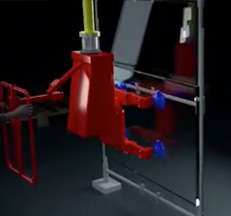
Industrial manipulators and lift-assist devices represent engineering controls designed specifically for material handling applications. These systems use pneumatic, mechanical, or hydraulic power to support loads during lifting, positioning, and placement operations. Transitioning to Pneumatic Manipulators: Durable and Efficient Material Handling Solutions allows workers to guide the equipment rather than generating lifting force themselves, eliminating the spinal compression and shoulder strain that manual handling produces. The findings in Why Warehouse and Logistics Facilities Face the Highest Injury Rates in American Industry demonstrate why facilities with intensive material handling operations benefit most significantly from these interventions.
Calculating Return on Investment
Ergonomic lifting equipment investments generate returns through multiple channels that compound over time. The most directly measurable savings come from reduced workers’ compensation claims and associated medical costs. By implementing ergonomic industrial manipulators, a facility averaging three serious musculoskeletal injuries per year at $40,000 in direct costs each can eliminate $120,000 in annual direct injury expenses—before accounting for the indirect cost multiplier that typically doubles or triples the true impact.
Productivity gains often exceed injury cost savings in total value. Workers using lift-assist equipment can handle more cycles per hour than those relying on manual lifting, particularly as shifts progress and fatigue accumulates. The worker who slows down in the final hours of a shift due to physical exhaustion maintains consistent output when the equipment absorbs the physical burden. For operations with production targets tied to labor hours, this sustained productivity translates directly to throughput improvements.
Retention benefits prove harder to quantify but are increasingly significant in tight labor markets. Operations known for physical demands and high injury rates struggle to attract and retain workers who have options elsewhere. Facilities that invest visibly in ergonomic equipment signal commitment to worker welfare, improving both recruitment success and retention rates. With approximately 20.6 percent of manufacturing plants operating below full capacity due to labor or skill shortages, the ability to maintain a stable workforce carries substantial competitive value.

Implementation Considerations
Effective ergonomic equipment deployment requires matching solutions to specific application demands. A manipulator designed for handling automotive components may prove poorly suited for food and beverage operations where sanitation requirements and product characteristics differ substantially. The most successful implementations begin with a detailed analysis of current handling tasks, injury patterns, and operational constraints.
Integration with existing workflows determines whether equipment delivers its potential value. Solutions that require workers to significantly alter established procedures face adoption resistance and may create new inefficiencies even as they address ergonomic hazards. Equipment that fits naturally into current operations—requiring minimal workflow modification while eliminating the most physically demanding lifting tasks—typically achieves faster acceptance and fuller utilization.
Training requirements for ergonomic equipment generally prove less demanding than the ongoing reinforcement that manual lifting technique programs require. Workers learn to operate lift-assist devices in hours rather than the repeated sessions needed to maintain proper lifting form. Once trained, the equipment enforces safe handling through its design rather than relying on workers to remember and apply the technique under production pressure.
Maintenance considerations affect long-term cost calculations. Pneumatic manipulators operating on compressed air require different support infrastructure than electric or hydraulic alternatives. Facilities with existing compressed air systems may find pneumatic solutions more economical to deploy and maintain, while operations lacking this infrastructure must factor installation costs into their analysis. Reliable equipment from established manufacturers typically commands higher initial prices but delivers lower lifetime costs through reduced downtime and longer service life.
THEMA North America: Your Partner in Ergonomic Material Handling
THEMA North America delivers advanced industrial manipulators and ergonomic lifting devices engineered for precision, safety, and speed. As the sole distributor of THEMA Manipulators in North America, we’ve supplied over 2,500 industrial manipulators supporting applications across automotive, food and beverage, packaging, and heavy manufacturing sectors.
Our Solutions Include:
- Pneumatic Manipulators: Durable and Efficient Material Handling Solutions – High-precision systems handling loads up to 4,078 lbs, customized for your specific industrial application.
- Industrial Manipulators for Multiple Industries – Ergonomic lifting systems handling loads up to 4,078 lbs using compressed air, customized for your specific application
- Site inspection, custom design, and seamless integration services
Ready to Reduce Injuries and Improve Productivity? Contact THEMA North America to discuss how ergonomic material handling solutions can transform your operations.
Works Cited
“Diversity, Equity, and Inclusion Key to Filling High-Skilled Manufacturing Jobs.” U.S. Census Bureau, 28 Sept. 2023, www.census.gov/library/stories/2023/09/manufacturing-faces-labor-shortage.html. Accessed 24 Nov. 2025.
“Ergonomics – Overview.” Occupational Safety and Health Administration, U.S. Department of Labor, www.osha.gov/ergonomics. Accessed 24 Nov. 2025.
Related Articles
- Material Handling Injuries Cost U.S. Employers $13.7 Billion Annually—And the Crisis Is Worsening
- Why Warehouse and Logistics Facilities Face the Highest Injury Rates in American Industry
{“@context”:”https://schema.org”,”@type”:”FAQPage”,”mainEntity”:[{“@type”:”Question”,”name”:”What is the ROI of ergonomic lifting equipment?”,”acceptedAnswer”:{“@type”:”Answer”,”text”:”With musculoskeletal disorders costing employers an estimated $17.7 billion annually, equipment that prevents these injuries typically pays back through avoided claims, reduced turnover and higher throughput within the first one to two years.”}},{“@type”:”Question”,”name”:”Why do engineering controls outperform training for injury prevention?”,”acceptedAnswer”:{“@type”:”Answer”,”text”:”The occupational safety hierarchy of controls favors engineering solutions because they remove the hazard at its source and don’t depend on worker behavior, training retention, or decision-making under production pressure.”}},{“@type”:”Question”,”name”:”What does OSHA say about ergonomics and productivity?”,”acceptedAnswer”:{“@type”:”Answer”,”text”:”OSHA’s ergonomics guidance states that fitting the job to the person reduces muscle fatigue, increases productivity, and lowers both the number and severity of musculoskeletal disorders.”}},{“@type”:”Question”,”name”:”Why hasn’t safety training solved the injury cost problem?”,”acceptedAnswer”:{“@type”:”Answer”,”text”:”Despite decades of training programs, injury costs and rates have persisted, indicating the underlying hazard requires engineering solutions rather than continued behavioral interventions.”}},{“@type”:”Question”,”name”:”What should manufacturers consider before investing in lifting equipment?”,”acceptedAnswer”:{“@type”:”Answer”,”text”:”Key factors include load weights and shapes, workflow integration, operator training time, and total cost of ownership compared to the ongoing cost of manual-handling injury claims.”}},{“@type”:”Question”,”name”:”How does the labor shortage affect the ROI calculation?”,”acceptedAnswer”:{“@type”:”Answer”,”text”:”With 2.1 million manufacturing jobs at risk of going unfilled, equipment that protects and retains current workers delivers additional value beyond direct injury-cost avoidance.”}}]}