

Thema North America: Precision Ergonomic Material Handling Solutions
Manufacturing HR teams face an uncomfortable mathematical reality: traditional hiring criteria exclude the majority of working-age adults from consideration for material handling positions. When job requirements demand repeatedly lifting 50, 75, or 100 pounds throughout shifts, candidate pools narrow dramatically to a subset of physically robust individuals—a population already in high demand across multiple industries and increasingly difficult to recruit.
According to the Deloitte 2026 Manufacturing Industry Outlook, equipping workers with skills to maximize smart manufacturing potential ranks as the top concern for more than a third of manufacturing executives surveyed. Yet the fundamental barrier isn’t skill development—it’s that physical strength requirements eliminate candidates before any skills assessment occurs. These intersecting challenges demand fundamentally different approaches to workforce strategy rather than incremental improvements to traditional recruiting methods.
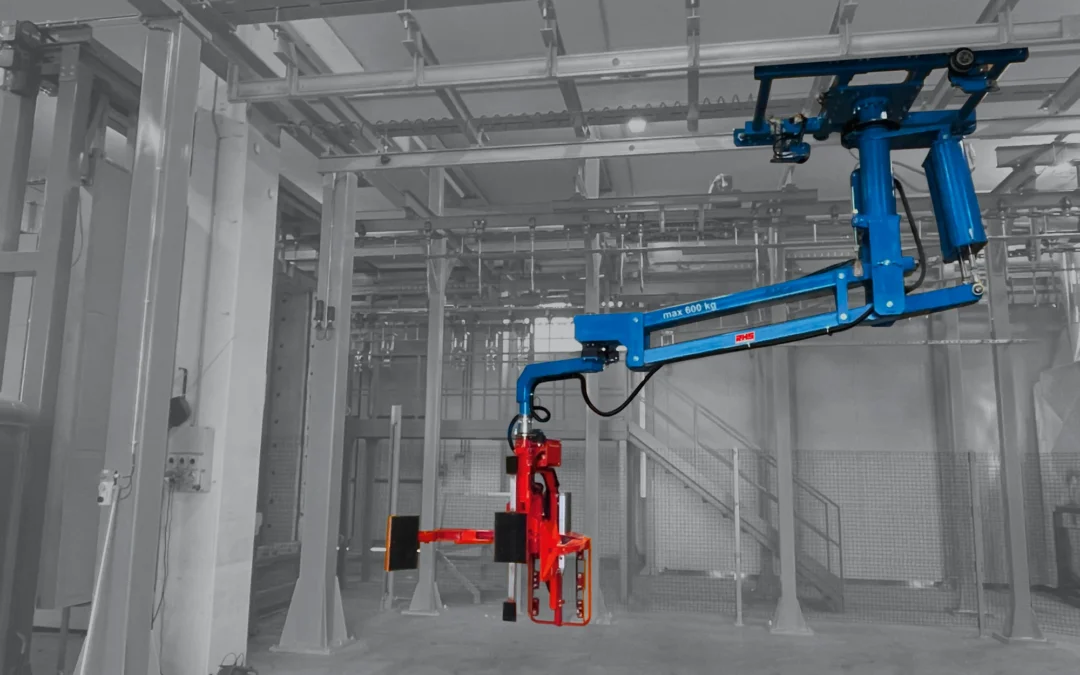
Zero-gravity material handling systems created through pneumatic manipulator technology offer a strategic response to workforce scarcity. By eliminating physical strength requirements from material handling tasks, these systems expand eligible candidate populations dramatically while simultaneously protecting existing workers from the injuries that accelerate turnover and drain institutional knowledge from operations.
The Physical Strength Barrier to Manufacturing Careers
Traditional manufacturing job descriptions routinely specify lifting requirements that eliminate most potential applicants. Requirements to repeatedly lift 50 pounds or more effectively exclude individuals with lower body mass, those with previous injuries limiting lifting capacity, and workers whose age has reduced peak strength from earlier career periods. This elimination happens before any assessment of the skills, reliability, or work ethic that actually determine employee value.
Women remain significantly underrepresented in manufacturing despite representing half the working-age population and facing lower unemployment rates than men in many regions. The physical demands that characterize material handling positions create barriers that discourage applications and screen out candidates whose other qualifications might prove valuable. Operations maintaining traditional lifting requirements recruit from approximately half the available workforce before any other screening criteria apply.
Older workers face similar exclusion despite often possessing the experience, reliability, and institutional knowledge that manufacturers prize. A machinist with 25 years of experience who develops back limitations no longer qualifies for positions requiring heavy lifting—even when their expertise and judgment remain fully intact. Manufacturing loses this knowledge when workers can’t physically perform jobs that could theoretically be restructured to accommodate their capabilities.
Veterans transitioning from military service represent a high-potential candidate pool that physical requirements partially obstruct. Service-connected disabilities affect substantial percentages of veteran populations, and many conditions involve musculoskeletal limitations that would prevent traditional material handling employment. The leadership, discipline, and technical aptitude veterans offer become inaccessible when physical barriers screen them from consideration.
How Zero-Gravity Systems Democratize Handling Capability
Pneumatic manipulators use automatic weight balancing to render loads essentially weightless from the operator’s perspective. When systems compensate for load weight through pneumatic pressure, the physical effort required to move materials becomes negligible regardless of actual mass. A 100-pound operator guides the same loads with the same ease as a 220-pound operator because the equipment handles the weight while the human provides direction and precision.
This equalization fundamentally changes workforce mathematics. Positions that previously required specific physical capabilities become accessible to virtually any candidate capable of operating the equipment controls. Hiring managers can evaluate applicants based on reliability, trainability, attention to quality, and other attributes that predict job success—rather than filtering first by physical characteristics that technology now renders irrelevant.
The capability democratization extends across age, gender, body type, and disability status simultaneously. Manufacturing operations adopting zero-gravity handling technology report ability to consider candidates their competitors cannot hire, creating talent acquisition advantages in markets where skilled workers choose between multiple employment options. When your facility can offer employment to candidates other employers must reject, recruiting becomes substantially easier.
Examining the broader operational context, How Pneumatic Manipulators Are Solving Manufacturing’s Dual Crisis of Injuries and Labor Shortages details how workforce expansion connects to injury prevention and productivity improvement in comprehensive operational strategies.
Retaining Experienced Workers Through Career Extension
Workforce scarcity creates particular urgency around retention of experienced employees who might otherwise depart due to physical limitations. The institutional knowledge accumulated over manufacturing careers—understanding of product quirks, awareness of process sensitivities, relationships with customers and suppliers—evaporates when workers leave. Replacing this expertise through new hire training consumes years rather than months.
Zero-gravity handling enables experienced workers to continue contributing despite physical changes that would traditionally force retirement or reassignment. The machinist with back problems can continue working at material handling stations when equipment eliminates lifting demands. The assembler developing shoulder issues can maintain productivity when tools float on manipulator arms rather than requiring sustained holding. These accommodations preserve human capital that would otherwise exit the workforce entirely.
The retention benefit extends to younger workers observing how employers treat colleagues facing physical challenges. Workforce culture suffers when employees perceive that injuries or age-related changes will terminate their employment. Visible investment in equipment enabling continued employment demonstrates long-term commitment to workers rather than disposable treatment that encourages skilled employees to seek better options elsewhere.
Research from CADDi’s 2026 Manufacturing Outlook Study found that 79% of manufacturing executives identify the skilled labor shortage as their greatest challenge, with 90% reporting manufacturing departments are most impacted. Ergonomic solutions that retain experienced workers address this shortage directly while preventing the injury costs that Why Material Handling Injuries Cost Manufacturers More Than They Calculate.
Accelerating New Hire Productivity
Traditional material handling positions require substantial time for new workers to develop physical capabilities alongside task knowledge. Building strength and endurance for demanding lifting occurs gradually through progressive exposure. Developing safe lifting techniques that minimize injury risk requires practice under supervision. These physical development requirements delay the point at which new hires achieve full productivity, extending periods when training investments haven’t yet generated returns.
Zero-gravity handling systems compress learning curves dramatically by eliminating the physical skill development component of onboarding. New workers need orientation on equipment operation and product-specific handling procedures—skills transmitting through standard training methods in days rather than weeks or months. The physical adaptation that extends traditional learning periods becomes unnecessary when equipment handles the physical work.
This accelerated productivity proves particularly valuable given current labor market realities. When recruiting takes longer and candidate quality varies more widely than historical norms, faster returns on training investments improve workforce economics substantially. Operations paying market wages during extended unproductive periods face higher effective labor costs than competitors achieving faster productivity ramp-up.
Temporary and seasonal workforce strategies benefit similarly from reduced physical requirements. Facilities requiring capacity increases for peak periods can deploy workers with minimal prior manufacturing experience when equipment eliminates physical skill prerequisites. This flexibility enables scaling strategies that traditional handling methods wouldn’t support.
Implementing Inclusive Workforce Strategies
Workforce expansion through ergonomic equipment requires corresponding adjustments to recruiting, hiring, and management practices. Job descriptions should reflect actual position requirements rather than legacy language specifying physical capabilities that technology has eliminated. Interview processes should evaluate candidate attributes that predict success in reconfigured roles. Onboarding programs should emphasize equipment operation alongside traditional skill development.
Facility layouts may require attention to ensure accessibility for workers with mobility devices or other accommodations. Workstation heights, pathway widths, and control interface locations should anticipate workforce diversity rather than assuming all operators share similar physical characteristics. These adjustments typically involve minor modifications when planned proactively but create barriers if overlooked during implementation.
Communication strategies should highlight expanded opportunities when recruiting for reconfigured positions. Marketing positions as accessible to candidates with diverse physical capabilities attracts applicants who might not consider traditional manufacturing employment. Partnerships with veterans’ organizations, disability employment services, and workforce development programs create channels reaching populations traditional recruiting overlooks.
Management training ensures supervisors understand how to lead diverse workforces effectively. Expectations around productivity should reflect equipment capabilities rather than individual physical attributes. Performance evaluation should measure outcomes achieved with available technology rather than traditional metrics that rewarded physical strength.
Thema North America: Your Partner in Ergonomic Material Handling
Thema North America provides pneumatic manipulator systems that expand workforce accessibility while delivering the safety and productivity benefits manufacturing operations require. Our zero-gravity technology transforms material handling from a physical barrier into an equalizing platform that enables diverse workforces to contribute fully.
Our Services Include:
- Pneumatic Manipulators – Customized handling systems designed for your specific products and workforce strategies
- Workforce Integration Consulting – Guidance on recruiting, training, and managing expanded talent pools enabled by ergonomic equipment
Ready to Expand Your Talent Pool? Contact Thema North America to explore how zero-gravity material handling can transform your workforce strategy and recruiting outcomes.
Works Cited
“2026 Manufacturing Industry Outlook.” Deloitte Insights, Deloitte Development LLC, 24 Dec. 2025, www.deloitte.com/us/en/insights/industry/manufacturing/manufacturing-industry-outlook.html. Accessed 30 Jan. 2026.
“79% of Manufacturing Executives Say Skilled Labor Shortage Is Greatest Challenge According to New CADDi Research.” CADDi, us.caddi.com/resources/news/79-of-manufacturing-executives-say-skilled-labor-shortage-is-greatest-challenge-according-to-new-caddi-research. Accessed 30 Jan. 2026.
Related Articles
- How Pneumatic Manipulators Are Solving Manufacturing’s Dual Crisis of Injuries and Labor Shortages
- Why Material Handling Injuries Cost Manufacturers More Than They Calculate