
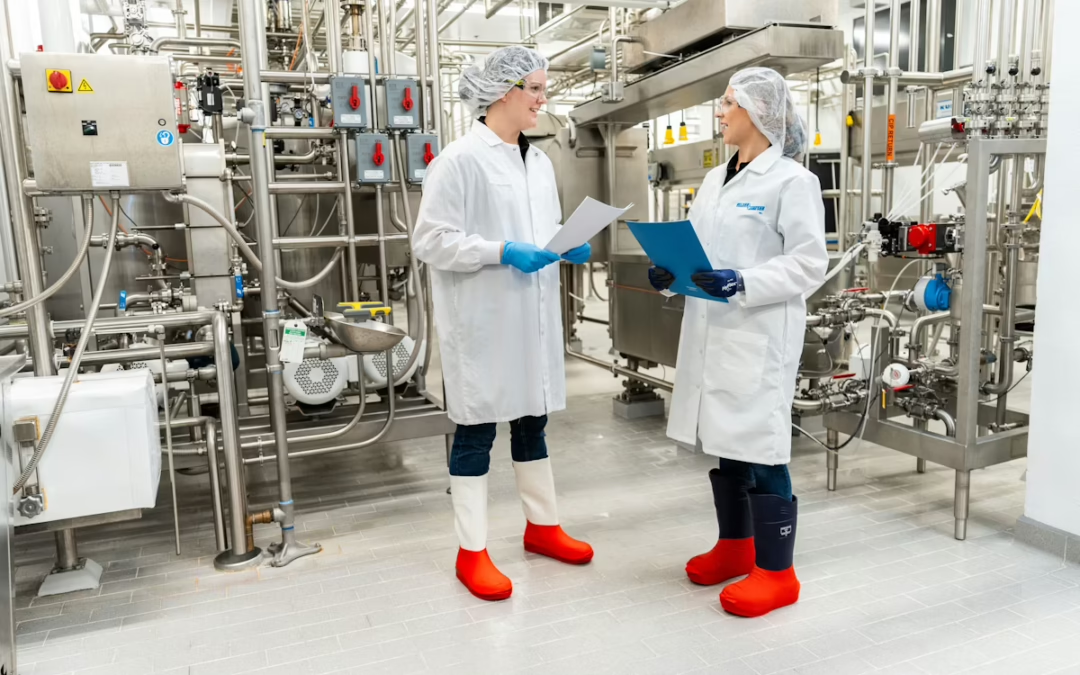
Food processing facilities operate under dual pressures that traditional management approaches address separately but that increasingly demand integrated solutions. Worker safety programs focus on reducing injuries through training, procedures, and protective equipment. Food safety programs focus on preventing contamination through sanitation, process controls, and hazard analysis. The intersection where these programs overlap—manual material handling—represents both an injury risk requiring ergonomic intervention and a contamination vector requiring hygienic controls. Equipment decisions made without recognizing this intersection optimize for one concern while potentially compromising the other.
The financial stakes justify serious attention. According to the National Safety Council, the average cost per medically consulted workplace injury reached approximately 42,000 dollars, encompassing wage and productivity losses, medical expenses, and administrative costs. Food manufacturing’s injury rate of 3.6 per 100 full-time workers—exceeding general manufacturing’s 2.8 rate—means these costs accumulate rapidly across facilities employing hundreds of production workers. Direct expenses represent only the visible portion of total impact, as indirect costs, including replacement labor, overtime, training, and productivity disruptions, typically multiply direct costs by factors of two to four.
The food safety dimension adds another cost layer that injury-focused analyses overlook. Workers performing manual material handling tasks contact products, packaging, and food-contact surfaces in ways that sanitation programs must address. Rushed handling when workers fatigue or when staffing shortages accelerate work pace increases contamination risk. Improper techniques developed to accommodate physical limitations may introduce product contact that proper form would avoid. Injuries removing experienced workers from production lines bring replacement workers who lack familiarity with sanitation requirements into sensitive handling roles.
Key Takeaways
- Food manufacturing injuries typically cost $40,000 or more per incident while separately threatening FSMA compliance.
- Ergonomic hazards and contamination risk are linked — awkward manual handling can compromise hygienic product contact.
- Worker safety and food safety programs are usually run separately, missing this connection.
- Calculating the true cost of manual handling requires combining injury costs with compliance and recall risk exposure.
- Equipment solutions like hygienic pneumatic manipulators address both worker safety and FSMA compliance simultaneously.
How Ergonomic Hazards Create Contamination Pathways
Food manufacturing involves substantial manual handling of containers, ingredients, and packaging that creates repeated biomechanical stress. Workers lift 50-pound bags of ingredients, transfer 40-pound cases between conveyors, position products for processing equipment, and load finished goods for shipping. Each repetition generates musculoskeletal loading that accumulates across shifts into overexertion injuries and repetitive motion disorders, driving the industry’s elevated injury rates.
The physical responses workers develop to manage these loads often compromise hygienic handling practices. Gripping containers by their edges rather than designated handles provides better leverage but also contacts surfaces that might later come into contact with food products. Bracing loads against the body during transport stabilizes heavy items but introduces contamination from clothing. Resting loads on the thighs while repositioning the grip provide momentary relief but involve contact surfaces that sanitation protocols may not anticipate. These adaptations make sense biomechanically but create sanitation challenges that proper equipment would eliminate.
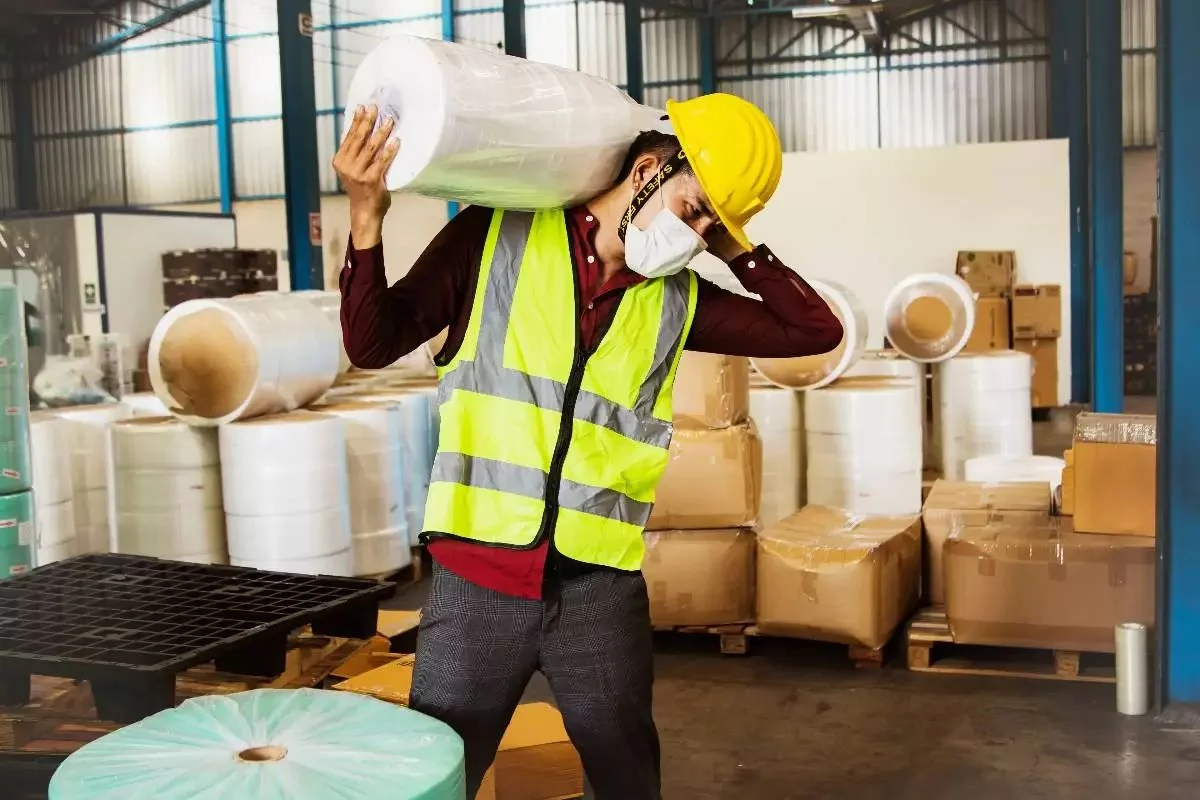
OSHA’s hazard alert on food processing emphasizes that machinery used for food and beverage processing contributed to the greatest number of severe injury reports within the industry between 2015 and 2022. The alert stresses employers’ responsibilities to protect workers—including younger workers and temporary employees who receive less training—from hazards that produce amputations, crush injuries, and fatalities. While the alert focuses on machine guarding and lockout-tagout, the underlying message applies equally to material handling: equipment and procedures must protect workers from the physical hazards that food processing environments create.
The food and beverage processing sector faces this dual ergonomic and contamination challenge more acutely than almost any other manufacturing environment, making integrated equipment solutions a compliance and safety priority, not simply an operational convenience.
Examining broader equipment considerations for food manufacturing facilities, How Hygienic Vacuum Lifters Are Transforming Food Manufacturing Safety and Compliance provides context for equipment decisions affecting both injury prevention and contamination control.
The FSMA Compliance Connection
FSMA’s preventive controls framework creates direct linkages between material handling practices and food safety compliance. Facilities must identify hazards, including those introduced by employees handling food, and implement controls to minimize those hazards. Sanitation controls specifically address procedures ensuring facilities remain maintained in a sanitary condition. Material handling equipment and practices fall within the sanitation control scope when they affect product safety.
Equipment that introduces contamination hazards or complicates sanitation procedures undermines the preventive controls facilities establish. Conversely, equipment designed around hygienic principles supports compliance by eliminating hazards that controls would otherwise need to address. The choice between standard industrial equipment and food-grade alternatives thus affects compliance posture—not just operational preference.
Auditors evaluating facility compliance examine how equipment design supports or complicates sanitation programs. Vacuum lifters constructed from appropriate materials with sealed construction and smooth surfaces demonstrate commitment to contamination prevention. Equipment showing corrosion, harboring product buildup in crevices, or resisting thorough cleaning signals inadequate attention to hygienic design principles that FSMA expects facilities to prioritize. These observations influence audit outcomes and ongoing compliance assessments.
The workforce stability dimension connects injury prevention to compliance through an indirect but consequential pathway. High injury rates drive turnover that brings inexperienced workers into food handling roles. These workers require time to learn not just production tasks but sanitation requirements, proper handling techniques, and contamination prevention practices that experienced workers have internalized. During learning periods, contamination risks elevate as workers develop competencies that training alone cannot fully impart.
Understanding how food manufacturing injury costs extend into contamination events and compliance failures, Why Material Handling Injuries Cost Manufacturers More Than They Calculate documents the full financial scope of indirect costs that safety and quality budgets must account for together.
Calculating the True Cost of Manual Handling
Comprehensive cost analysis requires capturing expense categories that standard injury accounting overlooks. Workers’ compensation claims and medical expenses establish baselines, but these direct costs typically represent only 25 to 40 percent of total injury impact. Indirect costs, including replacement labor during absences, overtime covering unfilled shifts, reduced productivity during recovery periods, and the administrative burden of managing claims and restrictions, multiply baseline figures substantially.
The sanitation consequences of injury-driven workforce disruption add costs that neither safety nor quality departments may fully capture. Temporary workers brought in to cover injury absences require orientation to sanitation requirements. Remaining workers absorbing additional duties may rush through handling tasks, increasing contamination probability. Quality holds, rework, and product disposal resulting from contamination events trace back to workforce instabilities that injury prevention could address.

Insurance implications compound over time as claim history affects experience modification rates and premium calculations. Facilities with deteriorating safety records face escalating insurance costs that persist for years after claim events. Some carriers may decline renewal, forcing coverage through high-cost assigned risk pools. These premium adjustments effectively capitalize injury costs into ongoing operational expenses that outlast the incidents generating them.
Understanding how contamination events translate into business consequences, How Sanitary Material Handling Equipment Protects Food Manufacturers from Recall Risks examines the regulatory, financial, and reputational stakes that make contamination prevention an operational imperative.
Equipment Solutions Addressing Both Dimensions
Hygienic vacuum lifting systems engineered for food manufacturing environments address injury hazards and contamination risks through integrated design. Pneumatic systems generate lifting force, rendering heavy loads weightless at operator contact points, eliminating the overexertion that drives musculoskeletal injuries. Food-grade materials, sealed construction, and smooth surfaces support sanitation programs by minimizing harborage points and withstanding cleaning protocols. The single equipment investment serves both worker safety and food safety objectives.
Proper equipment selection requires matching system capabilities to specific handling tasks and product characteristics. Bag handling attachments secure flexible packaging without the gripping adaptations that create contamination contact. Case handlers provide stable positioning for cardboard containers moving through production lines. Drum manipulators address bulk ingredient handling where manual methods create both injury and contamination exposure. Custom gripping solutions accommodate specialty containers unique to particular product categories.
Exploring the full range of pneumatic manipulator products available for food manufacturing environments helps safety and quality teams identify the specific systems matching their product mix, facility layout, and FSMA compliance requirements.
The productivity benefits that ergonomic equipment generates often exceed injury prevention savings in absolute magnitude. Workers freed from fatigue accumulation maintain consistent output across shifts. Reduced turnover preserves institutional knowledge about products, processes, and sanitation requirements that experienced workers carry. Expanded candidate pools from reduced physical requirements improve hiring success rates in competitive labor markets. These operational improvements generate returns justifying equipment investments even before injury cost avoidance enters calculations.
Professional installation ensures food manufacturing facilities get correctly configured systems from day one — with mounting, gripping, and environmental specifications aligned to both ergonomic requirements and FSMA sanitation standards.
Thema North America: Your Partner in Hygienic Material Handling
Thema North America delivers vacuum lifting and pneumatic manipulator systems engineered for food manufacturing environments where worker safety and food safety intersect. Our sanitary designs address both ergonomic hazards and contamination risks through equipment supporting your FSMA compliance objectives.
Our Services Include:
- Pneumatic Manipulators – Hygienic lifting systems eliminating manual handling hazards while supporting sanitation programs
- Ergonomic Assessment Services – Detailed workplace evaluation identifying high-impact intervention opportunities across safety and sanitation dimensions
Ready to Protect Both Your Workers and Your Products? Contact Thema North America for a comprehensive analysis of how hygienic material handling equipment can address your facility’s integrated safety and compliance challenges.
Frequently Asked Questions
How much does a workplace injury really cost, once indirect costs are included?
Direct costs (medical, indemnity) are typically only 25% to 40% of the total impact — indirect costs like lost productivity, retraining, and supervisor time typically multiply the direct cost by a factor of two to four. The National Safety Council put the average direct cost of a medically consulted injury at roughly $42,000 in 2023.
What did OSHA identify as the biggest injury source in food processing?
OSHA’s Hazard Alert on food processing found that machinery used in food and beverage processing contributed to the greatest number of severe injury reports in the industry between 2015 and 2022.
How are ergonomic injuries connected to food safety violations?
Workers compensating for heavy or awkward loads — bracing against their bodies, gripping product edges instead of designated handles — create the kind of direct contact and cross-contamination risk that FSMA’s Preventive Controls rule is designed to prevent. Mechanical lift assistance removes both the ergonomic hazard and the improvised handling that creates contamination risk.
Is food manufacturing’s injury rate worse than manufacturing in general?
Yes — 3.6 injuries per 100 full-time workers in food manufacturing versus 2.8 for manufacturing overall.
Works Cited
“Food Processing Industry: Worker Safety.” Occupational Safety and Health Administration, U.S. Department of Labor, www.osha.gov/sites/default/files/publications/food-processing-industry-worker-safety.pdf. Accessed 30 Jan. 2026.
“Work Injury Costs.” National Safety Council Injury Facts, National Safety Council, injuryfacts.nsc.org/work/costs/work-injury-costs/. Accessed 30 Jan. 2026.
Related Articles
- How Hygienic Vacuum Lifters Are Transforming Food Manufacturing Safety and Compliance
- How Sanitary Material Handling Equipment Protects Food Manufacturers from Recall Risks