

Manufacturing finance teams track workers’ compensation premiums and direct medical costs with precision. These visible expenses appear on budget reports and factor into operational planning. What most calculations miss are the cascading indirect costs that multiply actual injury impact by factors of two, three, or more—transforming what appears manageable on paper into a significant drain on profitability and competitive position.
The U.S. Chamber of Commerce reports that 313,000 durable goods manufacturing job openings remained unfilled as of April 2025, highlighting the workforce scarcity that makes every injury absence increasingly costly. When experienced workers leave production lines for treatment, recovery, or permanent disability, operations can’t simply backfill positions from readily available candidate pools. The labor market reality transforms injuries from temporary inconveniences into operational crises with costs extending far beyond immediate medical bills.
Understanding the complete cost picture changes how manufacturers evaluate ergonomic investments. When prevention expenditures compete against partial cost calculations, beneficial projects appear expensive. When those same investments compete against accurate total cost assessments, returns become compelling and payback periods shrink dramatically.
Key Takeaways
- MSD injuries cost $15,000 to $85,000 in direct expenses — and indirect costs roughly triple that figure.
- Finance teams typically track only direct medical and workers’ comp costs, missing the larger indirect impact.
- Turnover tied to injuries adds recruiting, retraining, and lost-productivity costs rarely counted against the injury.
- Calculating a facility’s true exposure requires combining direct, indirect, and turnover costs together.
- A complete cost analysis makes the investment case for engineering controls far stronger than direct costs alone.
Direct Costs Represent Only the Visible Portion
Medical expenses and workers’ compensation claims establish the baseline for injury cost calculations. The Occupational Safety and Health Administration documents that work-related musculoskeletal disorders rank among the most frequently reported causes of lost or restricted work time across all industries. Manufacturing’s physical demands—lifting heavy items, bending, reaching overhead, pushing, and pulling heavy loads—expose workers to the risk factors OSHA identifies as primary MSD contributors.
Individual injury costs vary substantially based on severity, affected body parts, and treatment requirements. Industry data suggests direct costs range from 15,000 to 85,000 dollars per case requiring medical attention and lost work time. Back injuries requiring surgery approach the upper ranges. Repetitive strain conditions catching early attention may be resolved more economically. But even modest direct cost figures accumulate rapidly when injury frequency reflects inadequate ergonomic protection.

These material handling injury costs affect manufacturers across every industry we serve — from food processing facilities to heavy mechanical engineering environments — wherever manual lifting remains part of daily operations.
Insurance premium adjustments compound direct costs over time. Workers’ compensation insurers calculate rates based on claim history, with elevated experience modification rates following injury clusters. These premium increases persist for years after incidents occur, meaning a single bad quarter can inflate insurance costs for multiple budget cycles. Operations with deteriorating safety records may eventually face carrier non-renewal, forcing coverage through high-cost assigned risk pools that dramatically inflate premiums.
Indirect Costs Multiply Actual Impact
Production disruption begins immediately when injuries occur and continues through replacement, recovery, and retraining phases. Supervisors abandon scheduled activities to manage incident response. Coworkers assume additional responsibilities or reduce output while accommodating absence. Production schedules adjust around missing personnel, potentially delaying customer shipments or requiring premium freight to recover lost time.
Overtime expenses surge following injuries as operations struggle to maintain output with reduced headcount. Remaining workers accept additional hours, often at time-and-a-half or double-time rates depending on accumulated hours. Extended overtime schedules increase fatigue levels among the workforce, elevating injury risk for workers absorbing extra demands and creating potential for additional incidents that compound the original problem.
Quality impacts frequently accompany injury-driven workflow disruptions. Substitute workers may lack the experience to maintain the quality standards that injured employees achieved through practice. Rushed production, attempting to recover schedule delays, increases defect rates. Customer complaints and returns generate both direct costs and relationship damage that affects future business volumes.
Administrative burden consumes management time throughout injury cycles. Incident investigation, regulatory reporting, claim documentation, accommodation planning, return-to-work coordination, and litigation preparation all divert attention from productive activities. These opportunity costs don’t appear on injury expense reports but represent real economic impact as management capacity decreases.
Industries with the highest manual lifting frequency — including packaging operations and automotive manufacturing — experience these indirect cost multipliers most severely and benefit most directly from ergonomic intervention.
Examining broader productivity challenges manufacturers face, How Pneumatic Manipulators Are Solving Manufacturing’s Dual Crisis of Injuries and Labor Shortages explores the strategic context that makes injury prevention increasingly critical for operational success.
The Turnover Dimension of Injury Costs
Workforce retention suffers when injury rates signal that employers prioritize production over worker welfare. Skilled employees with options—precisely the workers manufacturers most want to retain—evaluate workplace conditions when considering career moves. High injury rates at one facility create recruiting advantages for competitors who demonstrate safety commitment through visible investments in ergonomic equipment and protective systems.
Recruitment costs escalate when safety reputations precede hiring efforts. Candidates research potential employers through online reviews, word-of-mouth networks, and visible facility conditions during interviews. Operations known for injuries must offer premium compensation to attract candidates or accept lower-quality applicants whom safety-focused competitors rejected. Either path increases labor costs or reduces workforce capability.
According to the National Safety Council, the average cost per medically consulted workplace injury reached approximately 42,000 dollars, with total workplace injury costs exceeding 167 billion dollars annually. These figures encompass wage and productivity losses, medical expenses, and administrative costs—but still undercount the full organizational impact when experienced workers permanently exit the workforce due to injury.
Training investments evaporate when injured workers leave. The six months required to develop proficiency at complex manufacturing tasks represent substantial employer investment in wages, supervision, and reduced productivity during learning curves. When injuries end employment relationships, that investment disappears along with the workers who received it.

Calculating Your Facility’s Actual Exposure
Comprehensive injury cost analysis requires tracking expense categories that most operations overlook. Begin with direct costs from recent claim data, then systematically estimate indirect multipliers based on operational specifics. Most research suggests indirect costs equal two to four times direct expenses, though facilities with skilled workforce requirements or tight production schedules may experience higher ratios.
Document overtime hours triggered by injury absences and calculate the premium labor costs those hours generated. Review quality metrics during periods when injuries disrupted normal operations and estimate costs of any degradation. Quantify management hours devoted to injury administration rather than productive activities. Survey supervisors about workflow impacts and capture their observations systematically.
Turnover cost estimation requires acknowledging recruiting, hiring, and training expenses that accompany each separation. Include advertising costs, interview time, background verification, initial training wages at reduced productivity levels, and supervision requirements during learning periods. When these factors combine with direct injury costs and indirect operational impacts, total expense figures often exceed initial estimates dramatically.
Understanding workforce development dimensions of ergonomic investment, How Zero-Gravity Material Handling Expands Your Manufacturing Talent Pool examines talent strategy implications that complement financial return calculations.
Converting Cost Analysis Into Investment Justification
Pneumatic manipulators address material handling hazards with documented effectiveness. Systems that render heavy loads essentially weightless eliminate the overexertion and repetitive motion exposures OSHA identifies as primary MSD risk factors. The 25 to 40 percent throughput improvements users report generate positive returns independent of injury prevention, making safety benefits essentially cost-free additions to productivity investments.
Return calculations should compare equipment costs against injury expense projections based on current handling methods. If material handling tasks generate one significant injury annually, and comprehensive injury costs reach 50,000 dollars per incident, equipment investments paying back within 12 to 24 months represent compelling economic propositions. When injury frequency exceeds once yearly, payback periods compress proportionally.
Professional installation of pneumatic manipulator systems is completed in one to two days with minimal disruption to existing production, making the transition from hazardous manual handling to protected zero-gravity operation straightforward for any facility.
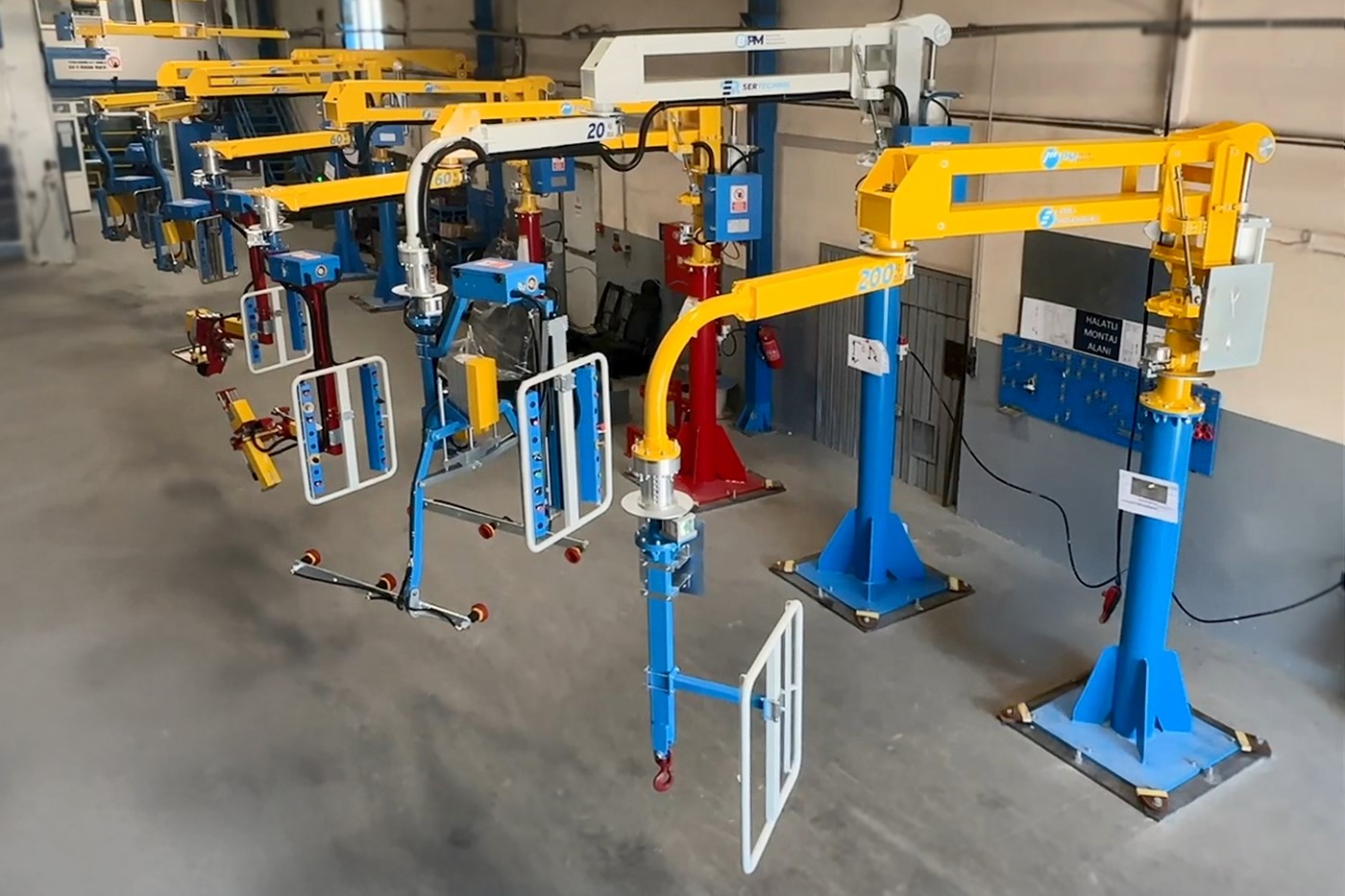
Insurance carriers increasingly recognize ergonomic investments as risk mitigation that justifies premium adjustments. Document equipment installations and provide specifications to underwriters during renewal negotiations. Some carriers offer explicit discounts for designated safety equipment categories. Others respond to demonstrated risk reduction with favorable experience modification calculations. A proactive maintenance program further supports insurance negotiations by demonstrating ongoing system reliability and consistent worker protection.
Thema North America: Your Partner in Ergonomic Material Handling
Thema North America delivers pneumatic manipulator systems engineered to eliminate the material handling hazards that generate manufacturing’s most costly injury categories. Our zero-gravity technology transforms heavy lifting from an injury risk into safe, efficient operation that any worker can perform consistently.
Our Services Include:
- Pneumatic Manipulators – Custom-configured systems with grippers designed for your specific products and handling requirements
- Ergonomic Assessment Services – Detailed workplace evaluation identifying high-impact intervention opportunities
Ready to Reduce Your Injury Costs? Contact Thema North America for a comprehensive analysis of how pneumatic manipulators can protect your workforce and improve your bottom line.
Works Cited
“Ergonomics – Overview.” Occupational Safety and Health Administration, U.S. Department of Labor, www.osha.gov/ergonomics/. Accessed 30 Jan. 2026.
“Work Injury Costs.” National Safety Council Injury Facts, National Safety Council, injuryfacts.nsc.org/work/costs/work-injury-costs/. Accessed 30 Jan. 2026.
Related Articles
- How Pneumatic Manipulators Are Solving Manufacturing’s Dual Crisis of Injuries and Labor Shortages
- How Zero-Gravity Material Handling Expands Your Manufacturing Talent Pool
{“@context”:”https://schema.org”,”@type”:”FAQPage”,”mainEntity”:[{“@type”:”Question”,”name”:”How much do material handling injuries cost directly?”,”acceptedAnswer”:{“@type”:”Answer”,”text”:”Musculoskeletal disorder injuries typically cost $15,000 to $85,000 in direct medical and workers’ compensation expenses per claim.”}},{“@type”:”Question”,”name”:”How much higher are the indirect costs of an injury?”,”acceptedAnswer”:{“@type”:”Answer”,”text”:”Indirect costs, including lost productivity, retraining, and administrative time, typically run about three times the direct cost of a claim.”}},{“@type”:”Question”,”name”:”Why do finance teams often underestimate injury costs?”,”acceptedAnswer”:{“@type”:”Answer”,”text”:”Standard budget tracking captures visible expenses like medical bills and workers’ comp premiums but usually misses indirect costs like productivity loss and turnover.”}},{“@type”:”Question”,”name”:”How does employee turnover factor into injury costs?”,”acceptedAnswer”:{“@type”:”Answer”,”text”:”Injured workers who leave or reduce hours create recruiting, hiring, and retraining costs that compound the direct and indirect costs of the original injury.”}},{“@type”:”Question”,”name”:”How can a facility calculate its true injury cost exposure?”,”acceptedAnswer”:{“@type”:”Answer”,”text”:”By adding direct medical and compensation costs, indirect productivity and administrative costs, and turnover-related costs together rather than tracking direct costs alone.”}},{“@type”:”Question”,”name”:”How does this cost analysis support an equipment investment case?”,”acceptedAnswer”:{“@type”:”Answer”,”text”:”Once the full cost of injuries is calculated, engineering controls like pneumatic manipulators typically show a much faster payback than direct-cost-only comparisons suggest.”}}]}