
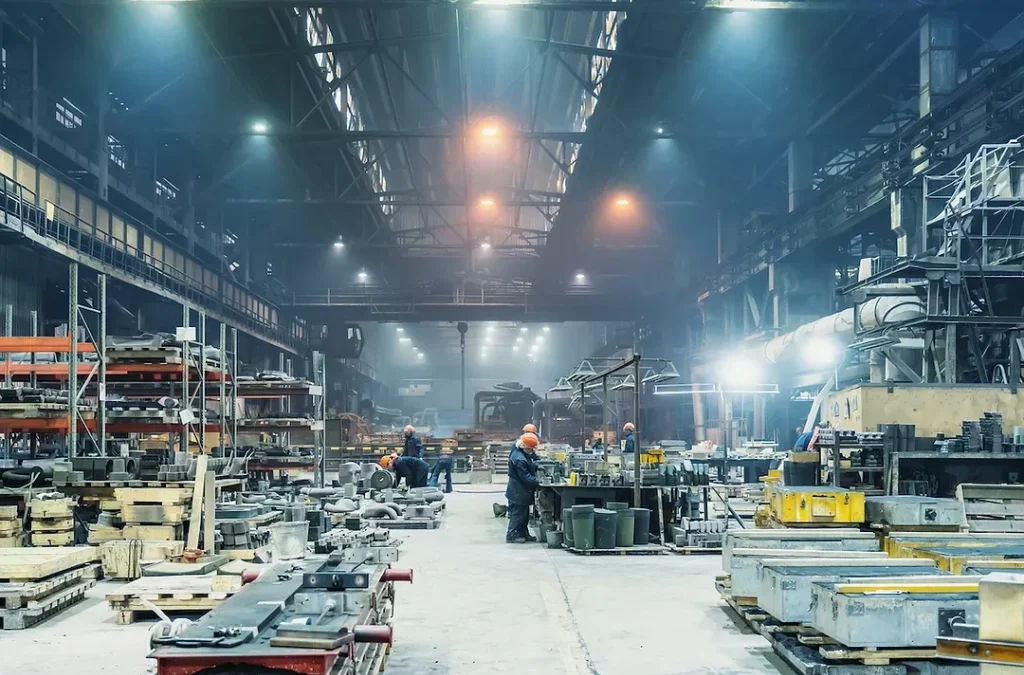
The Reshoring Boom Has an Equipment Problem
American manufacturing is in the middle of a historic reversal. After decades of offshoring production to Asia and Latin America, U.S. companies are bringing factories back at a pace not seen since the postwar industrial boom. The Reshoring Initiative reports that 244,000 manufacturing jobs were announced through reshoring and foreign direct investment in 2024 alone, pushing the cumulative total past two million jobs announced since 2010. Tariff volatility, supply chain fragility, and bipartisan political pressure have turned reshoring from a talking point into a full-scale industrial buildout.
At THEMA North America, we work directly with plant managers and operations leaders navigating exactly this transition—and we see the same equipment gap surface across every industry sector.] But there is a critical gap between announcing a new factory and actually running one. Companies pouring billions into new U.S. production facilities are discovering that modern domestic manufacturing demands entirely different factory floor equipment strategies than the overseas plants they are replacing. Cheap labor covered for inefficient material handling in offshore facilities. That calculus does not work when American manufacturing workers command average compensation exceeding $106,000 annually and nearly 500,000 manufacturing positions already sit unfilled nationwide.
The factories opening across the United States in 2026 cannot simply replicate the manual handling processes of the plants they are replacing. They need factory floor equipment that multiplies the productivity of every worker on the floor, reduces injury risk that drives up workers’ compensation costs, and requires minimal programming or integration complexity so production can ramp fast. Understanding what equipment do restored factories need in 2026 is the difference between a facility that hits output targets and one that burns cash for months.
New Factories, Old Handling Problems
The National Institute of Standards and Technology’s Manufacturing Innovation Blog has identified reshoring acceleration as a defining trend for U.S. manufacturing, noting that as OEMs and large manufacturers bring production back, they are actively seeking local suppliers and modern production infrastructure that can deliver faster turnaround and more flexible output. NIST specifically highlights that small and mid-sized manufacturers stand to benefit most from reshoring, but only if they invest in the right factory floor equipment and workforce capabilities.
The challenge is that many reshoring projects are being planned around outdated assumptions. Companies designing new U.S. facilities often default to one of two extremes: either replicating the manual, labor-heavy configurations from their overseas plants, or over-investing in full robotic automation that requires years of integration, programming, and debugging before it reaches target throughput. Neither approach works well in a labor market where qualified operators are scarce and every month of delayed production burns cash.
The smarter approach gaining traction among manufacturers who have successfully restored is right-sizing their automation. That means deploying ergonomic material handling solutions that enhance human capability rather than replacing humans entirely—particularly for material handling tasks that account for a disproportionate share of both worker injuries and production bottlenecks. Pneumatic manipulators, ergonomic lift assists, and intelligent positioning systems allow a single operator to safely handle heavy loads that previously required two or three workers, delivering immediate productivity gains without the integration headaches of full robotics. This is exactly why U.S. manufacturers are choosing pneumatic manipulators over robotics.
Our blog post on Pneumatic Manipulators: Durable and Efficient Material Handling Solutions examines in detail how this equipment category outperforms legacy manual handling across a range of production environments.
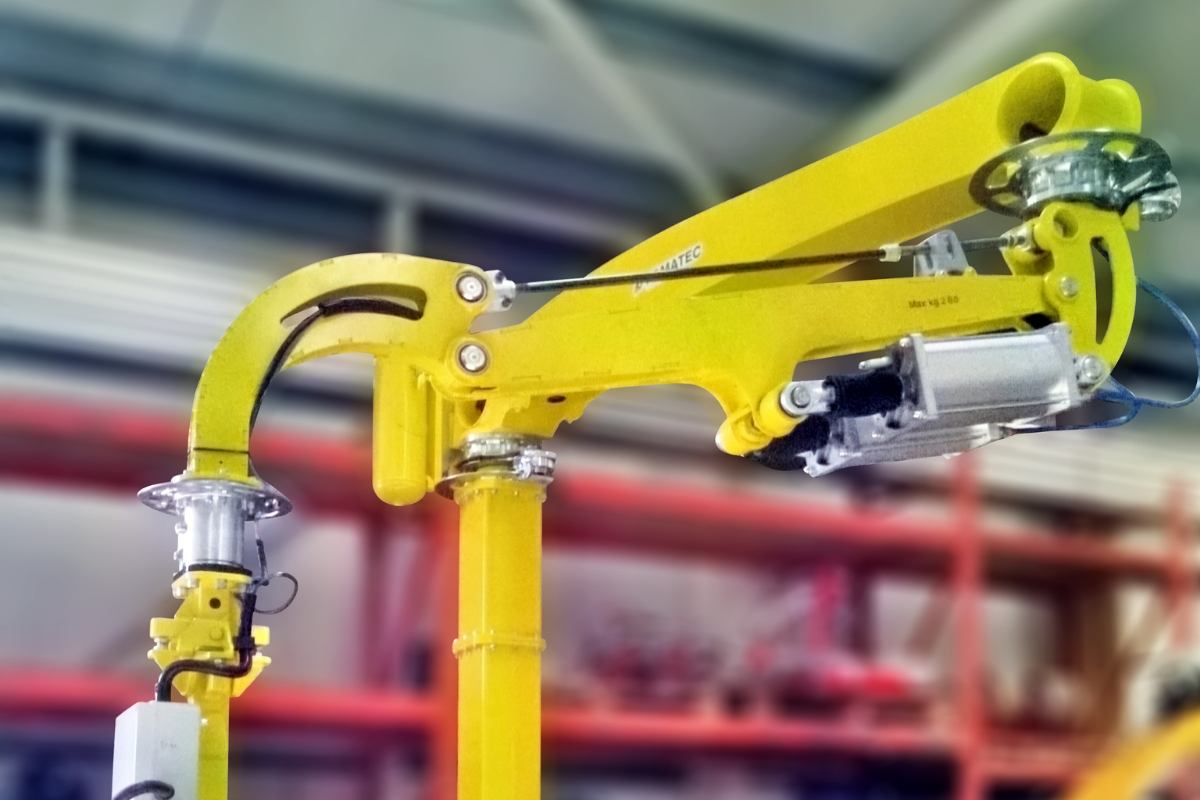
Pneumatic-Manipulator-Reshored-Manufacturing-Facility-US-Factory-Floor
Why the Reshoring Workforce Equation Demands Better Equipment
The Reshoring Initiative’s 2024 annual report makes clear that workforce availability is the single largest constraint on reshoring success. The organization’s survey of over 500 manufacturers found that locating manufacturing near engineering, reducing freight and duty costs, and avoiding geopolitical risk were the top three reasons companies are reshoring. But every one of those strategic advantages collapses if manufacturers cannot staff and operate their new facilities effectively.
The numbers are sobering. Even without additional reshoring pressure, projections show 1.9 million manufacturing jobs at risk of going unfilled by 2033 due to retirements and skills gaps. Add the reshoring wave on top, and some estimates push that manufacturing workforce shortage past three million. The Reshoring Initiative has explicitly warned that the success or failure of U.S. reindustrialization hinges on training millions of workers, with an estimated $1 trillion GDP loss if those positions remain empty.
This workforce scarcity means every factory built or reopened in the United States must extract maximum output from every employee. Manual material handling—workers lifting, positioning, and moving heavy components by hand—is the most obvious place to recapture lost productivity. It is also the leading source of workplace injuries in manufacturing that pull trained workers off the line for weeks or months, compounding the staffing crisis. How to reduce workplace injuries in manufacturing is no longer a compliance question alone—it is a production throughput question.
Decades of field experience with U.S. manufacturers confirms this pattern: the facilities that successfully ramp up restored production fastest are the ones that invest in ergonomic material handling equipment before the first worker walks through the door—not after the first injury report lands on an HR desk.]
Equipment that eliminates manual lifting while keeping human judgment and flexibility in the loop addresses both problems simultaneously. A pneumatic manipulator that allows one operator to precisely position a 300-pound component does not just prevent a back injury. It means that operator can complete the task faster, more consistently, and without needing a second pair of hands that the manufacturer cannot hire anyway. This single-operator material handling equipment for heavy loads capability is what makes these systems transformative for restored factory floors.
Explore how our pneumatic manipulators for automotive manufacturing and pneumatic manipulators for mechanical engineering address industry-specific heavy-load challenges.
How Section 232 Tariffs Are Reshaping Manufacturing Equipment Decisions
The tariff environment in 2025 and 2026 has added another layer of complexity to reshoring manufacturing equipment decisions. Section 232 tariffs on steel and aluminum, reciprocal tariffs affecting imports from major trading partners, and the Supreme Court’s February 2026 ruling striking down certain IEEPA-based tariffs have created a volatile cost landscape. How Section 232 tariffs impact manufacturing automation investments is now a question procurement teams can no longer ignore.
The fabricated metals sector—the backbone of countless material handling operations—now faces average tariff burdens exceeding 35 percent. Machinery and electrical equipment industries confront duties in the 18 to 22 percent range. For manufacturers trying to pencil out the economics of a restored facility, these tariff-inflated input costs compress margins that were already tighter than their offshore predecessors.
This uncertainty actually strengthens the case for simpler, more modular handling equipment over complex robotic systems. Pneumatic manipulators and ergonomic lift assists use readily available components, have shorter lead times, and carry lower per-unit costs than programmable robotic cells that often depend on imported servos, sensors, and control electronics. When tariff exposure on imported automation components can swing wildly, modular material handling equipment for fast factory deployment becomes strategically attractive. Many manufacturers are discovering that a $25,000 pneumatic manipulator delivering immediate productivity gains presents less tariff risk and faster payback than a $250,000 robotic cell requiring months of integration before generating its first dollar of return.
[EEAT ADDITION: When we discuss equipment ROI with our clients at THEMA North America, the conversation has fundamentally shifted in 2025–2026. Tariff exposure on complex automation components has made the simple supply chain and fast payback of pneumatic manipulators a strategic advantage, not just a cost consideration.]
The Institute for Supply Management’s late 2025 manufacturing survey captured the mood bluntly, with one transportation equipment executive reporting that tariff conditions are forcing permanent changes including staff reductions and restructured production strategies. For manufacturers making reshoring investments, choosing equipment that delivers productivity gains quickly and with minimal supply chain exposure is not just smart procurement—it is survival.
Our deeper analysis in Why Pneumatic Manipulators Are Outperforming Full Robotics for Mid-Size Manufacturers provides a detailed comparison of how these different equipment approaches stack up on cost, deployment speed, and flexibility—the three factors that matter most to manufacturers racing to get restored operations productive.
What Industries Benefit Most from Pneumatic Manipulators in Restored Operations?
The shift toward ergonomic, operator-assist material handling equipment spans every major manufacturing sector undergoing reshoring. Pneumatic manipulators for automotive manufacturing are among the most common deployments, where heavy metal stampings, engine blocks, and body panels demand precise, fatigue-free positioning across high-volume production lines.
Food and beverage processing facilities represent another high-growth deployment area, where ergonomic lifting equipment must meet both production throughput and food-safe handling requirements. Similarly, packaging operations rely on pneumatic lift assists to handle repetitive, high-cycle movements that would otherwise generate rapid-onset musculoskeletal disorders in operators.
Painting and coating operations and paper and forestry industries also face heavy-component handling challenges that pneumatic manipulators resolve without the overhead of robotic systems. Across all of these sectors, the common thread is the same: ergonomic material handling equipment for aging manufacturing workforces that keeps human judgment in the loop while eliminating the physical demands that cause injuries and burnout.
What Smart Reshoring Looks Like on the Factory Floor
The manufacturers succeeding at reshoring are not the ones spending the most on automation. They are the ones spending smartly on factory floor equipment that solves their most immediate bottleneck: getting product out the door safely and efficiently with the workforce they can actually recruit. That means prioritizing material handling equipment that reduces physical strain, accelerates cycle times, and requires minimal technical overhead to deploy and maintain.
[EEAT ADDITION: The pattern we observe consistently among THEMA North America’s customers is that the fastest production ramps happen at facilities where ergonomic material handling equipment is treated as infrastructure—not an afterthought. The ROI shows up in the first quarter: fewer recordable injuries, faster cycle times, and operators who are less fatigued at the end of the shift.]
The reshoring manufacturing boom is real, the investment is flowing, and the factories are being built. The question is whether they will be equipped to actually compete—or whether outdated handling approaches will create the same productivity and injury problems that made offshore manufacturing attractive in the first place. The best material handling equipment for restored U.S. factories is not necessarily the most complex—it is the equipment that gets your operators productive, safe, and efficient from day one.
Learn more about the full range of pneumatic manipulator solutions for U.S. industries and how they are engineered for the demands of modern domestic manufacturing.
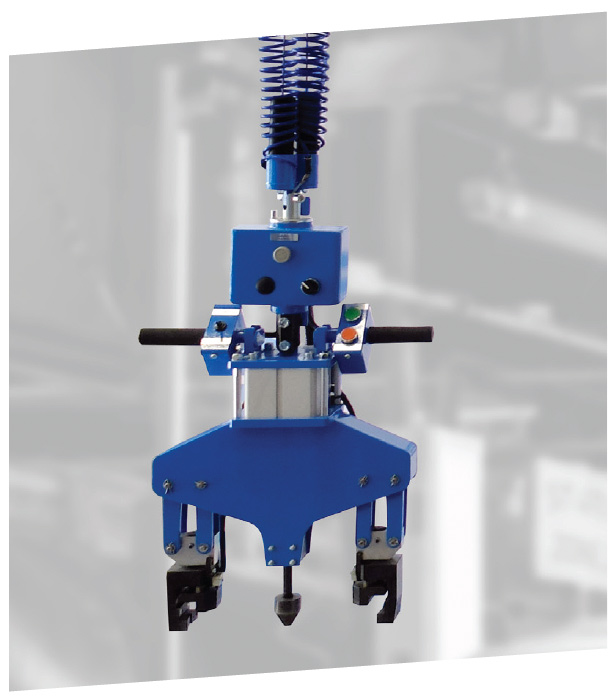
Ergonomic-Lift-Assist-Equipment-Reducing-Manual-Handling-Manufacturing-Plant
Frequently Asked Questions
What material handling equipment is best for restored U.S. manufacturing facilities?
Pneumatic manipulators and ergonomic lift assists are widely considered the most effective factory floor equipment for restored facilities. They allow a single operator to safely handle loads up to 300 pounds or more with precision positioning, eliminating the need for multiple workers and reducing injury risk—without the integration complexity of full robotic automation.
Why are pneumatic manipulators preferred over robotics in restored factories?
Pneumatic manipulators offer faster deployment, lower upfront costs, simpler supply chains, and minimal programming requirements compared to full robotic cells. A pneumatic manipulator can be operational in days, while a robotic cell may require months of integration before reaching target throughput—a critical disadvantage when manufacturers are racing to ramp up restored production.
How many U.S. manufacturing jobs have been reshored since 2010?
According to the Reshoring Initiative, the cumulative total of manufacturing jobs announced through reshoring and foreign direct investment surpassed two million since 2010, with 244,000 jobs announced in 2024 alone.
How do 2025–2026 tariffs affect manufacturing equipment choices?
Section 232 tariffs on steel and aluminum, plus reciprocal tariffs on imports from major trading partners, have driven up costs for complex automation equipment that relies on imported components. Pneumatic manipulators, which use readily available parts and have shorter lead times, carry lower tariff exposure and deliver faster ROI—making them strategically attractive for restored facility buildouts.
What is the U.S. manufacturing workforce shortage projection?
Projections show 1.9 million manufacturing jobs at risk of going unfilled by 2033 due to retirements and skills gaps. With the ongoing reshoring wave, some estimates push that workforce shortfall past three million, underscoring the need for ergonomic material handling equipment that maximizes productivity per operator.
How does ergonomic lifting equipment reduce manufacturing costs?
Ergonomic lifting equipment reduces workers’ compensation claims by preventing musculoskeletal injuries—the leading cause of lost work time in manufacturing. It also allows one operator to handle loads that previously required two or three workers, directly reducing labor costs and improving cycle times on factory floors.
What is right-sizing automation in manufacturing?
Right-sizing automation means deploying equipment that enhances human capability rather than replacing workers entirely. Instead of expensive, complex robotic systems, manufacturers deploy pneumatic manipulators and ergonomic lift assists that deliver immediate productivity gains with minimal integration overhead—particularly effective for material handling tasks in restored facilities.
Where is THEMA North America located, and how can I contact them?
THEMA North America is located at 3800 Ashland Drive, Harleysville, PA 19438—serving manufacturers across the United States. Reach the team at 267-551-5517 or jen@thema-northamerica.com to discuss pneumatic manipulator solutions for your facility. Contact THEMA North America here.
THEMA North America: Engineered Solutions for Modern U.S. Manufacturing
THEMA North America provides pneumatic manipulators and ergonomic material handling systems engineered for the demands of modern U.S. manufacturing. Our equipment helps manufacturers maximize workforce productivity while eliminating the manual handling injuries that derail production schedules and drive up operating costs.
Our Solutions Include:
- Pneumatic Manipulators — Precision-engineered lifting and positioning systems that allow a single operator to safely handle heavy loads with zero-gravity feel and exact placement
- Installation & Commissioning Services — Expert deployment to get your handling equipment productive from day one
- Maintenance Programs — Ongoing support to protect your uptime and extend equipment life
Contact THEMA North America to discuss how our factory floor material handling equipment can help your restored or expanded operation hit production targets faster and safer.
Works Cited
“What’s Coming for US Manufacturing in 2025.” Manufacturing Innovation Blog, National Institute of Standards and Technology, 20 Feb. 2025, www.nist.gov/blogs/manufacturing-innovation-blog/whats-coming-us-manufacturing-2025. Accessed 25 Feb. 2026.
“Reshoring Initiative 2024 Annual Report Including 1Q2025 Insights.” Reshoring Initiative, 9 June 2025, reshorenow.org/june-9-2025/. Accessed 25 Feb. 2026.
Related Articles
- Manufacturing’s Aging Workforce Is Rewriting the Rules on Factory Floor Safety
- Why Pneumatic Manipulators Are Outperforming Full Robotics for Mid-Size Manufacturers