
Industrial Manipulators: The Complete Guide to Types, Safety Benefits & Material Handling Applications

Why Every Manufacturer Is Talking About Industrial Manipulators Right Now
Picture this: it’s 7 AM on the production floor. A worker is on their fourth hour of lifting 200-pound engine blocks manually. By noon, their backs hurt. By Friday, there’s a workers’ comp claim. By the following quarter, your injury rate is up, your insurance premium is up, and that employee is out for six weeks.
Sound familiar? If it does, you’re not alone. And honestly, you’re also not stuck.
Industrial manipulators are changing the math in manufacturing plants across North America — reducing injuries, slashing cycle times, and quietly making production managers look very good in their quarterly reviews. At Thema North America, we’ve seen firsthand how the right ergonomic lifting system transforms a plant floor from a liability into a competitive advantage.
This guide covers everything you need to know: what industrial manipulators are, the different types, their safety and productivity benefits, how they compare to robots, and how to choose the right one for your operation.
What Is an Industrial Manipulator?
An industrial manipulator is a mechanical lifting and positioning device designed to move, rotate, tilt, or place loads that are too heavy, bulky, or hazardous for workers to handle manually. Unlike simple hoists or overhead cranes, a true industrial manipulator gives the operator three-dimensional control, vertical, horizontal, and angular, with minimal physical effort.
Think of it as giving your worker the strength of a machine without taking away their judgment, precision, or flexibility.
Key specifications of modern industrial manipulators include:
- Load capacity: Ranging from 10 kg to over 1,000 kg (22 lbs to 2,200 lbs)
- Movement range: Full vertical, horizontal, and angular positioning in 3D space
- Ergonomic control: Operators guide loads with fingertip-level force
- End-of-arm tooling: Customizable grippers, clamps, suction cups, or hooks for specific parts
- Certifications: CE-certified and ISO 9001-compliant systems available
In short, industrial manipulators bridge the gap between manual labor and full automation, giving your team the best of both worlds.
For companies seeking high-performance systems, Thema’s pneumatic manipulators offer durable and efficient material handling solutions engineered for the demands of North American manufacturing.
Learn more about our full product range →
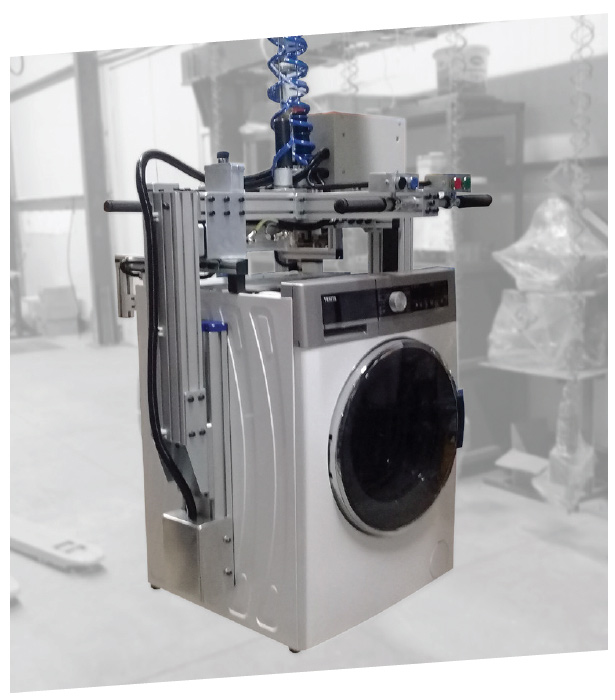
Pneumatic industrial manipulator arm lifting a heavy load in automotive assembly
The Real Cost of NOT Using Industrial Manipulators
Here’s a number that tends to get people’s attention: $167 billion.
That’s the estimated annual cost of workplace musculoskeletal disorders (MSDs) in American manufacturing, according to NIOSH and Bureau of Labor Statistics data. MSDs, the sprains, strains, and repetitive motion injuries caused by manual material handling, account for roughly one-third of all recordable workplace injuries.
Every manual lifting task is a risk. Every risk is a potential claim. Every claim raises your Experience Modification Rate (EMR), which directly increases your workers’ comp premiums.
A single workers’ comp claim in manufacturing can cost between $15,000 and $80,000 when you factor in medical costs, lost productivity, replacement labor, and OSHA recordability impact on your insurance rate.
Ergonomic industrial manipulators eliminate the root cause: they take the physical load away from the worker entirely, while keeping the worker in control of placement and precision.
How Do Industrial Manipulator Arms Improve Safety?
This is one of the most common questions we hear from safety managers, and it deserves a direct answer.
An industrial manipulator arm improves workplace safety by mechanically absorbing the weight, force, and repetitive motion of material handling tasks, removing the physical risk from the operator while preserving their positional control.
Here’s how that translates to your plant floor, specifically:
1. Elimination of Repetitive Strain: Repetitive lifting is the primary driver of MSD claims. A material handling manipulator handles the weight on every single cycle, whether it’s the 1st lift of the shift or the 500th.
2. Removal of Crush and Pinch Hazards: Manual load control means loads can shift, slip, or fall. With an ergonomic industrial manipulator, the load is mechanically secured, and the worker’s hands guide, not bear, the weight.
3. Reduced Fatigue-Driven Errors: Worker fatigue builds across a shift. A tired worker makes mistakes. Pneumatic manipulators don’t get tired. Cycle time and precision stay consistent from 6 AM to 6 PM.
4. OSHA Ergonomic Compliance: OSHA’s ergonomic guidelines strongly recommend engineering controls for repetitive heavy lifting. Industrial manipulators are the gold-standard engineering control, documented, measurable, and defensible in an OSHA inspection.
5. Lower EMR and Workers’ Comp Premiums: When your recordable injury rate drops, your Experience Modification Rate drops, and so does your workers’ comp premium. Plants that implement ergonomic lifting solutions report premium reductions of 15–35% within two policy cycles.
Explore how Thema’s industry-specific solutions address safety compliance across automotive, food, packaging, and more.
Types of Industrial Manipulators: A Complete Breakdown
Understanding the different types of industrial manipulators is essential before you spec a system. Each type is built for specific load weights, environments, and handling tasks.
1. Pneumatic Industrial Manipulators
Powered by compressed air, pneumatic manipulators are the most widely used type in North American manufacturing. They’re ideal for loads from 50–2,000 lbs, offer excellent durability in harsh environments, and require minimal electrical infrastructure.
Best for: Automotive assembly, packaging lines, food and beverage, and foundries.
Load range: 50 kg – 1,000 kg
Key advantage: No electricity required at the point of use; explosion-safe for certain environments
See Thema’s pneumatic manipulators for automotive manufacturing →
2. Electric Industrial Manipulators
Electric manipulators offer the highest positional precision and are the preferred choice for cleanroom environments, electronics assembly, and applications where fine control is critical.
Best for: Electronics, pharmaceutical, and precision assembly
Load range: 10 kg – 500 kg
Key advantage: Programmable movement profiles; energy-efficient; no compressed air dependency
3. Hydraulic Manipulators
Hydraulic manipulators handle the heaviest loads in the most demanding environments, such as foundries, heavy equipment manufacturing, and steel processing. They’re built for brute strength.
Best for: Foundries, metal fabrication, heavy equipment
Load range: 500 kg – 5,000+ kg
Key advantage: Maximum payload capacity; extremely robust
4. Mobile Industrial Manipulators
Mobile manipulators are mounted on wheeled or rail-based platforms, giving them flexibility to serve multiple workstations rather than being fixed to one point.
Best for: Large production floors, job-shop environments, warehousing
Key advantage: One system serves multiple workstations; lower per-station cost
5. Custom-Built Manipulators
When standard systems don’t fit your application, unusual load geometry, extreme environments, or unique positional requirements, custom-built manipulators are engineered from the ground up for your exact task.
Best for: Specialized production environments; irregular or fragile loads
Key advantage: Perfect fit for the application; engineered to your exact tolerances
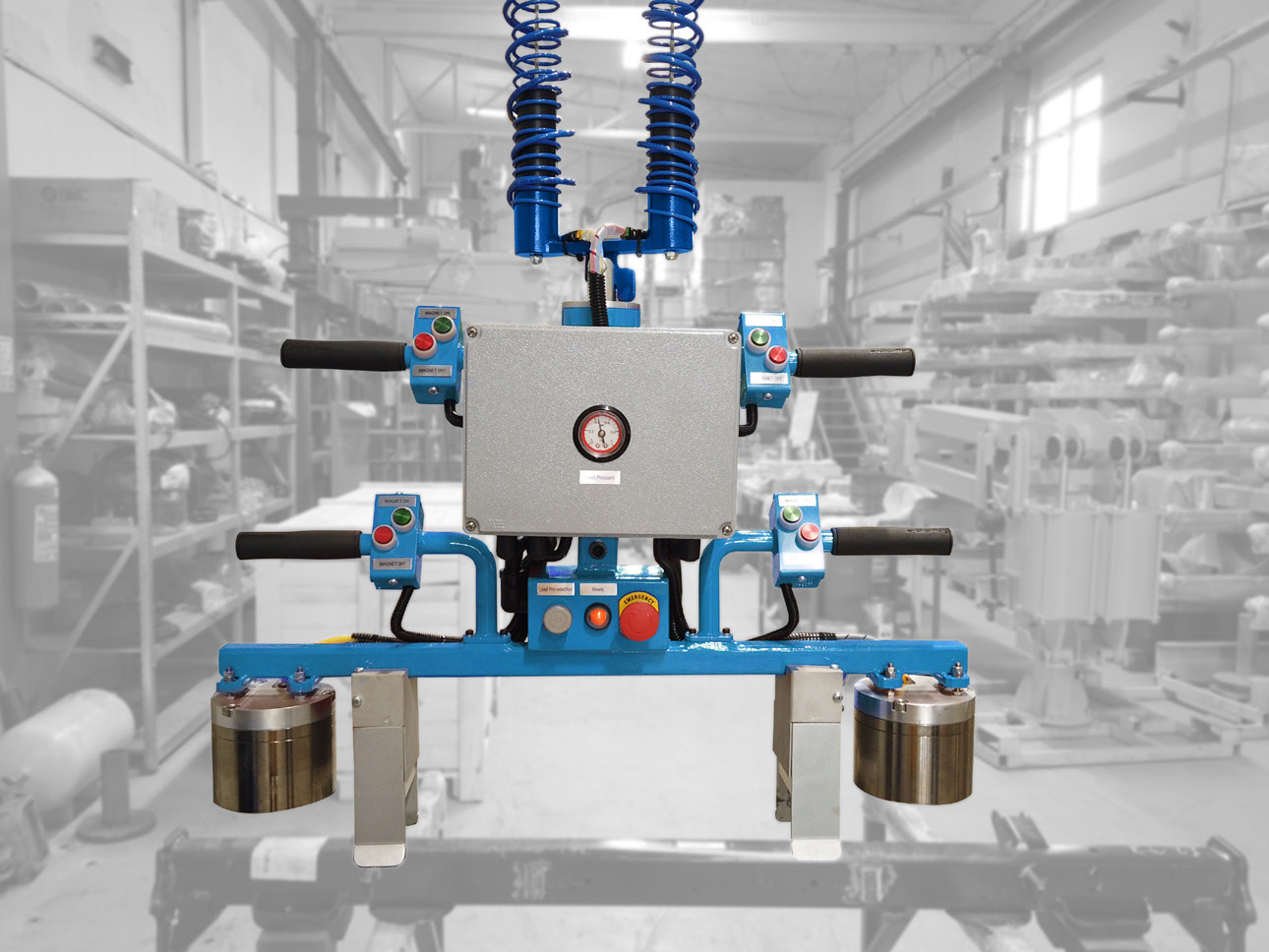
Pneumatic manipulator lifting a wooden crate with a vacuum gripper
Industrial Manipulators and Material Handling: How They Work Together
Industrial manipulators and material handling are not the same thing, but they work best together. Here’s how a manipulator fits into a complete material handling system:
RECEIVING → STORAGE → IN-PROCESS HANDLING ← [MANIPULATOR] → ASSEMBLY → QUALITY → SHIPPING
The manipulator lives in the in-process and assembly zone, the part of your workflow where precision, speed, and worker safety matter most. Cranes and forklifts move materials between zones; manipulators position them within zones, at the exact point of work.
Comparison: Industrial Manipulator vs. Alternative Equipment
| Feature | Industrial Manipulator | Overhead Crane | Forklift | Cobot |
|---|---|---|---|---|
| Positional precision | ★★★★★ | ★★☆☆☆ | ★☆☆☆☆ | ★★★★☆ |
| Operator skill required | Low | Medium | Medium | Low |
| Ergonomic benefit | ★★★★★ | ★★★☆☆ | ★☆☆☆☆ | ★★★★☆ |
| Flexibility | High | Low | Medium | Medium |
| Load range | 10–2,000 kg | 500–50,000 kg | 500–5,000 kg | 3–35 kg |
| Setup/changeover | Fast | Slow | N/A | Medium |
| Cost (entry-level) | $$ | $$$ | $$$$ | $$$ |
The takeaway: For in-process assembly, positioning, and ergonomic lifting of loads between 10 to 2,000 kg, industrial manipulators outperform every alternative on precision, ergonomics, and total cost of ownership.
Browse all Thema industries served →
Industrial Manipulators vs. Industrial Robots: What’s the Difference?
This is probably the most common confusion we encounter, and it’s worth clearing up properly, because the answer changes your capital investment decision.
Industrial Manipulators:
- Human-controlled (semi-automatic)
- Operator guides the load; machine bears the weight
- Best for tasks requiring human judgment: variable loads, irregular parts, changing tasks
- Lower cost; faster ROI
- Flexible — reconfigure in hours, not days
Industrial Robots:
- Fully automated; programmed sequence
- No human in the loop during operation
- Best for structured, repetitive, high-volume tasks with zero variation
- Higher cost; longer ROI timeline
- Inflexible — reprogramming a new part requires engineering time
In most plants, the smartest answer is both. A manipulator loads a part into position; a robot performs the fastening sequence. This hybrid production line approach maximizes human flexibility and robotic consistency, without forcing you to choose between them.
Industrial Manipulator Applications by Industry
Ergonomic industrial manipulators are making a measurable impact across manufacturing sectors. Here’s where they’re deployed, and what specific problems they solve:
Automotive
Engine block installation, door panel handling, seat assembly, and battery module positioning for EV production. Thema’s pneumatic manipulators for automotive manufacturing are engineered for Tier 1 and OEM assembly environments.
Breweries & Distilleries
Barrel handling, keg lifting, grain sack positioning. Pneumatic manipulators for breweries and distilleries address the unique ergonomic demands of craft and industrial brewing.
Food & Beverage
Sanitary bag lifting, ingredient drum handling, and tray stacking, all without contamination risk. Pneumatic manipulators for food and beverage processing meet FDA and USDA hygienic design requirements.
Packaging
End-of-line palletizing, case handling, and roll-feed positioning. Pneumatic manipulators for packaging operations keep pace with high-speed packaging lines.
Mechanical Engineering
Heavy component assembly, gearbox positioning, and machine tool tending. Pneumatic manipulators for mechanical engineering handle precision and payload simultaneously.
Painting & Coating
Part manipulation through spray booths and dip tanks — environments where pneumatic systems outperform electrical. Pneumatic manipulators for painting and coating operations are engineered for solvent-heavy environments.
Paper & Forestry
Roll handling, log positioning, sheeting operations. Pneumatic manipulators for the paper and forestry industries handle high-weight, awkward loads in demanding environments.
[Place Image Here]
How to Choose the Right Industrial Manipulator: A Practical Guide
Selecting the right system doesn’t have to be complicated, but it does require honest answers to five questions:
1. What is your maximum load weight?
This determines the drive type and structural rating. Be honest, include tooling weight, not just the part.
2. What is the load’s geometry?
Regular shapes (boxes, drums) are straightforward. Irregular, off-center, or fragile loads may require custom tooling design.
3. What is your work environment?
Temperature extremes, moisture, explosive atmospheres, or cleanroom requirements all affect which drive type is appropriate. Pneumatic is preferred in environments where electrical sparking is a risk.
4. How frequently is the task performed?
High-cycle applications (50+ lifts/hour) favor pneumatic systems for their durability and low maintenance cost. For industrial manipulator maintenance information and best practices, Thema’s maintenance program provides comprehensive ongoing support.
5. What is your floor layout?
Fixed workstations favor column-mounted systems. Multiple workstations favor mobile configurations. Ceiling-mounted options are available where floor space is limited. Thema’s installation team conducts a full facility assessment before recommending any configuration.
The fastest way to get it right?
Talk to an application engineer who’s done it before. Contact the Thema North America team in Harleysville, PA, for a no-pressure facility assessment.
Industrial Manipulator ROI: What to Realistically Expect
Let’s talk numbers, because every capital equipment decision comes down to math.
Typical ROI timeline for pneumatic industrial manipulators: 12–24 months.
Here’s what drives that return:
| Cost Reduction Driver | Typical Annual Impact |
|---|---|
| Reduced workers’ comp claims | $15,000 – $60,000/year |
| Lower EMR / insurance premium reduction | 15–35% premium reduction |
| Reduced labor cost (1 operator vs. 2–3) | $40,000 – $80,000/year |
| Reduced product damage/scrap | $5,000 – $25,000/year |
| Faster cycle times / increased throughput | 10–25% productivity gain |
For a material handling manipulator cost savings calculation specific to your plant, use OSHA’s Safety Pays estimator, enter your injury rate and direct cost, and it calculates the revenue impact of each prevented claim.
Request a custom ROI quote from Thema North America →
The Future of Industrial Manipulators: Smart Systems & Industry 4.0
The industrial manipulators of 2026 look different from those of even five years ago. Here’s where the technology is heading:
AI-Assisted Load Sensing: Modern smart industrial manipulators integrate load-cell data with AI systems that detect irregular weight distribution in real-time, automatically adjusting counterbalance before the operator feels any imbalance.
IoT Connectivity & Predictive Maintenance Industry 4.0: integration means your manipulator reports its own health data. Pressure drop anomalies, cycle count milestones, and wear indicators trigger maintenance alerts before failures occur, keeping uptime high and maintenance costs predictable.
Collaborative Operation (Human + Machine): Next-generation systems use proximity sensing and force-limiting technology to create true human-machine collaboration zones, not just guarded areas. The manipulator responds to the operator’s intent, not just their physical input.
EV Battery Assembly Integration: As EV production scales across North America, the need for ergonomic lifting equipment for manufacturing battery modules (heavy, chemically sensitive, precision-positioned) is creating one of the fastest-growing application segments in the industrial manipulator market.
[Place Image Here]
Why Thema North America?
At Thema North America, we don’t just sell industrial manipulators — we engineer material handling solutions that make your facility safer, more productive, and more competitive.
Based in Harleysville, Pennsylvania, we serve manufacturers across the United States, Canada, and Mexico. Our team of application engineers brings decades of hands-on experience in pneumatic lifting systems — and we stay involved through installation, training, and ongoing maintenance.
What sets Thema apart:
- CE-certified and ISO 9001-aligned systems
- Full application engineering support — not just order fulfillment
- Professional installation team — on-site, on schedule
- Comprehensive maintenance program — protecting your investment long-term
- Custom end-of-arm tooling for unique applications
- North America-wide coverage with fast response
Learn more about Thema North America →
Ready to see what the right industrial manipulator can do for your plant? Contact our team today →
267-551-5517 | jen@thema-northamerica.com | 3800 Ashland Drive, Harleysville, PA 19438
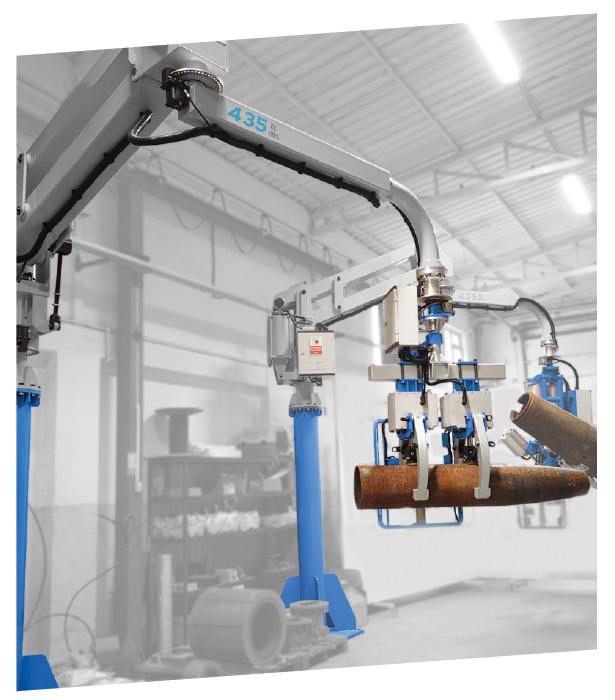
Thema North America ergonomic industrial manipulator reducing workplace injuries
FAQ: Industrial Manipulators — Your Questions Answered
1. What is an industrial manipulator, and how does it work?
An industrial manipulator is a mechanical lifting and positioning device that allows a single worker to safely handle loads ranging from 10 kg to over 1,000 kg. The manipulator bears the full weight of the load while the operator uses light force to guide it vertically, horizontally, and angularly with precision. Most industrial manipulators use pneumatic, electric, or hydraulic drives to provide counterbalanced lift assistance.
2. What are the main types of industrial manipulators?
The main types of industrial manipulators are:
(1) pneumatic manipulators — most common in North America, ideal for 50–1,000 kg loads in industrial environments
(2) electric manipulators — best for cleanrooms and precision assembly
(3) hydraulic manipulators — for the heaviest loads above 1,000 kg
(4) mobile manipulators — flexible systems serving multiple workstations
(5) custom-built manipulators — engineered for unique applications.
3. How do industrial manipulator arms improve workplace safety?
Industrial manipulator arms improve safety by mechanically absorbing all lifting force, eliminating repetitive strain and heavy-load injuries. They prevent musculoskeletal disorders (MSDs), reduce crush and pinch hazards, and maintain consistent handling precision across an entire shift, reducing the fatigue-driven errors that cause most workplace accidents. OSHA recognizes ergonomic engineering controls, such as manipulators, as the most effective approach to preventing manual handling injuries.
4. What is the difference between an industrial manipulator and a robot?
An industrial manipulator is human-controlled — the worker guides the load while the machine bears its weight. An industrial robot is fully automated and programmed for repetitive, structured tasks. Manipulators are more flexible, lower-cost, and faster to deploy. They excel in environments with variable loads, irregular parts, or tasks requiring human judgment. In many modern plants, manipulators and robots work together in hybrid production lines.
5. What industries use industrial manipulators?
Industrial manipulators are used across automotive, food and beverage, packaging, aerospace, breweries and distilleries, paper and forestry, mechanical engineering, painting and coating, pharmaceuticals, and logistics/warehousing. Any manufacturing environment where workers manually handle loads over 25 lbs repeatedly throughout a shift is a candidate for a manipulator system.
6. How long does it take for an industrial manipulator to pay for itself?
Most pneumatic industrial manipulators achieve full ROI within 12–24 months through a combination of reduced workers’ comp claims, lower insurance premiums, reduced labor costs (one operator replacing two or three), faster cycle times, and decreased product damage. The OSHA Safety Pays estimator can calculate a custom ROI projection based on your plant’s injury rate.
7. Can industrial manipulators be customized for specific applications?
Yes. Custom-built industrial manipulators can be engineered for virtually any load geometry, environment, or positional requirement. End-of-arm tooling, grippers, suction cups, clamps, hooks, tilters, and rotators are designed specifically for your parts. Thema North America’s application engineers work directly with plant teams to design, prototype, and validate custom tooling before production deployment.
8. Where can I get an industrial manipulator in Pennsylvania or North America?
Thema North America, headquartered in Harleysville, Pennsylvania, supplies and installs CE-certified industrial manipulators across the United States, Canada, and Mexico.
Contact our team at 267-551-5517 or jen@thema-northamerica.com for a free facility assessment and application recommendation.